Let me get the uncomfortable part out of the way. No watch is guaranteed to hold its value. Not a Rolex, not a Patek Philippe, not an Audemars Piguet, not a Richard Mille. Anyone who tells you otherwise is selling something, and usually at a premium.
What you can do is understand which markets are deep, which are thin, which prices are real and which are theater. That is a much more useful skill than picking a winner.
Six different prices, and people confuse all of them
Before you compare anything, get your vocabulary straight, because most bad watch decisions come from mixing these up.
Retail price is what an authorized dealer charges. Grey market purchase price is what an unauthorized seller charges, often above retail on scarce references and below retail on slow ones. Secondary market sale price is what a private buyer pays. Dealer bid is what a dealer will actually wire you today, and it is always lower than the asking prices you see online. Auction result is the hammer plus the buyer's premium. Net proceeds are what lands in your account after seller commission, fees, shipping and insurance.
The gap between an online asking price and a dealer bid can be substantial. The gap between an auction result and your net proceeds after commissions is real money. When someone says a watch is worth a number, always ask which of those six numbers they mean.
Brand level behavior, and why it is not the whole story
Chrono24 published its Rolex Report for 2026 describing Rolex as still the leader in a changed market, and JCK has reported on buyers diversifying away from a Rolex only approach even while Rolex keeps the largest share of attention. Market analytics platforms such as WatchCharts track secondary market prices continuously and are the right place to check a specific reference rather than a brand.
That distinction is the whole point. Brand level averages tell you almost nothing about the watch on your wrist. Reference level behavior is what pays or costs you. Two Daytonas from different eras with different dials and different papers are two different assets.
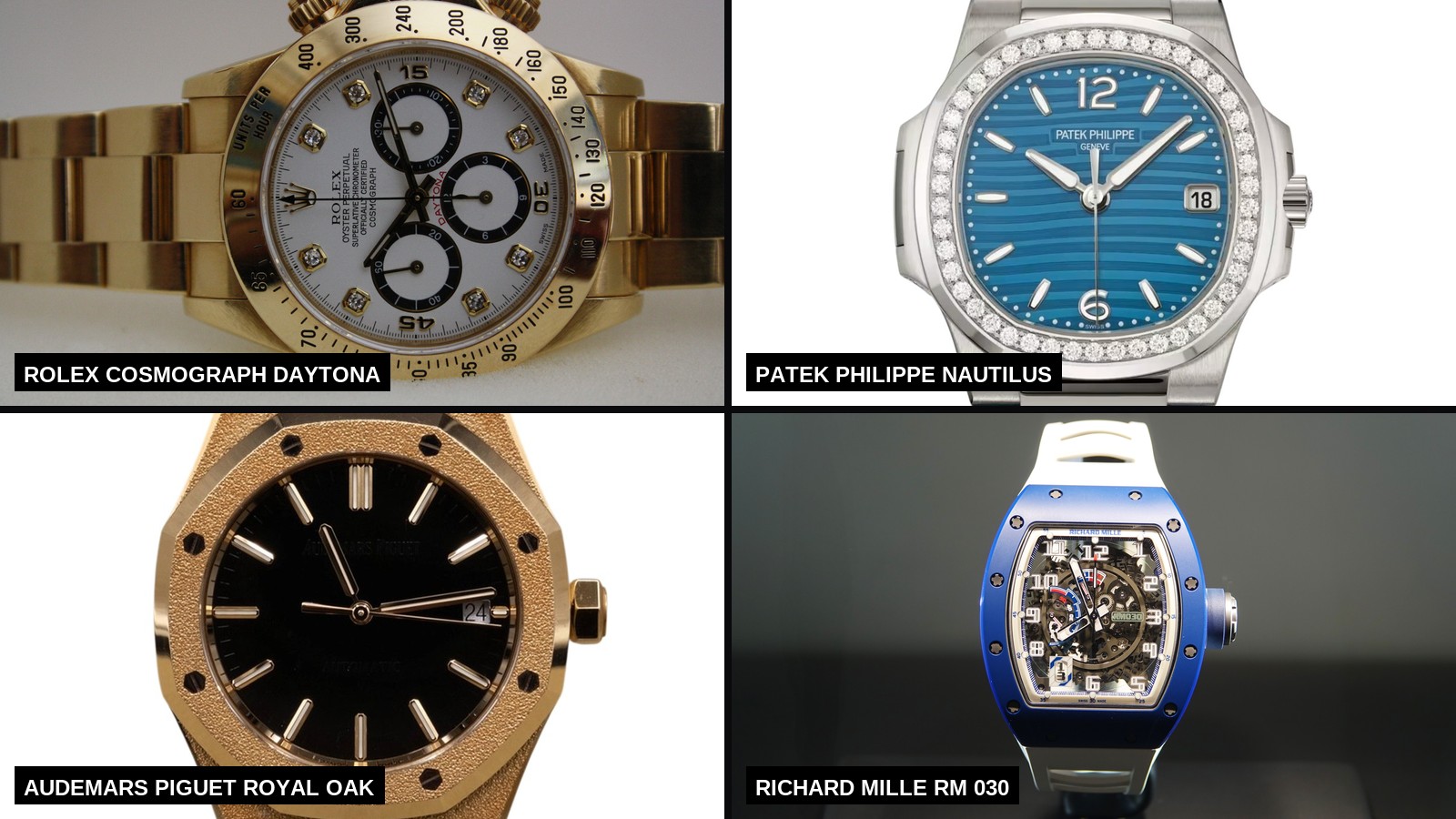
| Brand | Liquidity | Buyer pool | Service notes | Typical entry | Examples people actually chase |
|---|---|---|---|---|---|
| Rolex | Highest of the four, sells quickly in most markets | Broadest, global, includes non collectors | Largest official service network, widely available parts and expertise | Lowest of the four | Cosmograph Daytona in steel, GMT-Master II, discontinued steel sports references |
| Patek Philippe | Good on the right references, slower on classical models | Narrower and more collector driven | Long service turnaround, high service cost | High | Nautilus 5711 and successors, Aquanaut |
| Audemars Piguet | Good on Royal Oak, thinner elsewhere | Concentrated around one design family | Costly servicing, integrated bracelet work is specialist labor | High | Royal Oak Jumbo and steel Royal Oak references |
| Richard Mille | Thin market, few transactions, slow to sell | Very small, very wealthy, relationship driven | Highly specialist, expensive, limited service options | Very high | Scarce limited editions and athlete associated references |
Those are qualitative labels on purpose. I am not going to hand you a percentage without a dated source next to it, because retention numbers move every quarter and a stale percentage is worse than no percentage. Check WatchCharts for the reference you care about, note the date you checked, and use that.
Rolex
Rolex is the most liquid luxury watch market in the world. The buyer pool includes people who do not consider themselves collectors, which is exactly why it stays liquid. Pricing is relatively transparent because volume is high, service is available almost everywhere, and authentication expertise is widespread.
The stainless steel Cosmograph Daytona is the strongest broadly recognizable candidate for value retention. Steel Daytonas have a long record of demand exceeding authorized dealer supply. Selected GMT-Master II configurations and scarce or discontinued steel sports references have also held up well.
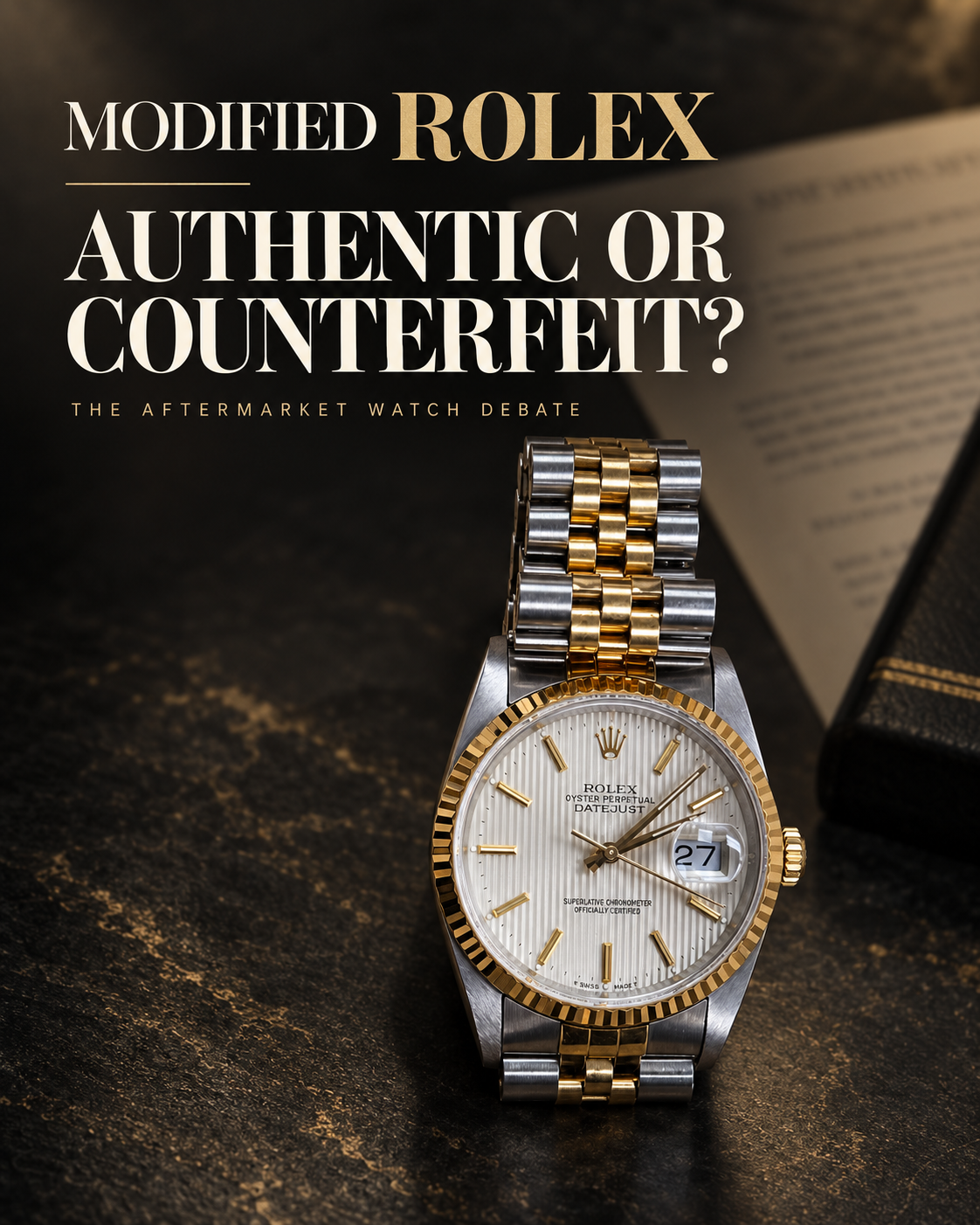
Now the caveats, because they decide everything. Not every Daytona appreciates. Purchase price and exact reference determine your outcome. A steel Daytona bought at authorized dealer retail is a very different position from the same watch bought at a large grey market premium at a market peak. Precious metal Daytonas behave differently than steel. Condition, box and papers, and whether a reference is current or discontinued all move the number.
Patek Philippe
Patek's strongest performers, particularly the Nautilus family, have shown premiums over retail that Rolex rarely matches. That is the appeal and it is real.
It comes with conditions. Access at retail is extremely limited for most buyers, which means many people enter at a secondary market premium that already prices in the upside. The buyer pool is narrower. Volatility on hyped references has been meaningful in both directions since 2022. Service is expensive and slow, and it matters more here because condition and originality carry so much of the value.
Audemars Piguet
The Royal Oak is one of the most recognizable designs in watchmaking, and selected steel references, particularly the thinner Jumbo models, have commanded strong premiums.
The concentration is the risk. Much of AP's secondary strength sits in one design family. Outside the Royal Oak line, liquidity thins noticeably. Servicing is expensive and refinishing an integrated case and bracelet is specialist work that a careless polish can ruin, which directly damages resale.
Richard Mille
Richard Mille can retain extraordinary value on scarce references, and certain limited editions have traded far above their original prices.
It is also the thinnest market of the four. Transaction counts are low, individual sales can move perceived market levels, buyers are few and often reached through relationships rather than listings, and both service and insurance are expensive. If you need to sell in a hurry, thin markets are unkind. This is not the safest universal recommendation, and no one should treat it as one.
Why your purchase channel decides the outcome
Consider two people buying the same steel sports reference. One waits on an authorized dealer list and pays retail. The other pays a large premium to a grey market seller to have it now. Same watch, same condition, same day. The first buyer starts above water. The second needs the market to rise before selling is anything but a loss, and if the reference cools, the premium evaporates first.
That is why brand level retention statistics are close to useless for individual decisions. The channel and the price you paid usually matter more than the badge on the dial.
If I had to choose one
A stainless steel Rolex Cosmograph Daytona, bought at the best price you can actually get, ideally at authorized dealer retail.
Not because it is guaranteed to appreciate. It is not. I am choosing it for the combination of the deepest buyer pool, the fastest sale when you need one, the most transparent pricing, the widest service network and a long record of demand outrunning supply. That combination is what protects you when you need to exit, and needing to exit is the scenario people never plan for.
If you want the highest possible upside and you have real access at retail, selected Patek and AP references can beat it. Just be honest that you are accepting a narrower market, higher service costs and more volatility to get there.
Buyer checklist before you pay
- Condition, including whether the case has been over polished and whether the lugs and bevels are still sharp
- Box and papers, original warranty card, and matching serial numbers
- Service history, including who serviced it and whether original parts were retained
- Exact reference number, not just the model name
- Dial and configuration details, since dial variants can change value significantly
- Production status, current or discontinued, and how long it has been out of production
- Authentication by someone who is not the seller, especially on high value references
- Purchase channel and total price paid, including tax
- Insurance based on replacement value with a current valuation on file
- Selling costs, meaning the commission, fees and net proceeds you would actually receive
Do that work and you are not gambling. You are buying a watch you like at a price you understand, with a realistic idea of what it would fetch if life changes. That is the honest version of the value question.