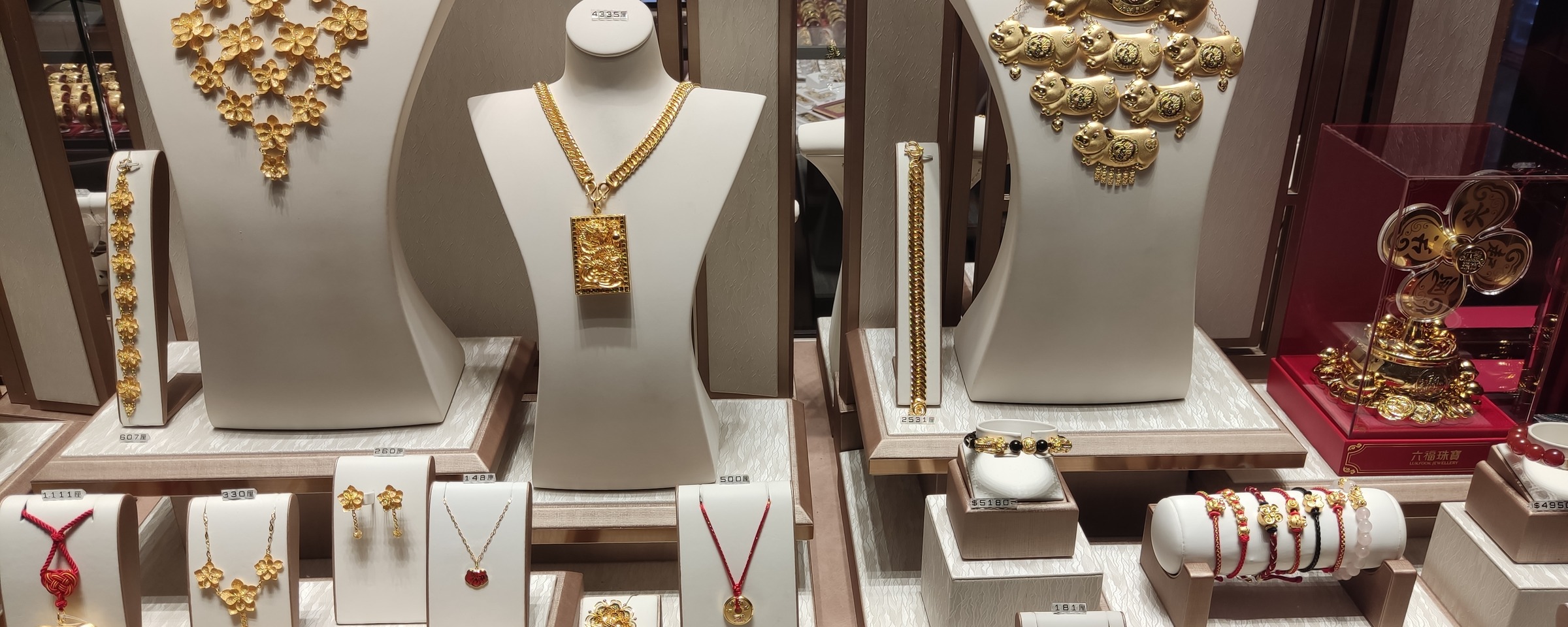
Gold had a rough morning, and the group chats started immediately. If gold is down, shouldn't the chain in the case be cheaper?
Reuters reported that on September 14, 2026, spot gold was down 1.2% at $4,296.68 per troy ounce as of 12:16 GMT, while U.S. gold futures were down 1.7% at $4,335.40. The U.S. dollar sat at more than a one-week high. In the same snapshot, silver was down 2.2% at $63.11, platinum was down 1.3% at $1,772.47, and palladium was down 0.8% at $1,288.67. Traders were pricing roughly an 89% chance of a rate increase at that week's Federal Reserve meeting, up from about 67% before the latest inflation data.
Every one of those numbers is an intraday snapshot from that morning, not a live quote. By the time you read this, the tape has moved.
As a GIA Graduate Gemologist and working jeweler, I want consumers to understand that the gold chart measures raw metal. A finished piece of jewelry also represents design, labor, craftsmanship and risk.
Why Gold Fell That Day
Four pressures showed up at once in the reporting: a stronger dollar, hotter inflation data, higher oil prices, and rising expectations of a Fed rate hike.
Higher interest rates tend to work against gold because gold pays you nothing to hold it. When safer interest-bearing options start paying more, money that was parked in a non-yielding asset has somewhere else to go. A stronger dollar adds a second squeeze, because bullion is priced in dollars, so it becomes more expensive for buyers holding other currencies.
None of that is a crash. For context, Reuters reported in June 2026 that spot gold had touched a record $5,594.82 on January 29, 2026, before pulling back. A 1.2% down day inside that range is a move, not a collapse. I am not predicting where gold goes next, and neither should anyone selling you jewelry.
What "Spot Gold" Actually Means
Spot gold is the wholesale market reference price for raw gold, quoted per troy ounce. One troy ounce is about 31.1035 grams.
That is the whole definition. It is the reference number the trade uses for unfinished metal. It is not the price of a necklace, a ring, a bracelet or a Cuban link, and no retailer anywhere sells finished jewelry at spot.
The Metal Math, Labeled Honestly
Take the reported $4,296.68 snapshot and divide by 31.1035 grams. Pure gold works out to roughly $138.14 per gram at that moment.
Most jewelry is not pure gold. Using nominal purity alone, the contained fine-gold portion comes out to approximately:
| Karat | Nominal fineness | Fine-gold content per gram |
|---|---|---|
| 14K | 585 | about $80.81 |
| 18K | 750 | about $103.61 |
| 24K | 999 | about $138.00 |
Read that table carefully. Those are simplified theoretical metal-content estimates based on nominal purity, calculated before alloy costs, refining losses, fabrication, labor, stones, setting, design, branding, overhead, taxes and profit. They are not retail prices, they are not appraisals, and they are not guaranteed scrap offers.
The spot price tells you what the metal is worth in theory. It tells you nothing about what it costs to turn that metal into something you can wear every day.
Why Finished Jewelry Does Not Reprice Overnight
Retail inventory has a history. The chain sitting in that case was bought by the store weeks or months ago, at whatever the metal cost then. A single soft session does not retroactively lower what the store already paid.
Replacement cost also matters. A jeweler who sells a piece has to buy metal again to make or stock the next one, and no one runs a business on the assumption that the next purchase will be cheaper.
Then there is the making of the thing. Chains and findings carry fabrication premiums, because someone has to draw wire, form links, solder, polish and finish them. Custom work adds CAD time, casting, filing, stone setting, polishing and quality control. Branded jewelry can carry design and marketing premiums on top of all of it. None of that labor gets cheaper because the dollar had a strong morning.
Why a Scrap Buyer Will Not Pay Your Spot Calculation
This is where people feel burned, so let me be direct. When you walk into a cash-for-gold shop, you are not selling refined bullion, you are selling mixed material of uncertain content.
The buyer has to account for assay uncertainty, refining fees, processing and shipping, market risk between the moment they buy and the moment they refine, and their own margin. That is why a scrap offer normally lands well below the theoretical metal-content number, and why melt value is close to the floor of what a piece is worth rather than the ceiling.
If a piece is well made, wearable or collectible, selling it as jewelry almost always beats selling it as metal.
How to Compare Prices Like You Know Better
Stop shopping the headline and start shopping the piece. Before you compare two quotes, get answers to all of this:
- What karat is it, and is that stamped and verifiable?
- What is the actual gram weight?
- Is it hollow or solid? Two chains can look identical and differ enormously in metal content and durability.
- If there are stones, what are they, and what is the quality?
- Who made it, how is it finished, and what happens if a link fails or a stone comes loose?
- Is there a warranty, and will the seller stand behind repairs?
A price only means something once you know what is behind it. Two chains at the same price can be very different purchases, and the cheaper one is not automatically the better deal.
The Bottom Line
Gold's daily move matters. It shapes replacement cost, it moves wholesale quotes, and over long stretches it does show up in retail pricing.
It is still only one part of a jewelry price. The rest is craftsmanship, stones, design, service and the cost of running a real business. Judge the piece, not the ticker.
This article is consumer education, not financial advice. Market figures cited are reported intraday snapshots, not current quotes or price predictions.