Would you wear a Birkin on your wrist?
It sounds like a joke until you sit in a boutique and watch how the conversation actually goes. A client asks about a watch. The watch gets discussed for about ninety seconds. Then the real question arrives, usually phrased politely: does buying this help me get a bag?
That question is the shadow Hermès watchmaking cannot seem to step out of. And it is a shame, because the watches themselves have gotten genuinely good.
The business is real, and it is growing fast
Hermès is not dabbling. According to Wall Street Journal reporting, the company's watch division nearly tripled in size between 2019 and 2025, and sold more than 500 million euros in watches in 2025. That is not a vanity line kept alive for brand image. That is a watch company living inside a leather goods house.
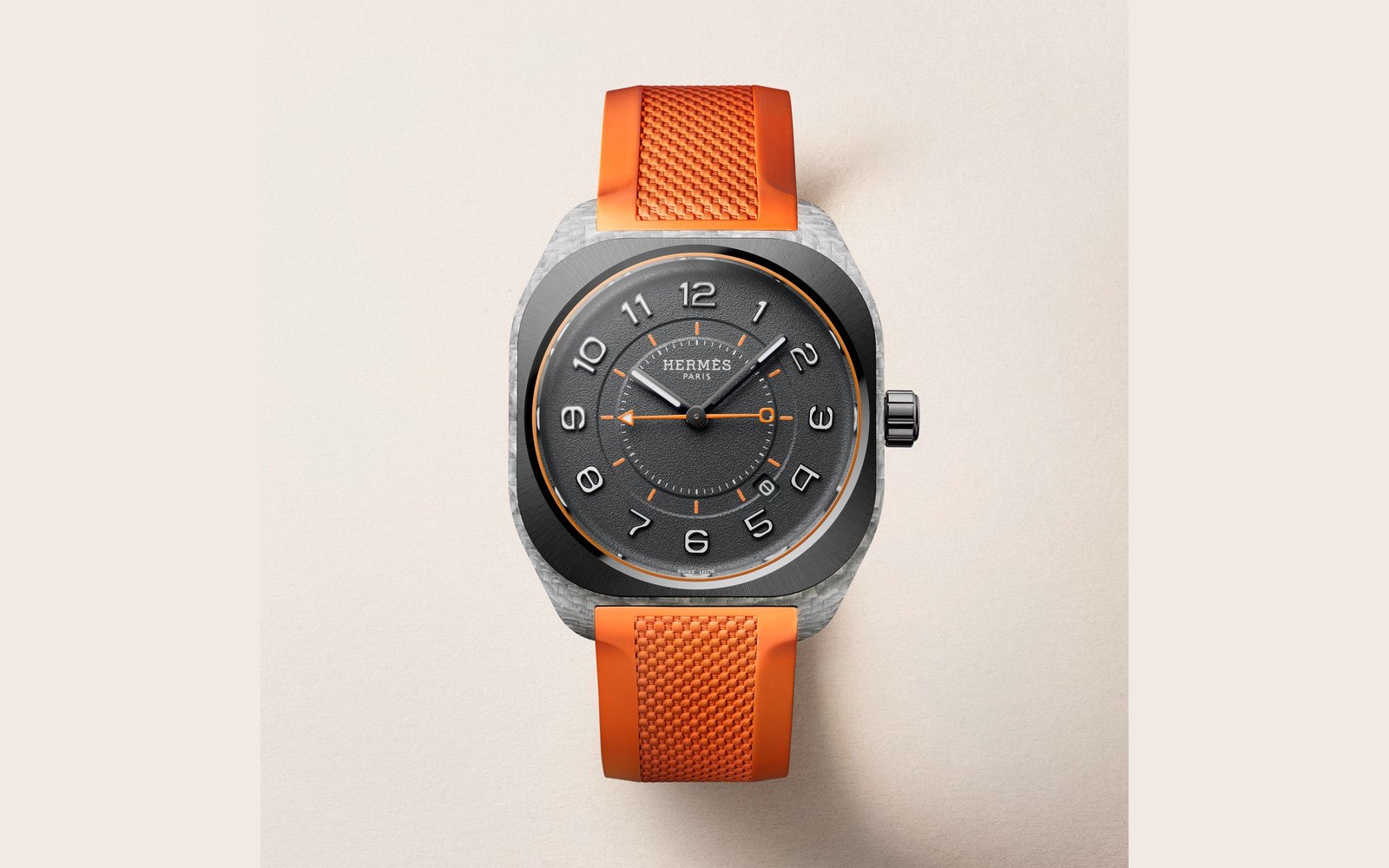
The products back it up. Hermès works with Swiss movement and case suppliers, uses mechanical calibers, and has built a design language that does not borrow from anyone. The H08 leans into cushion cases and composite materials. The Cut is a genuinely modern round case with an offset crown. The Arceau family carries the asymmetric lugs the brand has used since 1978. Le Temps Suspendu still does the thing almost no other brand attempts: a complication whose entire purpose is to hide the time until you ask for it.
From a working perspective, that matters. When I inspect a case back, a bracelet end link, or a bezel edge, I am looking for the same things regardless of the name on the dial: finish transitions, tolerance at the joints, whether the surfaces were actually decorated or just polished until they reflected. Hermès holds up. These are not badge engineered watches.
So why does the resale number look like that?
Here is the part that stops the room.
Reported secondary market averages tell a rough story. On The RealReal, mint condition Hermès watches have resold for an average of about 41 percent of original sticker price so far in 2026. Mint Cartier has averaged roughly two thirds of retail. Pristine Rolex has averaged around full retail, with scarce references sometimes trading well above it.
Read those as reported averages across many transactions, not guarantees. Any individual sale depends on reference, condition, completeness, timing and who is buying that week. Averages are not appraisals.
But a gap that wide is not noise. It is a signal about who was buying and why.
The Birkin bait problem
Hermès does not sell a Birkin or a Kelly to whoever walks in. Allocation is relationship driven. Buyers who want one often build what the trade openly calls a client profile, purchasing across other categories first: scarves, homeware, shoes, jewelry, and yes, watches.
A watch is an attractive way to do that. It is a single high ticket item, it is easy to justify, and it feels like a real luxury purchase rather than a stack of receipts.
The problem is what happens next. A buyer who purchased a watch primarily to build standing did not fall in love with the watch. When the bag arrives, or when it does not, that watch goes to the secondary market. Multiply that behavior across thousands of clients and you get steady resale supply of nearly unworn watches from owners with no attachment to them. Supply like that pushes prices down. The discount then becomes the reputation, and the reputation discourages the next buyer, which keeps the cycle running.
None of that says the watch is bad. It says the watch was bought for the wrong reason, at scale.
What this means if you actually want one
I tell clients the same thing here that I tell them about diamonds: separate what you love from what you expect to recover.
If you love an Hermès watch, the current market is your friend. A soft resale average means you can often buy a recent, barely worn piece for well under retail. That is the correct move for a wearer. You are being handed a discount because other people treated the watch as a receipt.
If you are buying primarily as a store of value, understand that you are entering a category where reported averages currently sit far below retail, and that the pressure comes from the brand's own allocation culture rather than from any flaw in the product.
And if you are buying only to unlock a handbag, be honest about the math. You are paying a premium for access, then likely selling the access token at a loss. That is a fee, not an investment.
The bench jeweler's footnote
There is one more practical piece people skip. Watches that spend their lives in a safe, worn twice, still need service eventually. Gaskets dry out. Lubricants age. A mechanical movement that sits unworn for years is not preserved, it is stalled. If you buy an Hermès watch because you love it, wear it. If you buy one and store it, budget for service anyway.
Care is the same across the category. Keep it dry unless the case is rated for water and the crown is fully seated. Clean the strap area where skin oils collect. Never put a leather strap through an ultrasonic machine. Do not let anyone open a case back without the right tools.
Back to the question
Hermès has earned the right to be judged as a watchmaker. The movements are real, the designs are original, and the growth is not imaginary. What it has not yet escaped is a buying culture that treats its watches as currency for something else.
So, would you wear a Birkin on your wrist because you love the watch, or only because you want the bag?