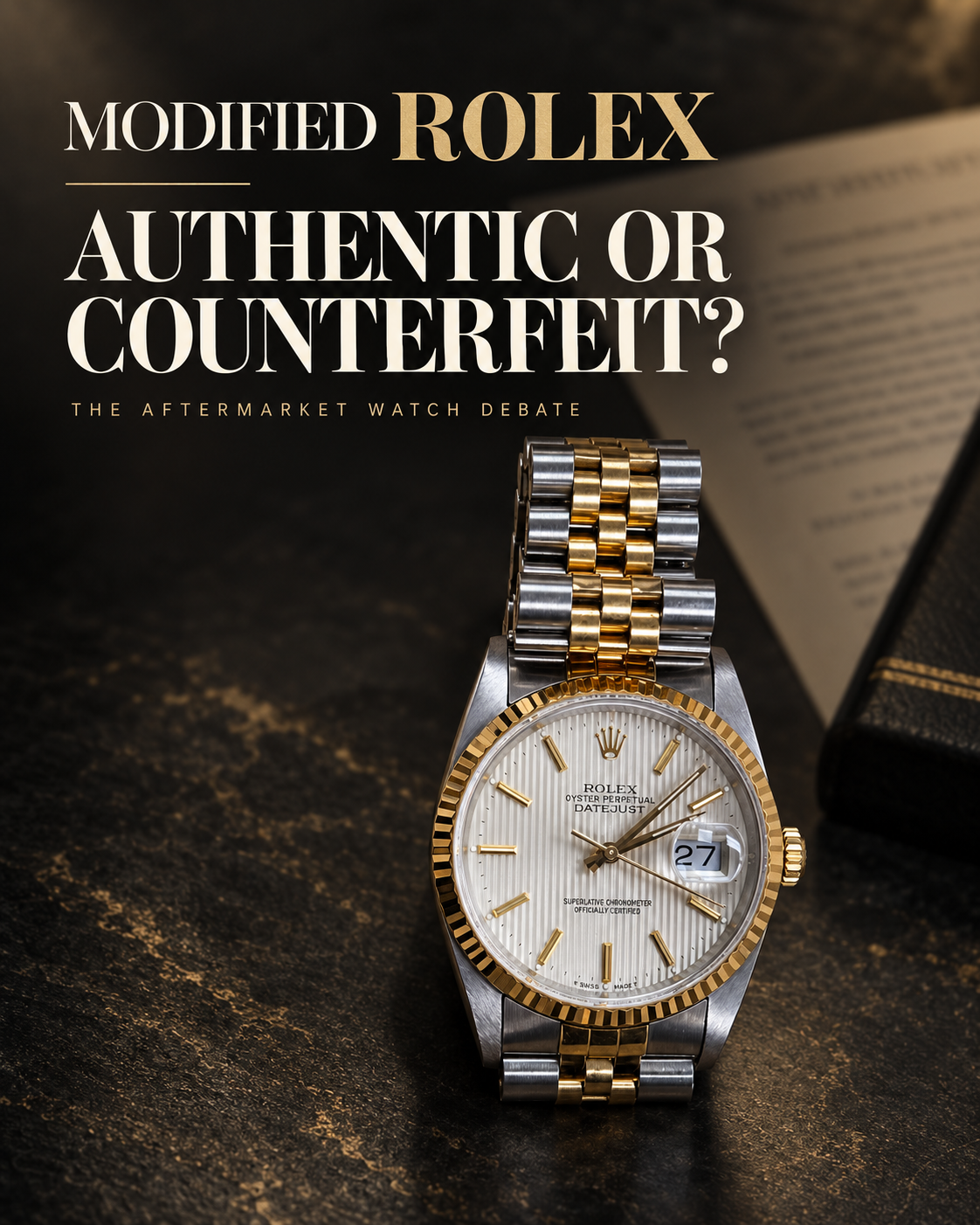
Rolex’s lawsuit against Canadian jeweler Bijoux Medusa raises new questions about when a customized luxury watch can still be marketed as an authentic Rolex.
Rolex has taken a Canadian jeweler to court over customized watches, but the case is more complicated than the viral question, “Are iced-out Rolexes now illegal?”
The short answer is no.
Rolex is not claiming that every diamond-set Rolex is illegal, and no court has ruled that a person cannot customize a watch they own. Instead, the luxury watchmaker’s lawsuit against Quebec-based Bijoux Medusa and its owner, Julien Duguay, examines a more difficult question: At what point does a genuine Rolex become so materially altered that selling the finished product simply as an “authentic Rolex” becomes misleading?
That distinction matters to jewelers, watch customizers, collectors and consumers, especially in the aftermarket world, where the movement, case, dial, bezel and bracelet may not all come from the same manufacturer.
What Rolex Is Alleging
According to Canadian news reports, Rolex filed a trademark lawsuit against Bijoux Medusa and Duguay in Canada’s Federal Court. The claim was reportedly filed on April 14, 2026, although the case did not receive widespread media attention until August.
Rolex is seeking more than CAD $50,000 in damages and alleges that Bijoux Medusa marketed and sold modified watches and watch components bearing Rolex trademarks without authorization.
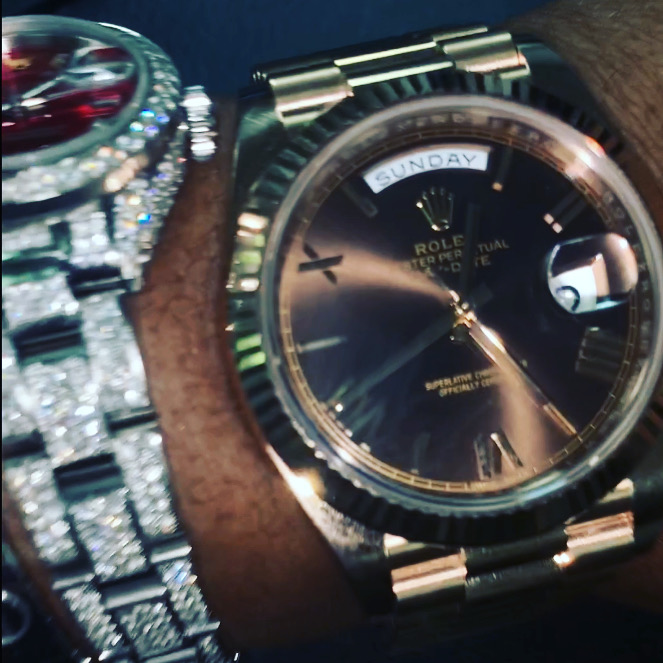
The dispute reportedly involves customized or embellished watches that may have received diamonds, colored gemstones, aftermarket bezels, replacement bracelets, customized cases or altered dials.
But Rolex’s allegations go beyond the addition of diamonds.
According to reporting based on the court documents, Rolex claims that several secondhand items promoted as authentic contained allegedly counterfeit dials or other counterfeit components. Rolex further argues that the way the watches were advertised could lead buyers to believe that the modified timepieces were manufactured, approved or officially certified by Rolex.
These remain allegations. The case is ongoing, and Rolex has not yet proven its claims in court.
A Genuine Watch Can Contain Aftermarket Parts
The word “authentic” becomes complicated when discussing a customized luxury watch.
A watch may begin as a genuine Rolex but later receive parts that were neither manufactured nor installed by Rolex. A jeweler might add diamonds to an original bezel, replace the bezel completely, refinish the dial, install an aftermarket bracelet or rebuild the watch using a mixture of factory and non-factory components.
Those scenarios are not all equivalent.
Adding diamonds to an original Rolex component is different from removing that component and replacing it with an aftermarket version. Replacing a dial with an unbranded custom dial is also different from installing an aftermarket dial bearing a newly reproduced Rolex name and crown.
That final distinction is especially important. A replacement dial can be made for a genuine Rolex movement without being a genuine Rolex dial. If someone other than Rolex manufactures that dial and reproduces Rolex’s trademarks on it, the component itself may be considered counterfeit, even if parts of the underlying watch are authentic.
This is why the question cannot be reduced to whether the watch “started as a real Rolex.”
The origin of every major component, the extent of the alteration and the representations made to the buyer can all matter. The same care applies to how a customized watch is worn and maintained, which is why we covered whether a bussdown watch can safely get wet.
The Problem With “Certified Pre-Owned”
Bijoux Medusa’s website markets both unmodified and customized Rolex watches. Its Rolex collection has described the inventory as authentic and used language translated as “Certified Pre-Owned” or “Certified Used.”
That wording may become one of the most significant parts of the case.
Rolex operates an official Certified Pre-Owned program through participating authorized retailers. Watches sold through Rolex’s program are authenticated under the company’s standards and receive an official Rolex guarantee.
Bijoux Medusa is not identified as an authorized Rolex retailer or an official participant in Rolex’s Certified Pre-Owned program.
Bijoux Medusa reportedly argues that “Certified Pre-Owned” is a general descriptive term that Rolex does not exclusively own. Nevertheless, placing that language near Rolex-branded products could potentially cause a consumer to believe that Rolex, not an independent seller, performed or approved the certification.
Some Bijoux Medusa product descriptions reportedly disclosed that the watches were customized by Medusa, were not covered by the manufacturer’s warranty and instead came with a 24-month warranty from the jeweler.
Those disclosures could support the jeweler’s defense. However, the court may still have to consider whether the disclosures were prominent and specific enough to counter other phrases, including “100% authentic,” “Certified Pre-Owned” and claims that the watches were restored according to “Rolex quality standards.”
Bijoux Medusa Denies Selling Counterfeits
Bijoux Medusa has called the lawsuit unfounded and maintains that all Rolex watches it sells are authentic.
The company says customizing genuine watches is a legitimate commercial practice and denies participating in the sale or use of counterfeit products. It also states that only a small percentage of its watch inventory consists of customized or embellished pieces.
The jeweler has accused Rolex of attempting to control the secondary market for genuine watches. It has also suggested that the legal action is connected to Bijoux Medusa’s planned expansion in Montreal near existing authorized Rolex retailers.
That is Bijoux Medusa’s characterization of Rolex’s motive and has not been established as fact.
Duguay reportedly filed a statement of defense in August. The company points to its disclosures identifying Medusa as the customizer and explaining that it is not an official Rolex retailer.
Customizing Your Own Watch Is Not the Same as Reselling One
The viral coverage surrounding this lawsuit risks combining two very different activities.
The first is a customer bringing a personally owned Rolex to an independent jeweler and requesting a customized design. The customer already knows Rolex did not create the modification because that customer directly commissioned the work.
The second is a dealer acquiring watches, modifying them, holding them as inventory and reselling them to the public under the Rolex name.
The second scenario creates a greater possibility of confusion, not only for the original buyer but for every future buyer who may encounter that watch without its original listing, invoice or verbal explanation.
A receipt describing aftermarket components may be separated from the watch. A disclaimer displayed at the bottom of a product page will not necessarily accompany it into the next resale. Years later, someone could inspect the Rolex trademarks on the dial, clasp or case and assume the entire piece was factory-produced.
That is one reason permanent identification such as “Customized by” markings can become important in disputes involving materially altered luxury goods.
A Similar Rolex Case in the United States
Rolex has previously pursued American businesses that sold modified watches containing combinations of Rolex and non-Rolex components.
In Rolex Watch USA v. BeckerTime, a federal appeals court upheld a finding of trademark infringement involving watches advertised as genuine Rolexes even though they contained aftermarket bezels, bracelets, dials and added diamonds.
The court found that the watches were materially different from products sold by Rolex and that existing disclosures did not eliminate consumer confusion.
However, the ruling did not establish that every form of customization is prohibited. The court distinguished between adding diamonds to a dial and refinishing a dial through a process that removes and reapplies Rolex trademarks. It also allowed certain customer-requested customization when accompanied by specific disclosures and permanent identification of the customizer.
That American decision does not automatically decide the Canadian Bijoux Medusa case. It does demonstrate why the exact modification and the language used to sell the finished watch matter.
Factory-Set, Customized and Aftermarket Are Not Interchangeable
Consumers frequently use “iced out,” “bust down,” “custom,” “aftermarket” and “factory-set” as if they mean the same thing. They do not.
A factory-set Rolex is produced and gem-set under Rolex’s authority. A customized Rolex began as a Rolex but was subsequently altered by someone else. An aftermarket component is made by a third party and is not a factory Rolex component.
The same clarity problem shows up with stones, which is why we broke down lab grown versus natural diamonds and why all diamonds are not created equal.
An honest description of a customized watch should clearly identify:
- Which components are original Rolex parts
- Which original parts have been permanently modified
- Which components have been replaced
- Whether any replacement components display Rolex trademarks
- Whether the diamonds or gemstones were set by Rolex or an independent jeweler
- Whether Rolex’s original warranty remains valid
- Who will service and guarantee the completed watch
- Whether the watch is connected to Rolex’s official Certified Pre-Owned program
Calling the entire finished watch “100% authentic” without explaining those distinctions may give a buyer an incomplete impression.
The Question This Case Could Answer
Rolex’s lawsuit is not merely a fight over diamonds.
It is a fight over who gets to define the identity of a materially altered product, and how much of the original product can be replaced before the original manufacturer’s name becomes misleading.
Bijoux Medusa’s defense raises an equally important ownership question: After someone purchases a genuine luxury watch, how much control should the manufacturer retain over what the owner or an independent craftsperson does with it?
Both issues can exist at the same time. A consumer can have the right to alter personal property while a manufacturer retains the right to challenge the commercial use of its trademarks.
For the jewelry and watch industries, the safest lesson is not that customization must stop. It is that disclosure must become more precise.
A customized Rolex can begin with an authentic foundation while still containing non-Rolex components. The responsibility of the seller is to explain that difference clearly, before a buyer mistakes aftermarket craftsmanship for factory production.
Editor’s Note
This article discusses allegations contained in an unresolved civil lawsuit. Rolex’s allegations have not been proven in court, and Bijoux Medusa and Julien Duguay deny wrongdoing. This article is for editorial and educational purposes and does not provide legal advice.
Sources and Further Reading
- Journal de Québec: Julien Duguay et Bijoux Medusa accusés par Rolex de vendre des montres contrefaites
- Times of India: Rolex sues Canadian jewellery store Bijoux Medusa over customized watches
- Everest Bands: Rolex’s Fight Against Custom Watches Reaches Canada
- Bijoux Medusa: Rolex Watches Collection
- Rolex: Official Guarantee Limitations
- FindLaw: Rolex Watch USA, Inc. v. BeckerTime, 2024 appellate decision