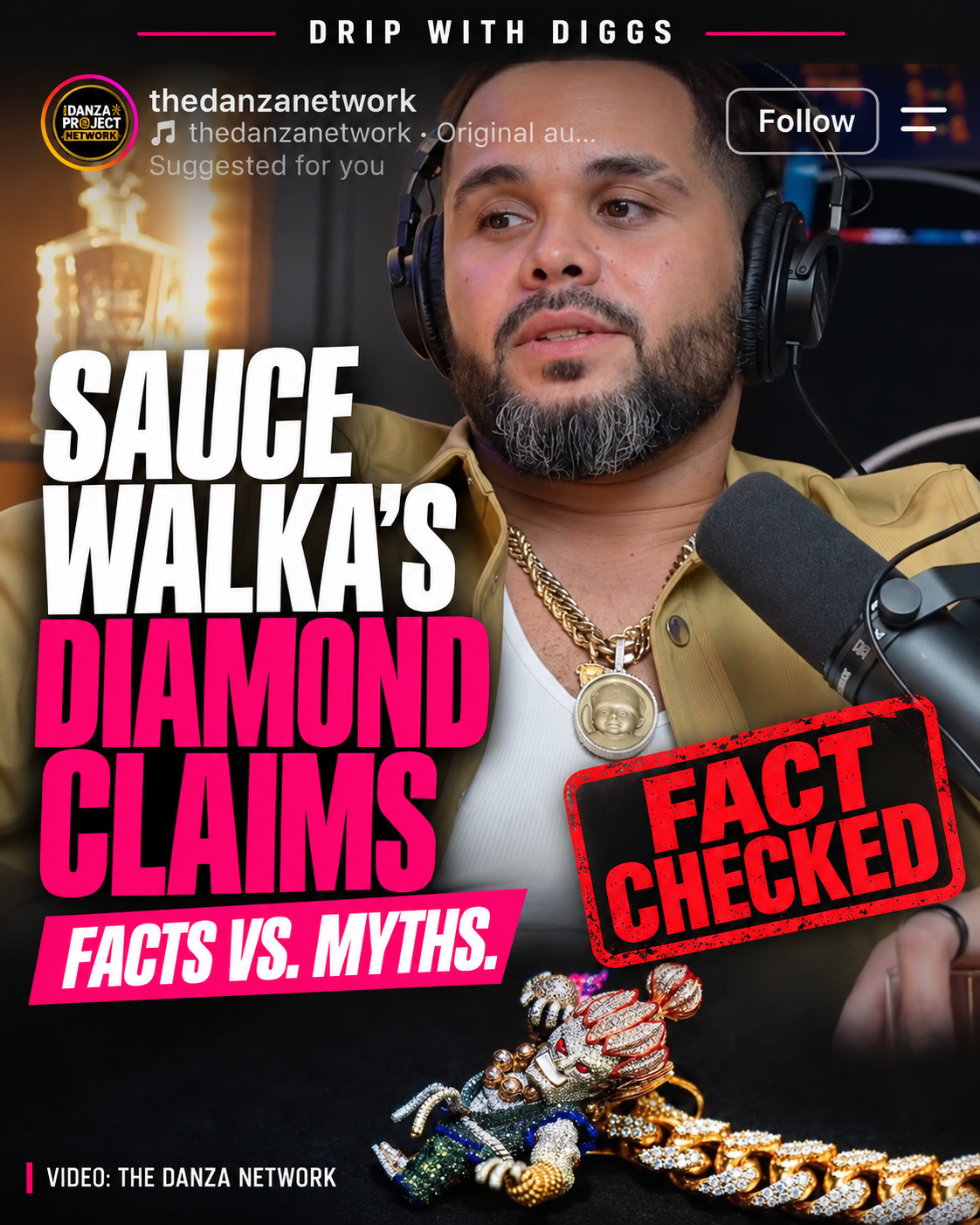
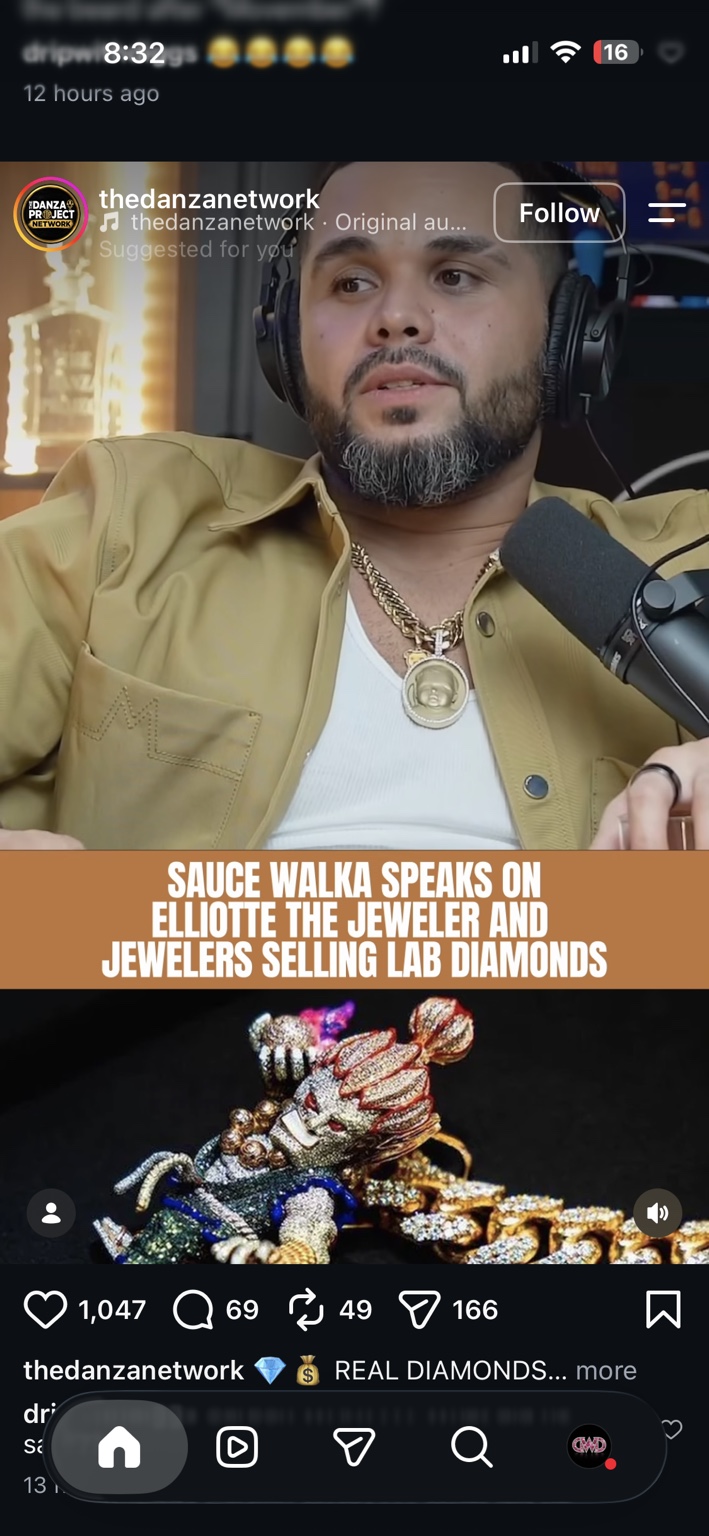
A clip of Sauce Walka has been circulating with a headline about the Houston rapper discussing Eliantte, jewelers and lab diamonds. In the interview with The Danza Network, he makes several confident statements about what a diamond is and how stones are tested. Because shoppers hear claims like these at jewelry counters and in comment sections, Drip With Diggs checked them against guidance from the Gemological Institute of America (GIA) and the Federal Trade Commission (FTC).
The clip is the subject of this fact check. It shows what was said; it is not evidence that the speaker holds gemological credentials.
Watch the Clip
What Sauce Walka Said
The following are statements from the clip, not Drip With Diggs findings.
- He says it is ignorant to claim a "carbon vaccinated diamond" is not a diamond.
- He says "CVD" stands for "carbon vaccinated diamond."
- He describes CVD as a diamond chemically created in a vacuum, and later calls it a "50% diamond" and a "microwave diamond."
- He says there is "virtually no way to test" these diamonds except for one test.
- He says moissanite and cubic zirconia are not diamonds, and that those stones could never affect the diamond market.
- He says he prefers natural stones and that he does not hate lab-grown diamonds.
Fact Check: CVD Does Not Mean Carbon Vaccinated
GIA defines CVD as chemical vapor deposition. In that process, carbon-containing gas is energized inside a vacuum chamber, and carbon deposits layer by layer onto a diamond seed. The process is real science. "Carbon vaccinated diamond" is simply not its name.
"Microwave diamond" is not a gemological category either. Some CVD reactors use microwaves to activate the plasma that drives growth, but that equipment detail does not rename the diamond that comes out of it.
Fact Check: A Lab-Grown Diamond Is Not a 50% Diamond
GIA says laboratory-grown diamonds have essentially the same chemical composition, crystal structure, and optical and physical properties as natural diamonds. A lab-grown diamond is a diamond created through a technological process. It is not half a diamond, and it is not an imitation.
The meaningful distinction is origin: laboratory-grown versus natural, mined from the earth. That is why GIA issues a separate Laboratory-Grown Diamond Report. Natural and lab-grown diamonds can differ in market price, supply history and consumer preference, but price does not decide whether a stone is a diamond.
Fact Check: "Virtually No Way to Test" Is False
GIA is clear that looking at a stone is not enough to tell natural from laboratory-grown. That does not mean origin cannot be determined. According to GIA's guidance on identifying laboratory-grown diamonds, trained laboratories separate them through specialized screening and advanced testing. GIA's own tools include the iD100 screening device, and its laboratory methods include spectroscopy, ultraviolet luminescence imaging and examination of growth features that differ between natural and grown crystals.
Not every jeweler can identify origin by eye, and no one should claim to. The accurate advice for buyers is to ask for a grading report from a recognized laboratory, check for a laser inscription where applicable, and request independent testing when origin matters to the purchase. GIA's overview of simulants, moissanite and lab-grown diamonds explains the differences.
Fact Check: Moissanite and CZ Are Simulants, Not Diamonds
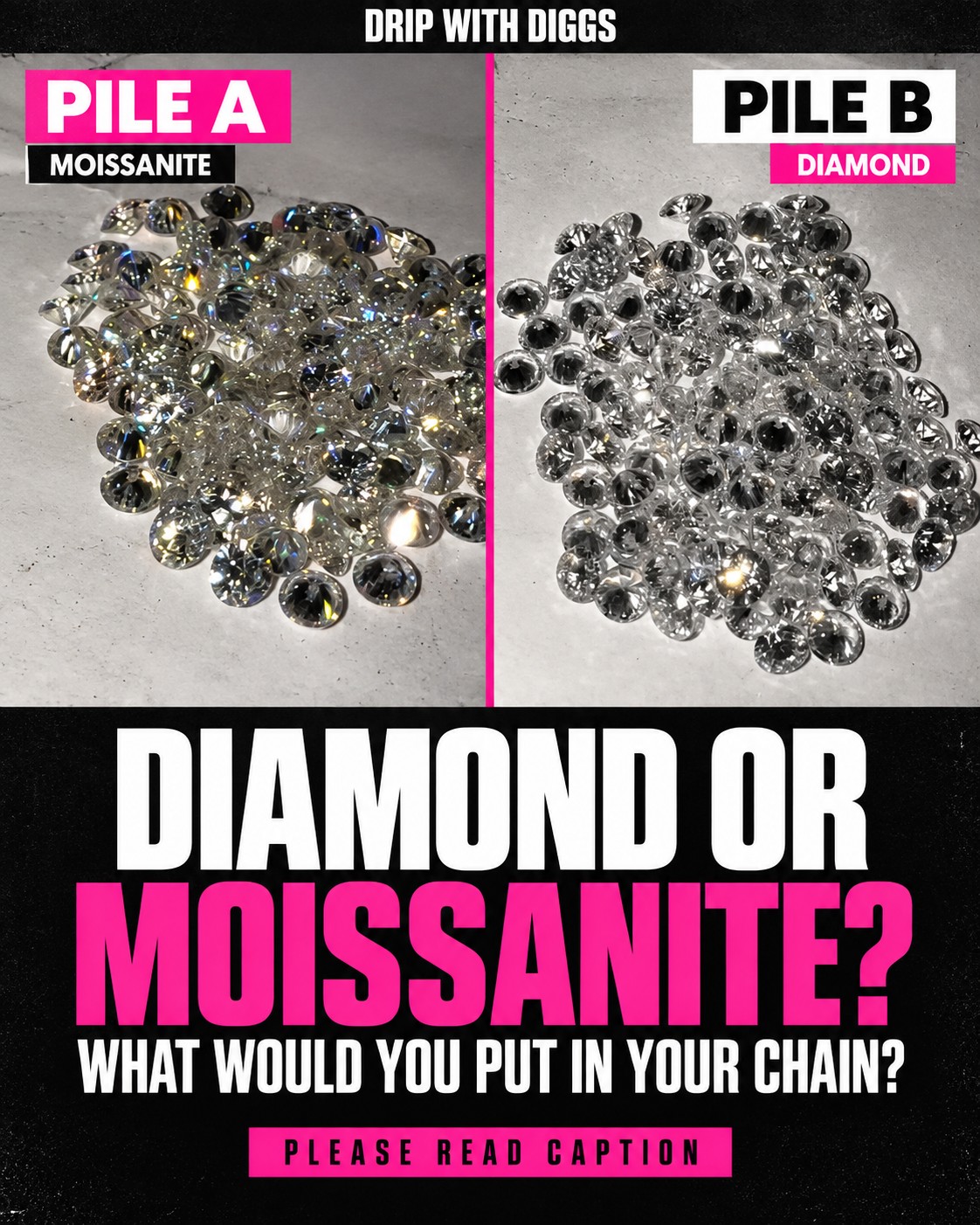
On this point, Sauce Walka is right. Moissanite and cubic zirconia are not diamond. They are simulants, materials that imitate the look of diamond but are chemically and physically different.
The FTC's guidance for jewelry advertising says sellers must clearly disclose when a product is simulated or imitation, and must not describe simulants as mined or laboratory-created diamonds.
His claim that simulants "could never affect the diamond market" is a different kind of statement. It is a market prediction, not a scientific fact. The economic effect of any substitute depends on consumer behavior, pricing, disclosure and demand, and no single statement settles it either way.
The Jewelry Lesson
The question here is not whether anyone should choose natural or lab-grown. Both are legitimate choices when they are accurately represented. The issue is correct terminology, honest disclosure and proper testing.
Consumers should not treat a celebrity, a designer, a salesperson or a social-media clip as a substitute for gemological evidence. The clip identifies Sauce Walka as the speaker, but it does not establish a gemological credential. Claims of expertise, from anyone, are worth checking independently.
Community Note
The clip uses "carbon vaccinated diamond" for CVD, but GIA identifies CVD as chemical vapor deposition. GIA says laboratory-grown diamonds have essentially the same chemical composition, crystal structure, optical properties and physical properties as natural diamonds. They are distinguished by origin, not by being "50% diamond." Moissanite and cubic zirconia are different diamond simulants. FTC guidance requires clear disclosure when a stone is simulated or laboratory-created and not mined. Sources: GIA, "Simulants, Moissanite and Lab-Grown Diamonds"; GIA FAQ, "How do I identify laboratory-grown diamonds?"; FTC, "In the Loupe: Advertising Diamond, Gemstones and Pearls".
Bottom Line
- CVD means chemical vapor deposition.
- Laboratory-grown diamonds are diamonds, not 50% diamonds.
- Moissanite and CZ are diamond simulants, not diamonds.
- Lab-grown versus natural origin can be determined through proper screening and advanced testing.
- Correct disclosure matters more than internet arguments.
Do not take anyone's word for it. Read the laboratory and regulator guidance, ask questions, and do your own research.