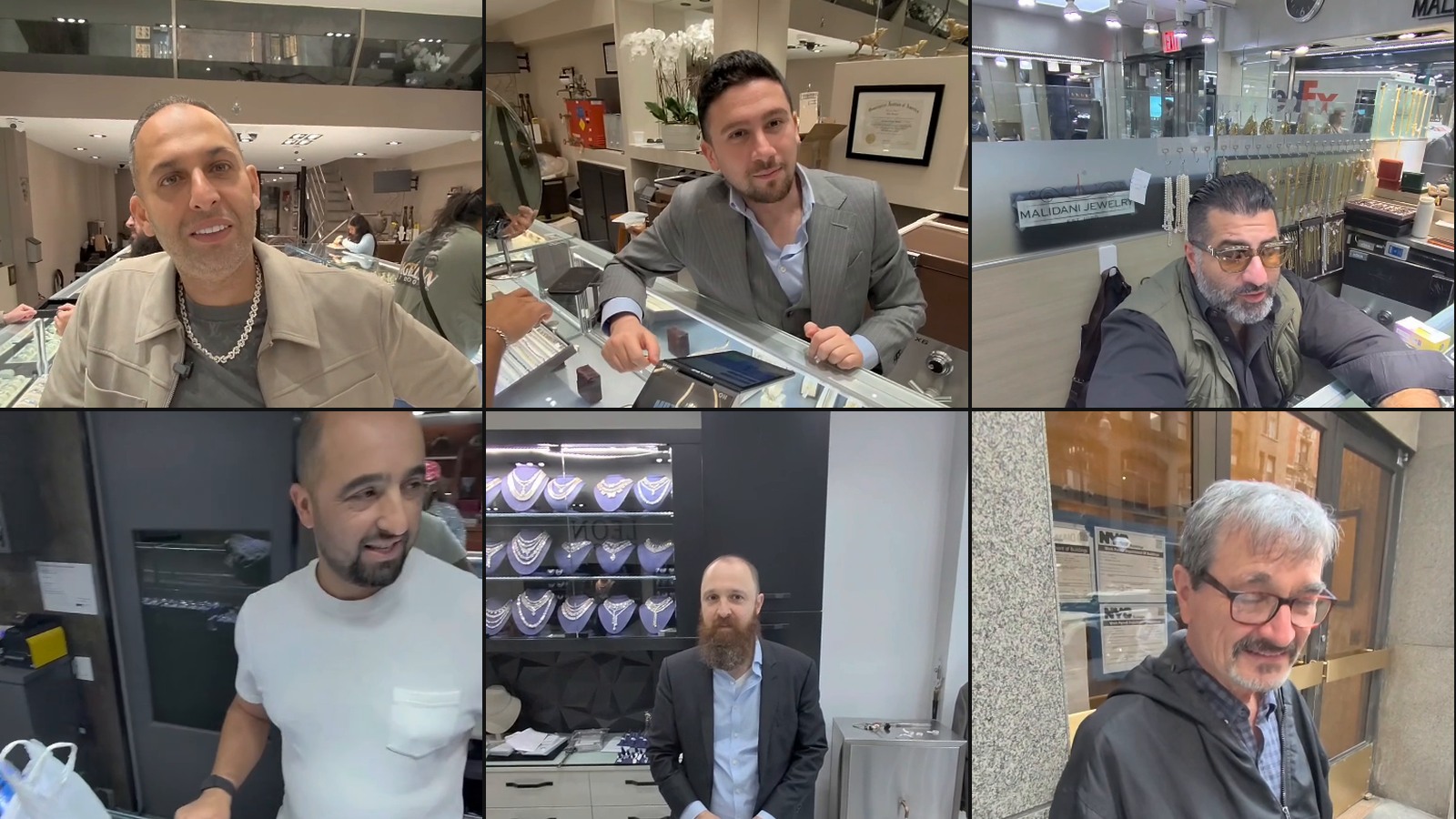
I prefer natural diamonds. Their geological history and individuality mean something to me as a jeweler. But that preference comes with a responsibility: customers deserve accurate information about both natural and laboratory-grown diamonds before deciding how to spend their money.
After our fact-check of Alex Moss’s comments about lab-grown diamonds, I took a question to the people who work with diamonds in New York City’s Diamond District: Could they confidently identify natural or laboratory-grown diamonds on someone standing across a room?
Six professionals answered, including jewelers with decades in the trade and a diamond setter who began working in 1978. Some spoke about the stones themselves; others described the wearer, the purchase or the supplier. Several acknowledged uncertainty.
What prompted the question
In a Complex Style interview clip, celebrity jewelry designer Alex Moss said he was surprised people could not distinguish lab-grown from natural diamonds and described some jewelry as looking “like a bunch of plastic.”
I asked the same question on 47th Street, where diamonds move between dealers, jewelers and setters every day.
Benny the Dealer: more than 20 years of perspective
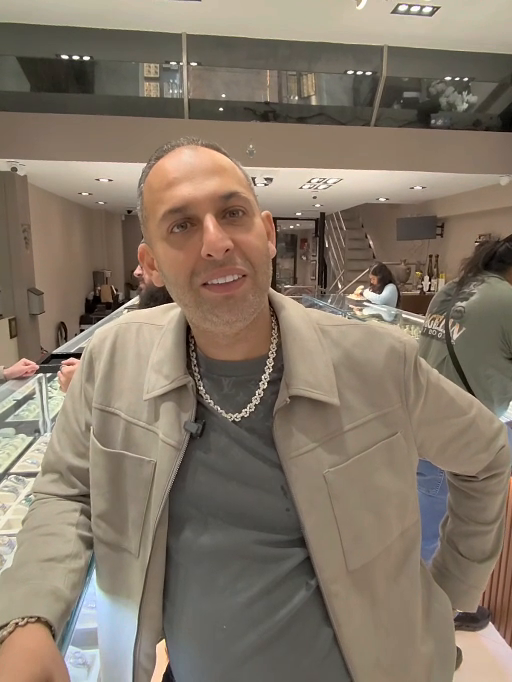
Original interview footage by Miss Diggs / Drip With Diggs.
Benny the Dealer of Mazalito said he has worked in the industry for more than 20 years and identified himself as a gemologist.
“There are times I can tell, and there are times I cannot tell,” he said.
Benny said a jeweler might calculate what a piece would cost in natural diamonds, then consider whether its wearer would spend that amount. He also described using the person’s appearance and the style of the jewelry to make an assessment, while saying he did not think anyone could identify every piece with certainty.
He spoke about seeing a different “life” in natural diamonds. In his view, large lab-grown stones can look like a “dead stone” once dirty, an effect he said would not happen to natural diamonds.
Find Benny: @bennythedealernyc Business: Mazalito Jewelry, @mazalito47th, 76 West 47th Street.
Avraham: a gemologist’s approach
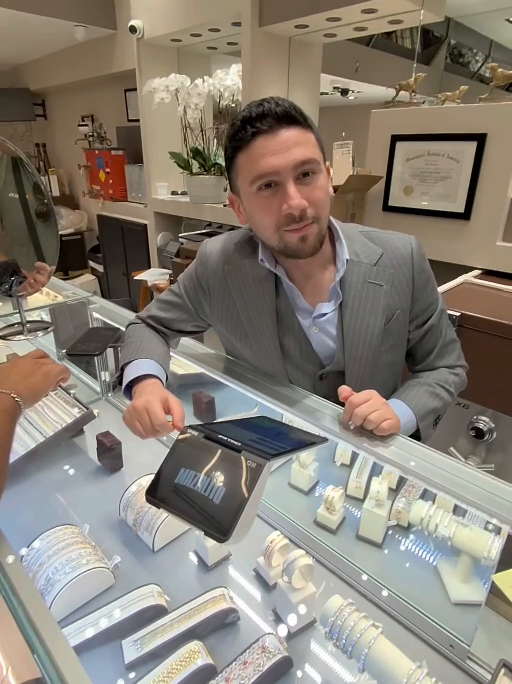
Original interview footage by Miss Diggs / Drip With Diggs.
Avraham of Mazalito introduced himself as a GIA Graduate Gemologist with 15 years in the industry.
Asked whether he could confidently identify diamond origin across a room, he answered no. He described making an educated guess from the size of a stone and what he believed about the buyer’s finances. His example was a young woman wearing a five-carat diamond whose partner did not appear to have the income he associated with that purchase.
But an inherited natural diamond would not surprise him either. The ring, he said, could have come from a grandmother.
“Lab-grown diamonds and earth-mined diamonds have the exact same chemical composition,” he said. He encouraged customers to research the subject and spoke about the distinction between selling jewelry and studying gemology.
Find Avraham: @avraham_ny Business: Mazalito Jewelry, @mazalito47th, 76 West 47th Street.
Dave: 25 years of experience, with a follow-up
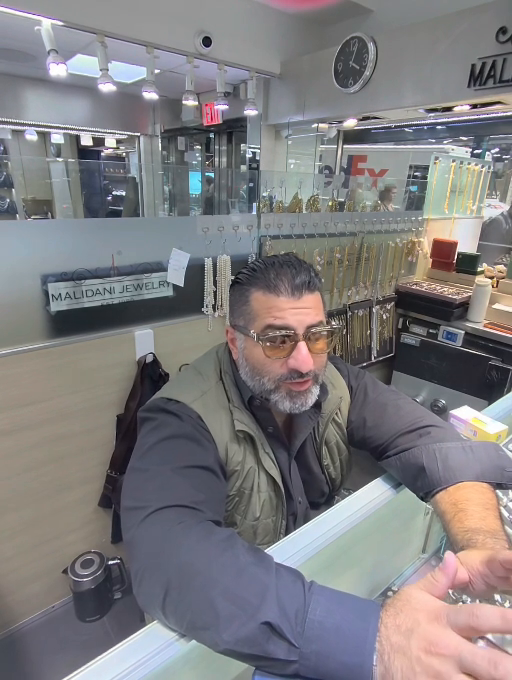
Original interview footage by Miss Diggs / Drip With Diggs.
Dave of Malidani Jewelry said he has spent 25 years in the industry. His initial answer to the across-the-room question was no.
“Can’t tell the difference,” he said.
When asked about someone claiming to tell the difference across a room, Dave replied, “They’re lying.”
He then amended his answer in a second recording. Dave said he would presume a diamond was lab-grown if its size seemed inconsistent with the wearer’s income, using a person earning $50,000 a year and wearing a 10-carat diamond as his example. He also said he could distinguish stones when comparing them side by side.
Business: Malidani Jewelry, @malidanijewelry Website: malidanijewelry.com.
Raphael: a candid answer from Simon Diamond
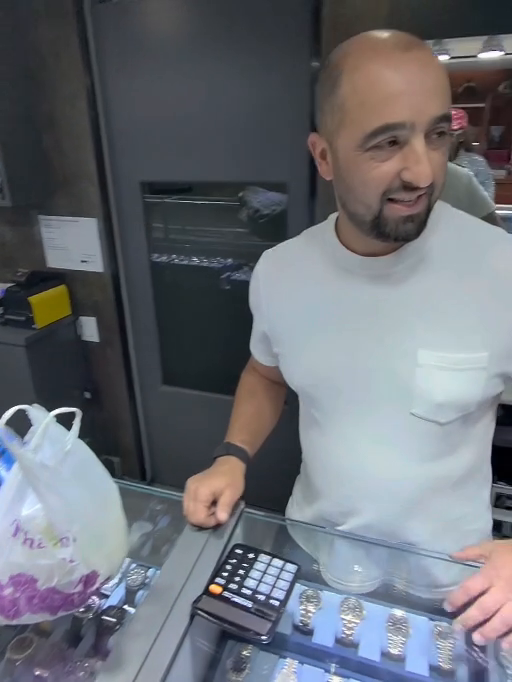
Original interview footage by Miss Diggs / Drip With Diggs.
Raphael of Simon Diamond said he began working in jewelry around age 16. Asked whether he could visually distinguish natural from lab-grown diamonds across a room, he answered, “Not 100%.”
He added: “I can’t even tell if it’s real if you’re right in front of me sometimes.”
Business: Simon Diamond, @simondiamondnyc, 45 West 47th Street. Website: simondiamondinc.com.
Mike Nekta: generations of knowledge at Leon Diamond
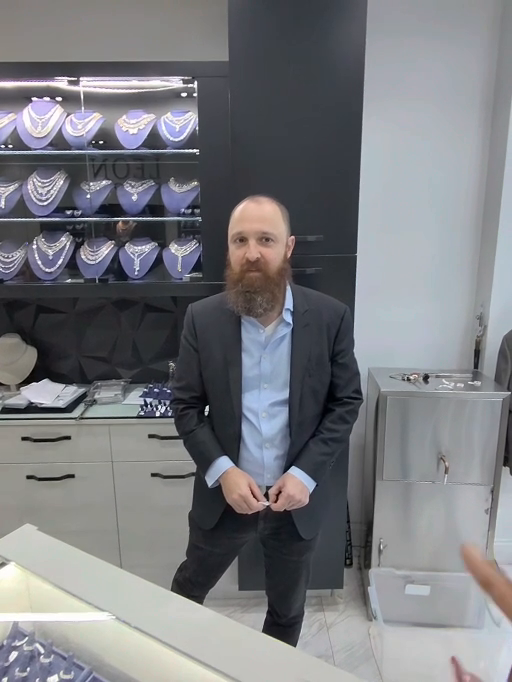
Original interview footage by Miss Diggs / Drip With Diggs.
Mike Nekta of Leon Diamond estimated his personal experience at about 25 years. Leon Diamond’s official biography identifies him as a third-generation jeweler, store co-owner and GIA Diamond Graduate.
Mike said his assessment could come from the wearer’s watch, shoes, car or his personal knowledge of that customer. An eight-carat colorless emerald-cut diamond, he explained, might prompt questions if the person’s other purchases did not seem consistent with it. A smaller stone or one with some color could lead him to a different impression.
“Just by looking at it, no,” he said.
He also described assessing celebrity jewelry through his knowledge of the maker. Even when a celebrity could afford an exceptionally expensive piece, Mike said he might suspect lab-grown diamonds if he did not believe the jeweler had the industry connections to assemble it in natural stones.
Find Mike: @mike_nekta Business: Leon Diamond, whose official site lists 74 West 47th Street.
A diamond setter working since 1978

Original interview footage by Miss Diggs / Drip With Diggs.
The veteran diamond setter interviewed outside a Diamond District building said he began setting diamonds in 1978. Miss Diggs identifies his workspace as being in the Marco Polishing suite; he did not give his personal name in the interview.
His answer was direct: “Can’t tell like that.”
“They look the same,” he said, before explaining that a machine can distinguish them.
Location: Marco Polishing suite, 71 West 47th Street, Suite 608. The suite is listed in a jewelry vendor resource guide. No social account was supplied for this interviewee.
What establishes a diamond’s origin
A wearer’s clothes, age, income or other purchases do not establish whether a diamond is natural or laboratory-grown. A ring may be inherited, gifted or purchased under circumstances an observer knows nothing about. Familiarity with a customer or supplier can inform a jeweler’s impression; confirmation of the stone’s origin is a separate question.
That distinction matters when a public statement suggests people should be able to tell the difference simply by looking. Customers do not need to master gem identification before buying jewelry. They need accurate disclosure and a reliable way to confirm what they are purchasing.
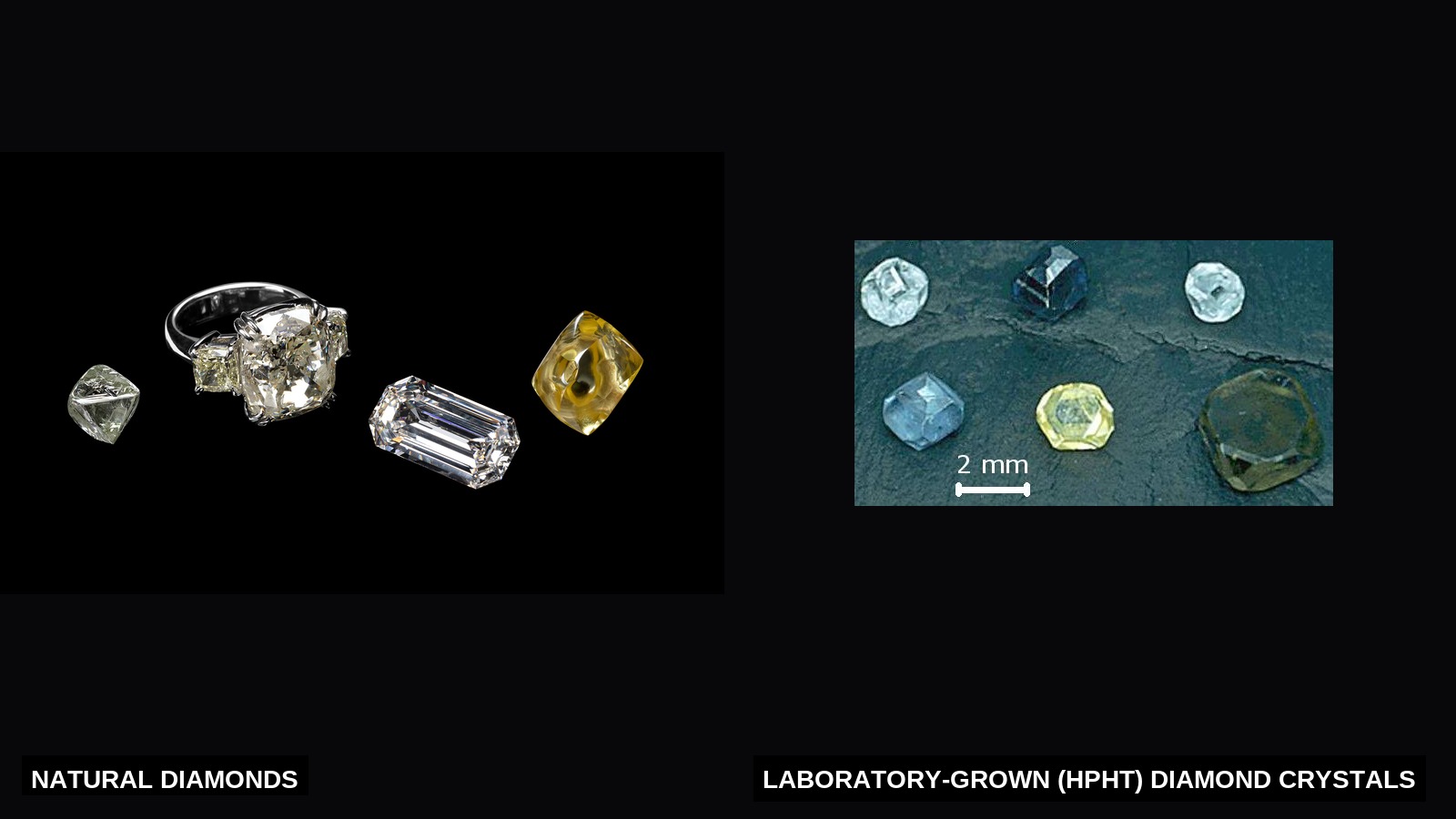
GIA explains that natural and laboratory-grown diamonds are essentially chemically and optically the same. Traditional gemological observations and instruments cannot reliably separate them; confirmation calls for examination and appropriate advanced testing.
IGI’s consumer guidance adds an important qualification: experienced professionals can recognize certain laboratory-grown diamonds under a loupe or microscope, including through some growth-related inclusions. IGI also screens stones with specialized technology to establish natural, laboratory-grown or simulant origin. Recognizing a diagnostic feature under magnification is different from expecting every diamond’s origin to be apparent across a room.
De Beers Group Verification describes how its DiamondView instrument uses short-wave ultraviolet light to reveal fluorescence and growth features. The instrument examines characteristics of the diamond itself, rather than the person wearing it.
Laboratory-grown diamonds are diamonds. Cubic zirconia, moissanite and glass or crystal used to imitate a diamond are different materials. Identifying the material and identifying a diamond’s growth origin are separate tasks; a basic diamond tester does not necessarily answer both.
Cut, quality, lighting and cleanliness affect visible brilliance. Dirt and oil can dull diamonds of either origin. Sparkle alone does not establish where a diamond formed.
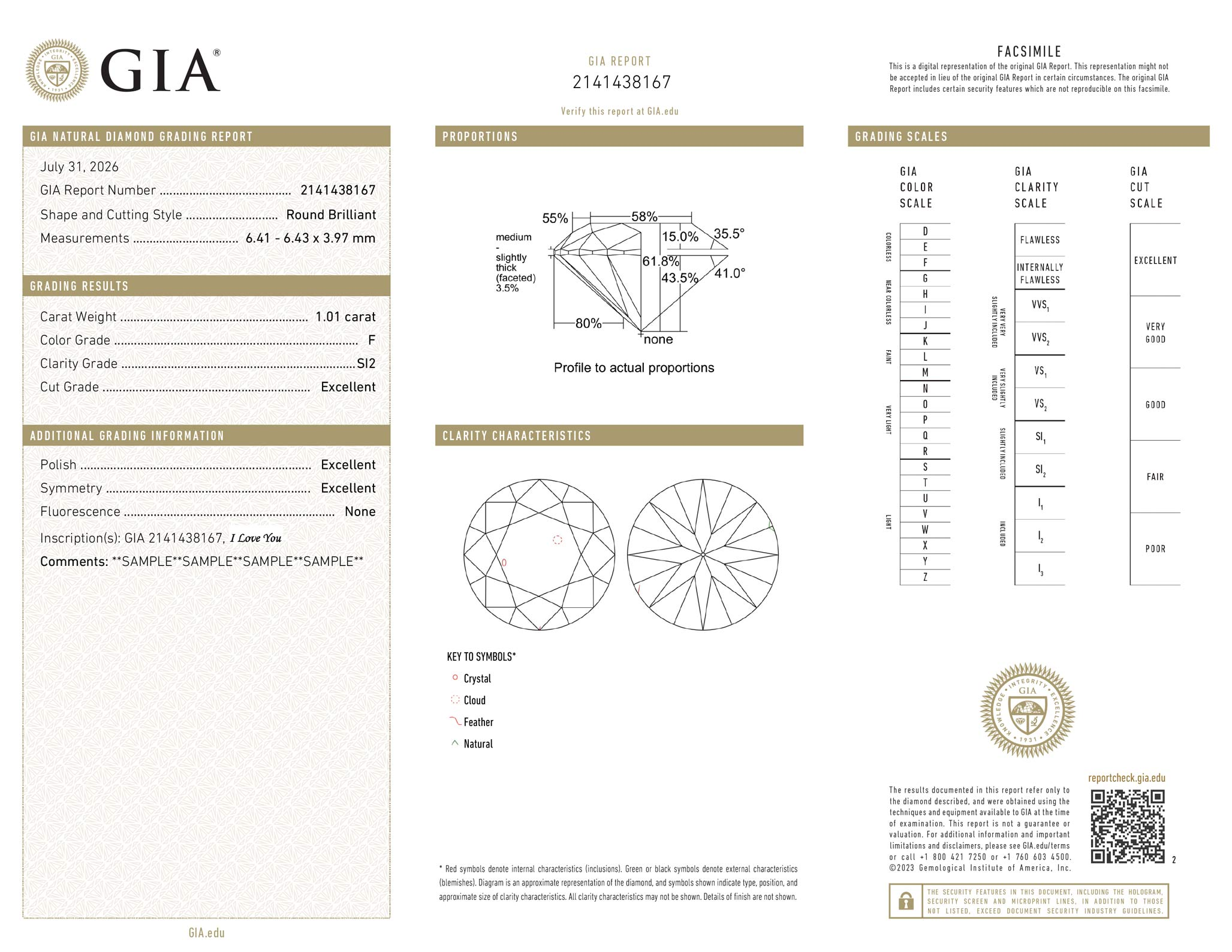
The FTC’s jewelry advertising guidance calls for clear disclosure of laboratory-grown origin and distinguishes laboratory-grown diamonds from imitations. Ask for that origin in writing, review any accompanying laboratory report and confirm that the documentation matches the stone.
I prefer natural diamonds for their geological history and individuality. That preference belongs in an honest conversation about a purchase, alongside accurate information about laboratory-grown diamonds. The choice belongs to the customer.
Reporting and photography: Original interviews by Erica “Miss Diggs” Diggs. All interview portraits are stills from her footage. Business identities were supplied by Miss Diggs and cross-checked against supplied profiles or official business information where available. Experience figures are the interviewees’ statements.
Disclosure: Miss Diggs is a GIA Graduate Gemologist and a jeweler who sells jewelry, including natural diamonds.
Technical sources: GIA: Identifying laboratory-grown diamonds; FTC: Jewelry advertising and disclosure.