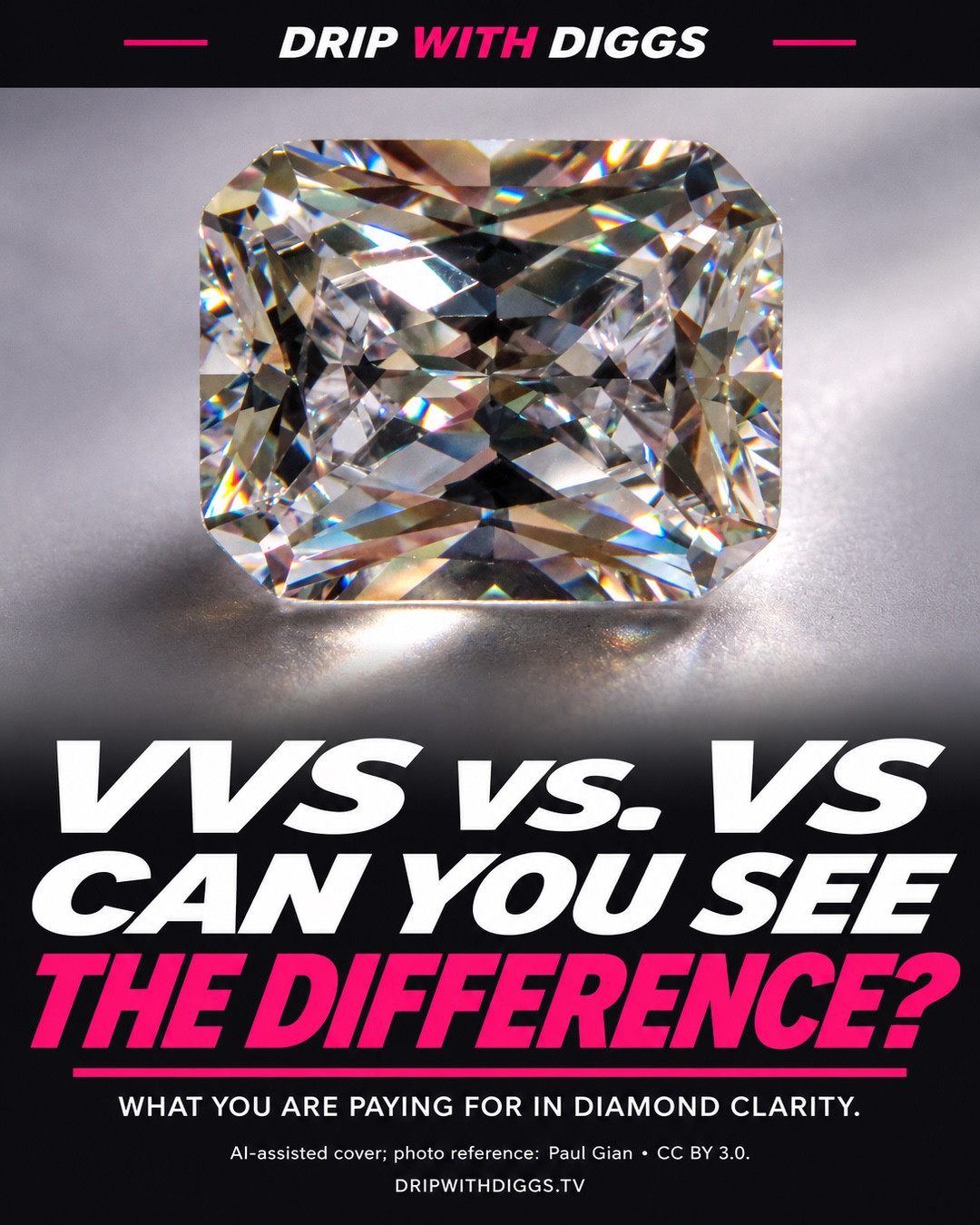
VVS has a strong reputation. But when you are paying for the diamond yourself, the useful question is what that higher clarity grade adds to the stone you plan to wear.
GIA’s comparison of VVS and VS diamonds explains that their clarity characteristics are usually invisible to the unaided eye. Two diamonds can look very similar while sitting in different clarity categories and carrying different prices. That makes the decision personal, rather than an automatic upgrade.
What those letters actually measure
GIA’s clarity scale evaluates characteristics under 10-power magnification. The grade considers their number, size, location, nature and relief, meaning how distinctly they stand out.
VVS means Very, Very Slightly Included. Its inclusions are difficult for a skilled grader to see under that magnification. VS means Very Slightly Included, with minor inclusions that can be observed with effort. Each category has two grades: VVS1 and VVS2, followed by VS1 and VS2 as you move down the scale.
That is a meaningful gemological distinction. It does not promise that you will see a dramatic difference when the diamond is on your finger.
Make room for the rest of the diamond
Clarity is one part of the purchase. GIA’s cut guidance explains how facet arrangement and proportions affect a diamond’s interaction with light. Brightness describes reflected white light, fire describes colored flashes, and scintillation includes the sparkle and pattern of light and dark areas as the stone moves.
A clarity label alone cannot describe that whole experience. My advice is to look at the diamond first, then use its grading information to understand what you are seeing. Ask to compare your candidates in the same viewing conditions, rather than letting the most impressive letters make the decision for you.
Shape deserves attention, too. GIA notes that step cuts such as emerald cuts can benefit from higher clarity. Examine the individual stone instead of assuming every VS diamond will look identical to every VVS diamond.
Spend for your priorities
If the rarity of VVS matters to you, that can be a valid reason to choose it. If a VS diamond gives you the appearance you want, compare what the price difference would let you keep in your budget or put toward another quality you value. GIA identifies that trade-off in its clarity comparison, but there is no universal savings percentage for today’s purchase.
Get prices for the actual diamonds you are considering. Then ask yourself whether the higher grade delivers something you want enough to pay for. The best choice is one you understand before the receipt is printed.
About the author
Erica Diggs is a GIA Graduate Gemologist, bench jeweler, GIA-trained 3D CAD jewelry designer and diamond setter. She is the founder and editor of Drip With Diggs.