You love the long, pointed shape. Then you notice a dark band across the middle. Before you rule out that marquise diamond, take another look as it moves.
GIA’s marquise buying guide explains that many marquise diamonds show a bow-tie: two adjoining dark areas across the center when viewed from above. Some contrast can give the stone visual depth. A broad, very dark band can become distracting.
Look at the movement, not just the photo
The effect comes from the way the diamond’s facets reflect its surroundings. Your head and shoulders can block incoming light, contributing to that central contrast. Proportions and facet arrangement influence how pronounced it appears, according to GIA.
My advice is to make the center part of your comparison, rather than choosing from the outline alone. Does the dark area keep drawing your attention away from the rest of the stone? Ask to see the actual diamond moving, in person or in video, under more than one lighting condition.
GIA’s guidance on lighting makes the broader point: a diamond’s appearance changes with its environment, viewing distance and even the clothing around it. Store spotlights and everyday office lighting can produce different impressions. Compare stones under the same conditions, including lighting similar to where you expect to wear the ring.
Know what the report tells you
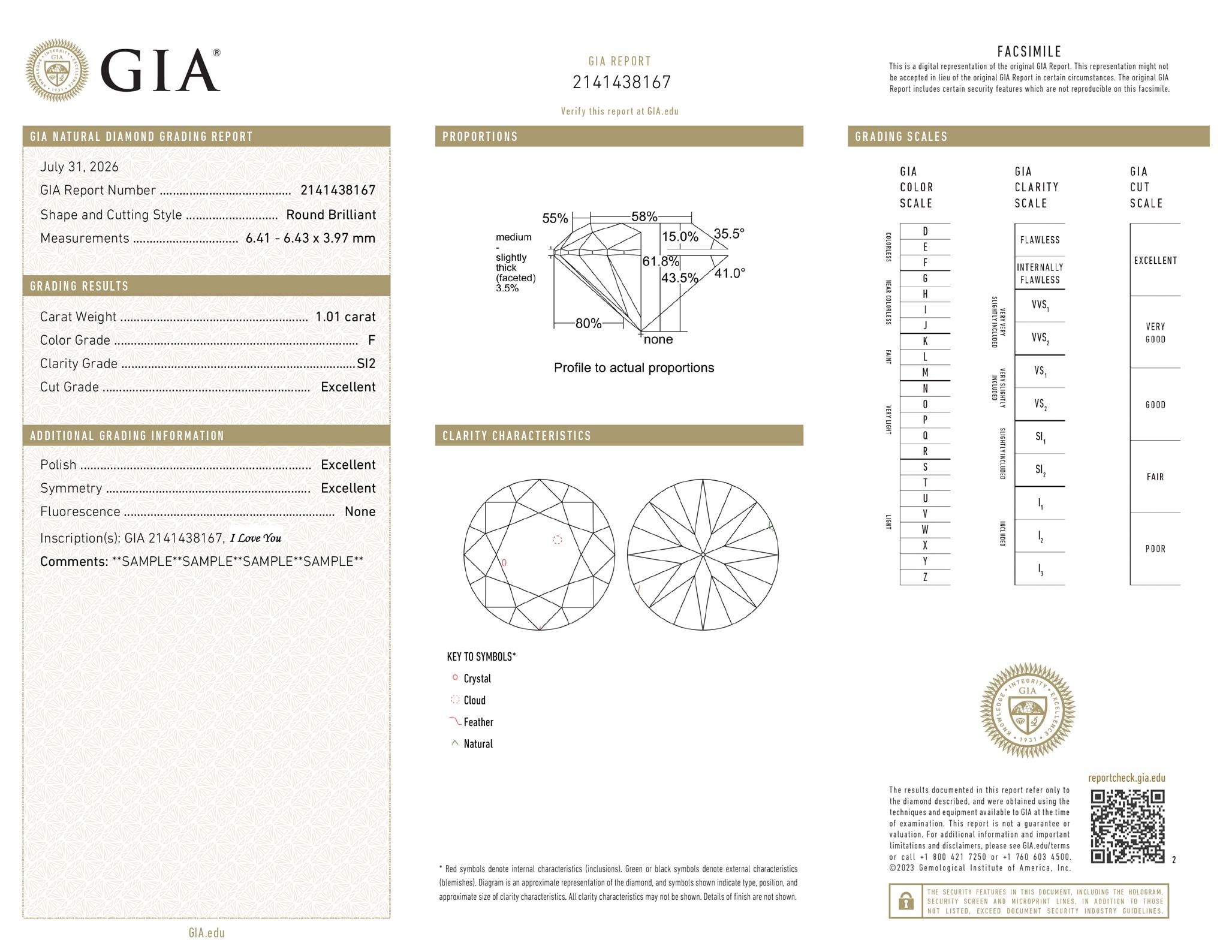
Marquise describes a shape. Cut also concerns how the facets and proportions work together. GIA’s cut-grading explanation says its overall Excellent-to-Poor cut scale applies to standard round brilliant diamonds in the D-to-Z color range. A marquise does not receive that same overall GIA cut grade.
Ask the seller to explain the marquise’s individual characteristics instead of treating a broad claim of “excellent cut” as the equivalent of that round-brilliant grade.
Check the points, too
Appearance is only part of the decision. GIA’s diamond-care guide distinguishes scratch resistance from resistance to breaking or chipping. Even a diamond can suffer damage from an impact, and pointed ends need protection.
Have the jeweler show you how the proposed setting protects both tips and holds the stone securely. Choose the marquise whose appearance you enjoy and whose setting makes sense for the way you will wear it.
About the author
Erica Diggs is a GIA Graduate Gemologist, bench jeweler, GIA-trained 3D CAD jewelry designer and diamond setter. She is the founder and editor of Drip With Diggs.