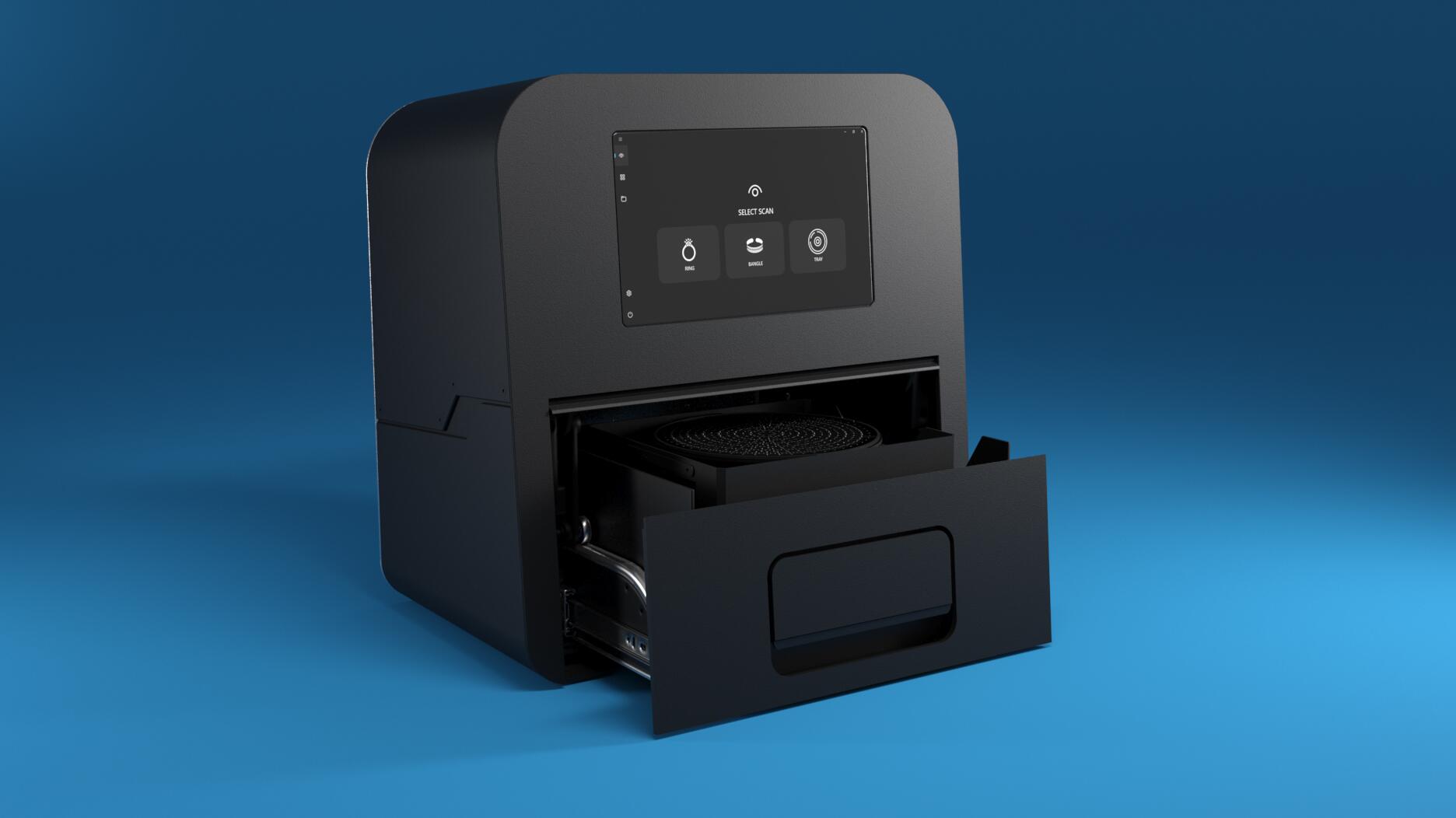
A diamond’s reaction to ultraviolet light can offer useful clues about how it formed. Reading those clues correctly takes more than watching a stone glow. GIA’s iD100 is listed in the GIA Store at $5,795 for the standalone instrument and $5,995 for the iD100 + Pink Diamond Bundle. It uses an instrument to analyze the light a stone emits and screen for natural diamond origin. GIA Store: iD100
The distinction matters at the jewelry counter. Natural and laboratory-grown diamonds have essentially the same chemical, physical and optical properties. GIA explains that traditional observations and older diamond detectors cannot reliably separate them. Specialized testing addresses a question that appearance alone cannot settle: where did this diamond grow? GIA’s explanation of natural and laboratory-grown diamonds
A glow gives clues, not the whole answer
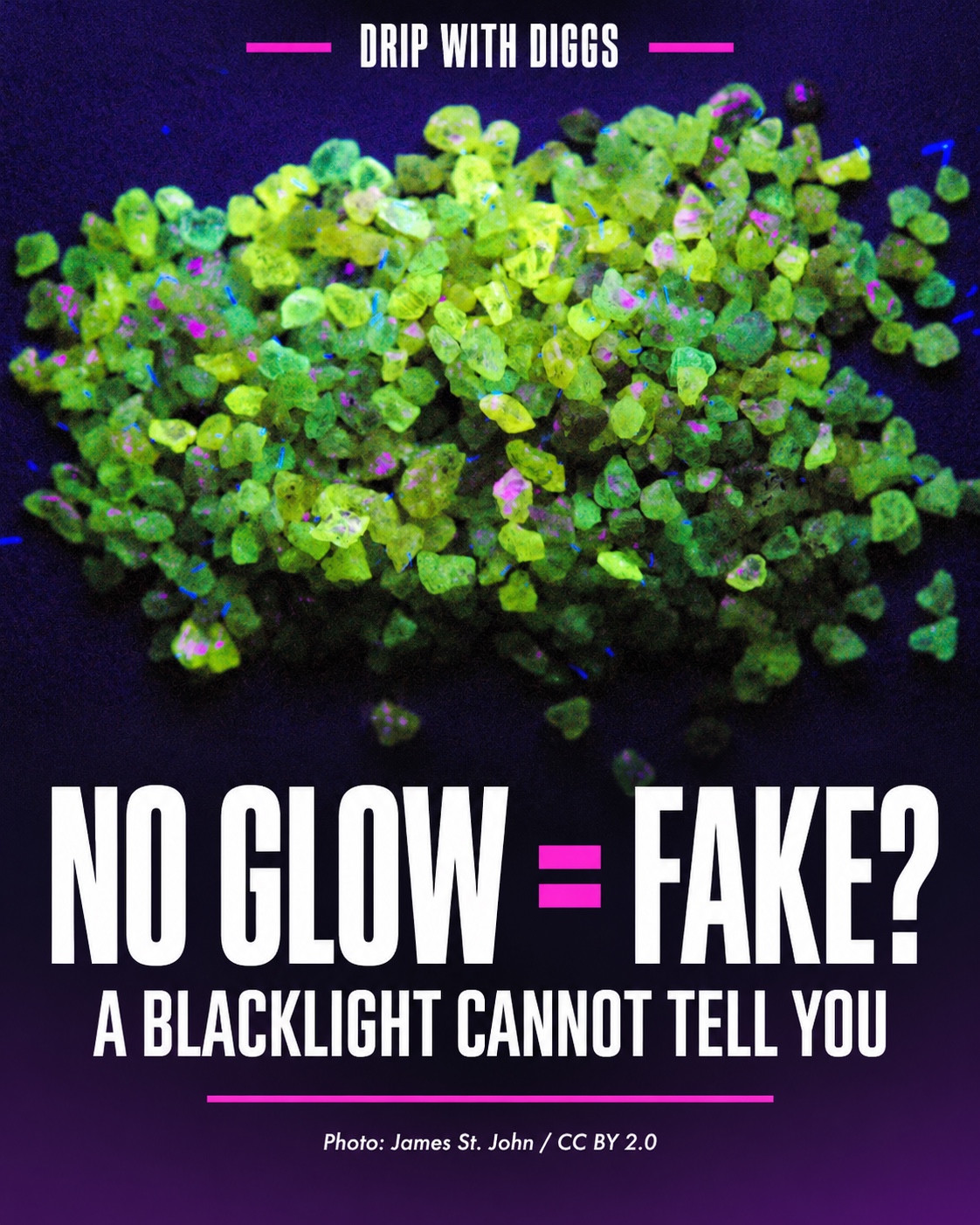
Fluorescence is visible light emitted during exposure to ultraviolet radiation. Blue is the most common fluorescence color in natural diamonds, though other colors occur. GIA’s report designation describes the strength of a diamond’s reaction to long-wave UV. GIA’s fluorescence definition
Comparing long-wave and short-wave responses can help a trained observer decide what deserves closer examination. GIA’s retailer guide says fluorescent natural diamonds usually respond more strongly to long-wave UV, while laboratory-grown diamonds often respond more strongly to short-wave UV. A lingering glow after the light switches off, called phosphorescence, can also raise a flag. Its absence does not establish natural origin.
Those are screening clues. GIA expressly warns that this kind of fluorescence testing alone cannot provide definitive identification. A color seen in a video is not enough to classify every stone in a piece of jewelry. GIA’s UV testing guide
Some Diamonds Glow Under Blacklight. Does That Mean the Others Are Fake?
No. A diamond that does not glow blue under a blacklight is not automatically fake. Some diamonds fluoresce under long-wave ultraviolet light and others do not. Fluorescence is the visible light emitted during that exposure; blue is common, but it is not the only possible color. GIA’s fluorescence explainer describes that natural variation.
That means different reactions among stones in one ring do not, by themselves, prove that a jeweler mixed diamonds with imitations. They also do not authenticate every stone. A glowing stone has not passed a complete identification test merely because you can see its reaction.
What the glow can and cannot tell you
GIA distinguishes between a useful screening clue and a definitive identification. Comparing ultraviolet responses can help trained professionals flag stones for further examination, but GIA explicitly says fluorescence testing alone cannot establish gem identity, treatment or origin.
Do not turn “blue means real” or “no glow means lab-grown” into buying rules. And do not confuse laboratory-grown diamonds with diamond imitations: the question of whether a stone is diamond is separate from where that diamond grew.
If the result worries you, ask a qualified gemologist about testing the stones and confirming their identity and disclosed origin. Describe exactly which question you need answered. Your blacklight can reveal an interesting response, but it cannot settle the whole purchase.
What the iD100 measures
The iD100 uses UV excitation and fluorescence spectroscopy, analyzing a stone’s luminescence for signatures associated with natural diamond. It does more than illuminate a stone for someone to judge by eye. GIA’s research overview describes an automated process that collects the optical signal and either recognizes a natural signature or refers the stone for further examination. GIA Diamond Research
GIA lists results in under two seconds and testing of loose or mounted diamonds measuring at least 0.9 millimeters across, approximately 0.005 carat. That makes small stones in finished jewelry part of its intended use. As checked November 11, 2026, GIA lists the standalone iD100 at $5,795 and the iD100 + Pink Diamond Bundle at $5,995. These are advertised prices, not quoted checkout totals. GIA Store specifications
“Refer” does not mean “lab-grown”
The readout has two outcomes. “Pass” indicates the characteristic luminescence signature of a natural diamond. “Refer” means additional testing is needed. A referred stone may be laboratory-grown, a simulant, or a natural diamond the instrument did not pass. GIA notes that lighting, cleanliness and probe position can affect referrals. GIA iD100 user guide
The published ASSURE 2.0 test sheet illustrates why that distinction matters. Natural-diamond referral rates were 10.4% ± 1.3% for the primary loose sample, 13.6% ± 1.8% for small loose stones and 7.4% for the mounted sample. Recorded false-positive rates were zero in those test sets. These are results from a defined evaluation, not a promise that every future stone or operating condition will produce the same outcome. ASSURE 2.0 iD100 fact sheet
Know the limits before testing
The standard instrument covers colorless to near-colorless, blue-to-green and brown diamonds. Pink testing requires additional software, which is included with the $5,995 Pink Diamond Bundle or purchased separately for the base instrument; the manual excludes yellow and other unsupported colors. It tests stones individually. It also does not generally establish whether a natural diamond has been treated. The pink upgrade detects certain color treatments, with exceptions.
GIA’s instructions call for proper preparation, stable indoor lighting and careful probe placement. They also warn against looking directly into the emitting probe or examining it through a loupe. GIA iD100 user guide
GIA does not guarantee error-free results
The iD100’s warranty terms disclaim error-free results. Its reading does not replace a GIA report or represent GIA’s opinion. GIA’s instrument terms, pages 34 to 38
Laboratory reports have their own separate limitations. GIA’s report terms state that a report is not a guarantee, valuation or appraisal. It documents an examination using the techniques and equipment available at that time; another examination may produce different results as methods and detection capabilities change.
That language describes limits on laboratory findings and guarantees. It does not describe the work as an “educated guess.” Instrument screening and a laboratory examination each need to be understood according to what was tested and what the result establishes.
For buyers, the useful question is what the test actually established. Ask which instrument was used, whether the stone falls within its testing range and what happened after any referral. A “Refer” result is a reason to finish the examination before making a claim about origin.
Correction, November 11, 2026: An earlier version identified $5,995 as the iD100 price without specifying the configuration. GIA lists the standalone instrument at $5,795 and the Pink Diamond Bundle at $5,995. The cover displays the bundle price.
About the author
Erica Diggs is a GIA Graduate Gemologist and the founder and editor of Drip With Diggs.