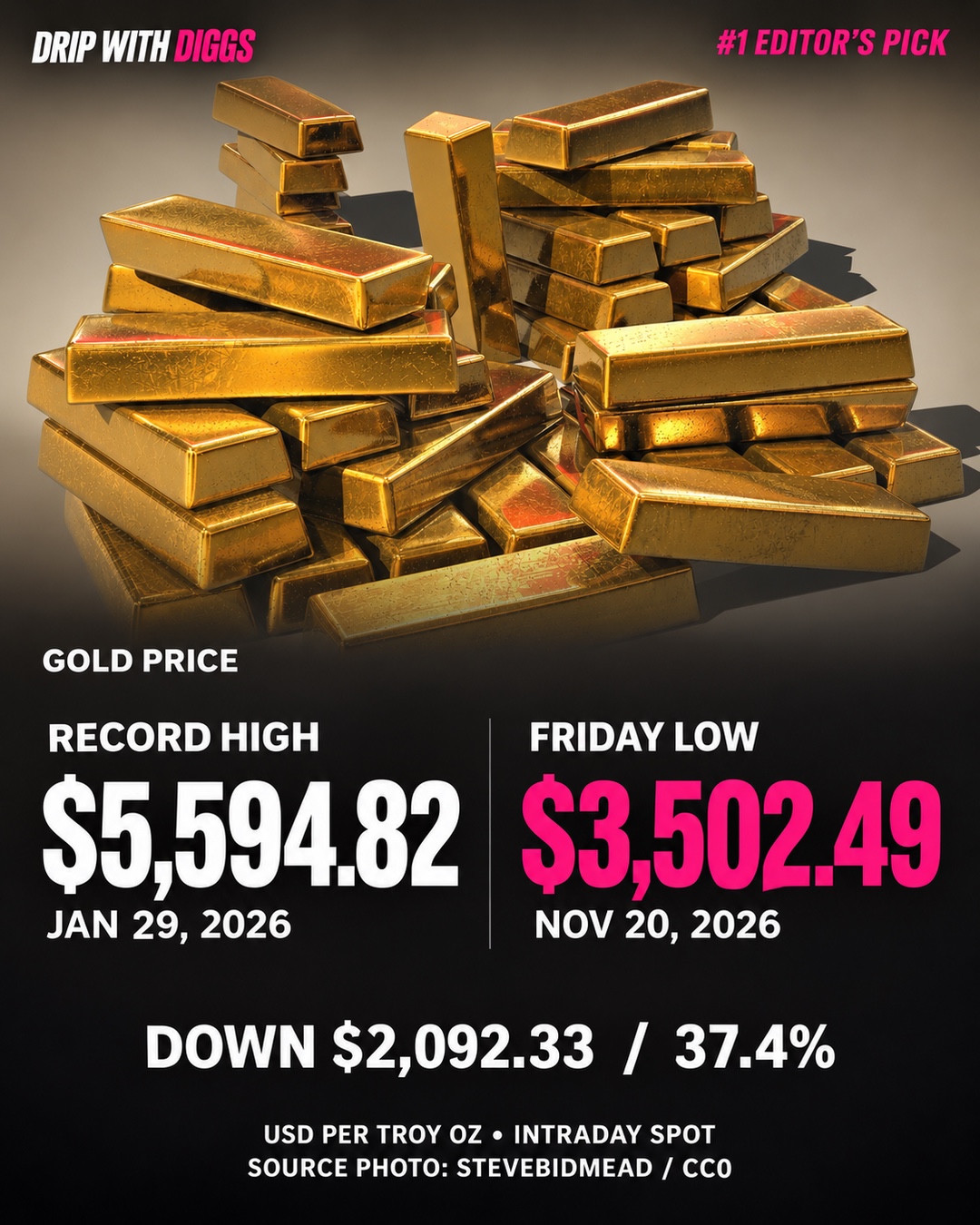
Gold hit $3,502.49 per troy ounce on Friday, November 20, down $2,092.33, or 37.4%, from its $5,594.82 record on January 29, 2026. Both numbers are intraday spot prices in U.S. dollars. That’s the drop from the January peak, not how much gold fell on Friday alone.
By 3:25 p.m. Eastern on Friday, spot gold had recovered to $3,514.08, but it was still down about 9.4% for the week at that point, Reuters reported.
Why gold fell
The January record came as investors sought safety. On Friday the pressure was different. The dollar was stronger and traders were betting the Federal Reserve might raise rates. Gold pays no interest, so higher rates can make interest-bearing assets more attractive. A stronger dollar also makes dollar-priced gold costlier for buyers paying in many other currencies.
The Fed’s October minutes show it held its target rate at 3.75% to 4%, with two officials favoring a quarter-point increase. Reuters also reported selling alongside a retreat in AI stocks. The market reporting points to those pressures; it doesn’t establish how much of the drop, if any, came from the election.
What that means for your jewelry
Take a 24-gram, stone-free 14K chain. At nominal purity, it contains about 14 grams of pure gold. At January’s high that gold content worked out to about $2,518. At Friday’s low it was about $1,577, a difference of roughly $942 before rounding. That’s theoretical gold content, not a resale quote or the price of a new chain.
If you’re selling, ask the buyer to show you the weight, karat and rate they’re paying, then compare the actual offers. If you’re shopping, the price of a finished chain still includes the work it took to make it. Here’s why retail jewelry doesn’t move tick for tick with spot.