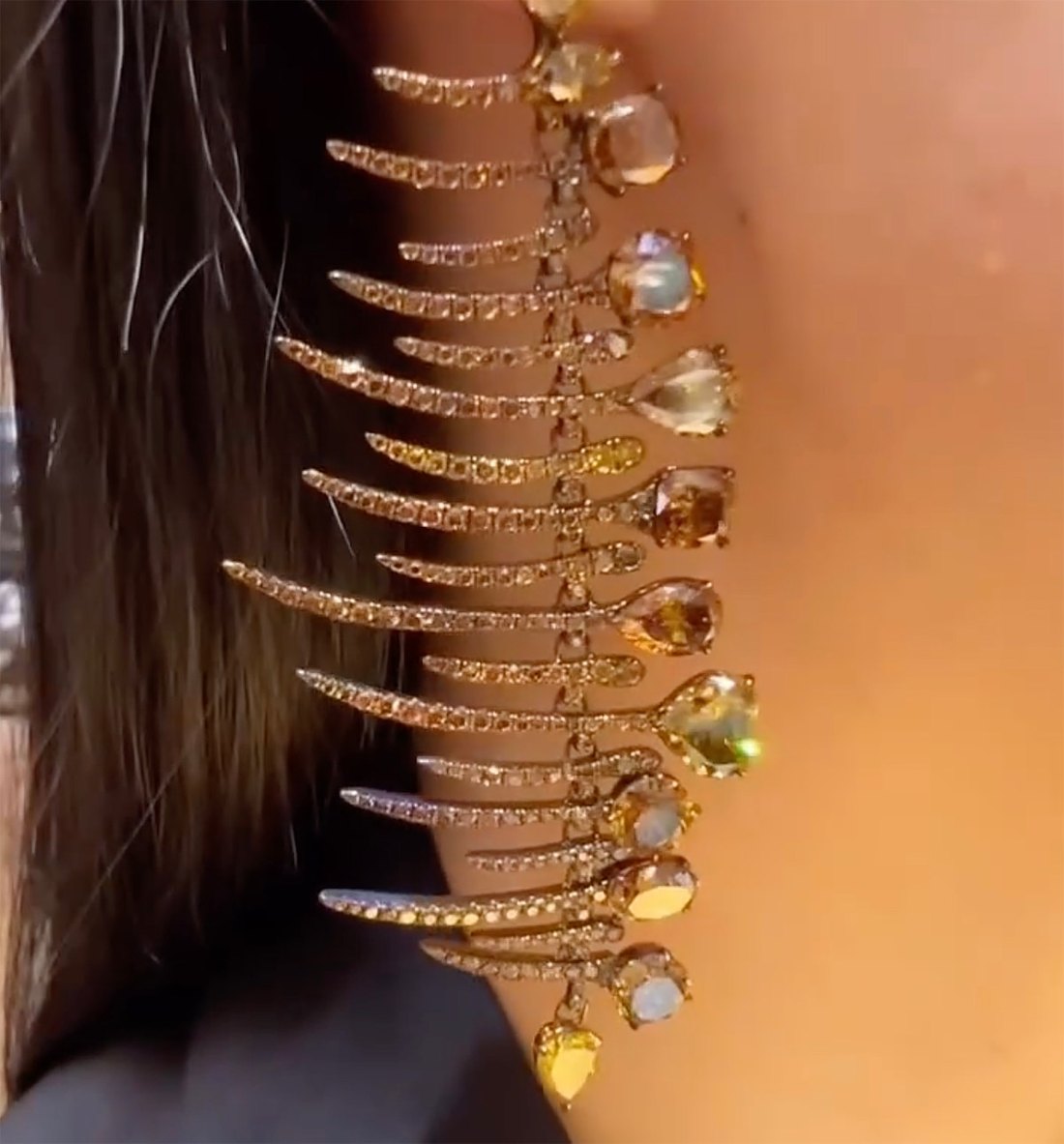
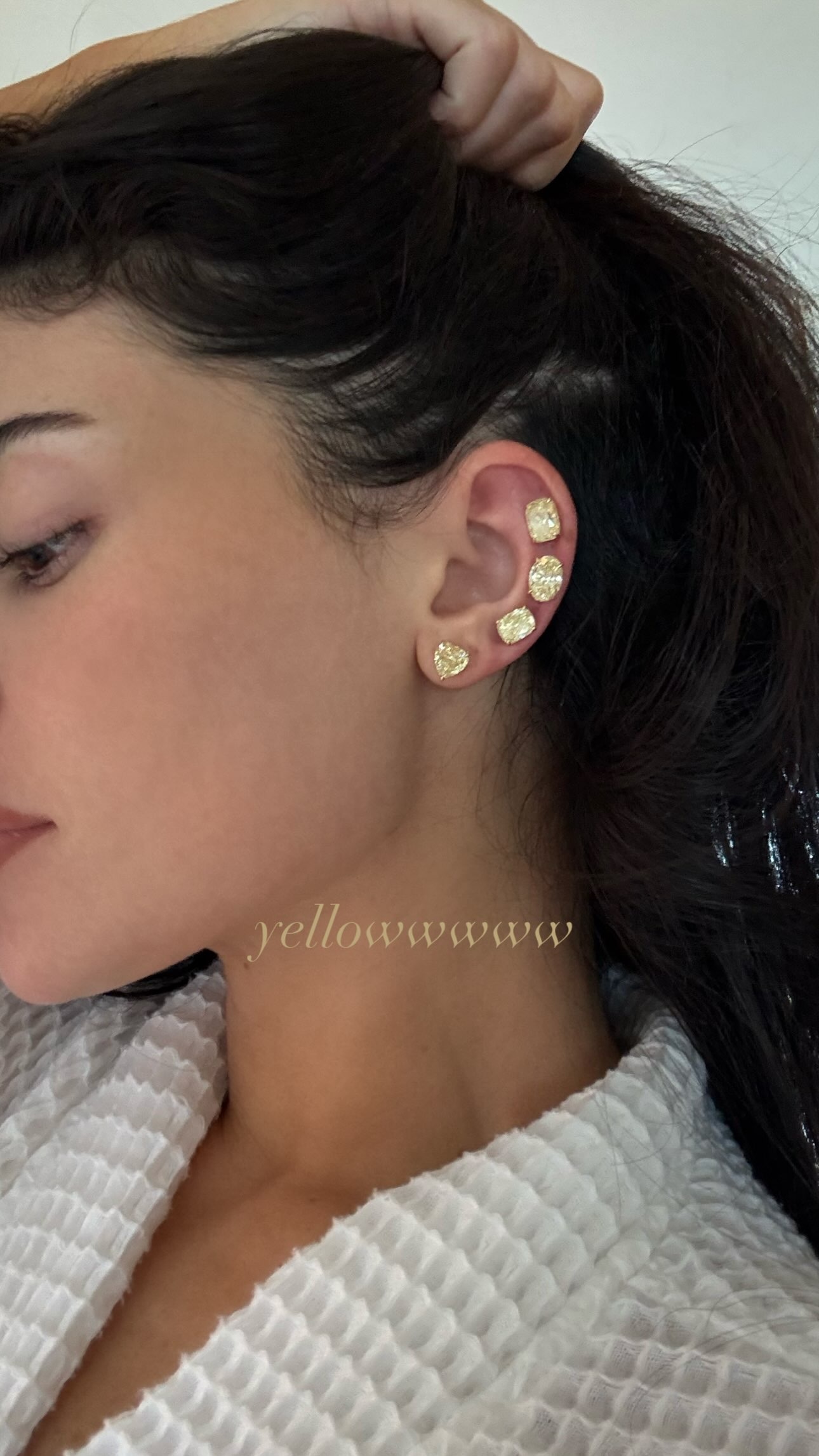
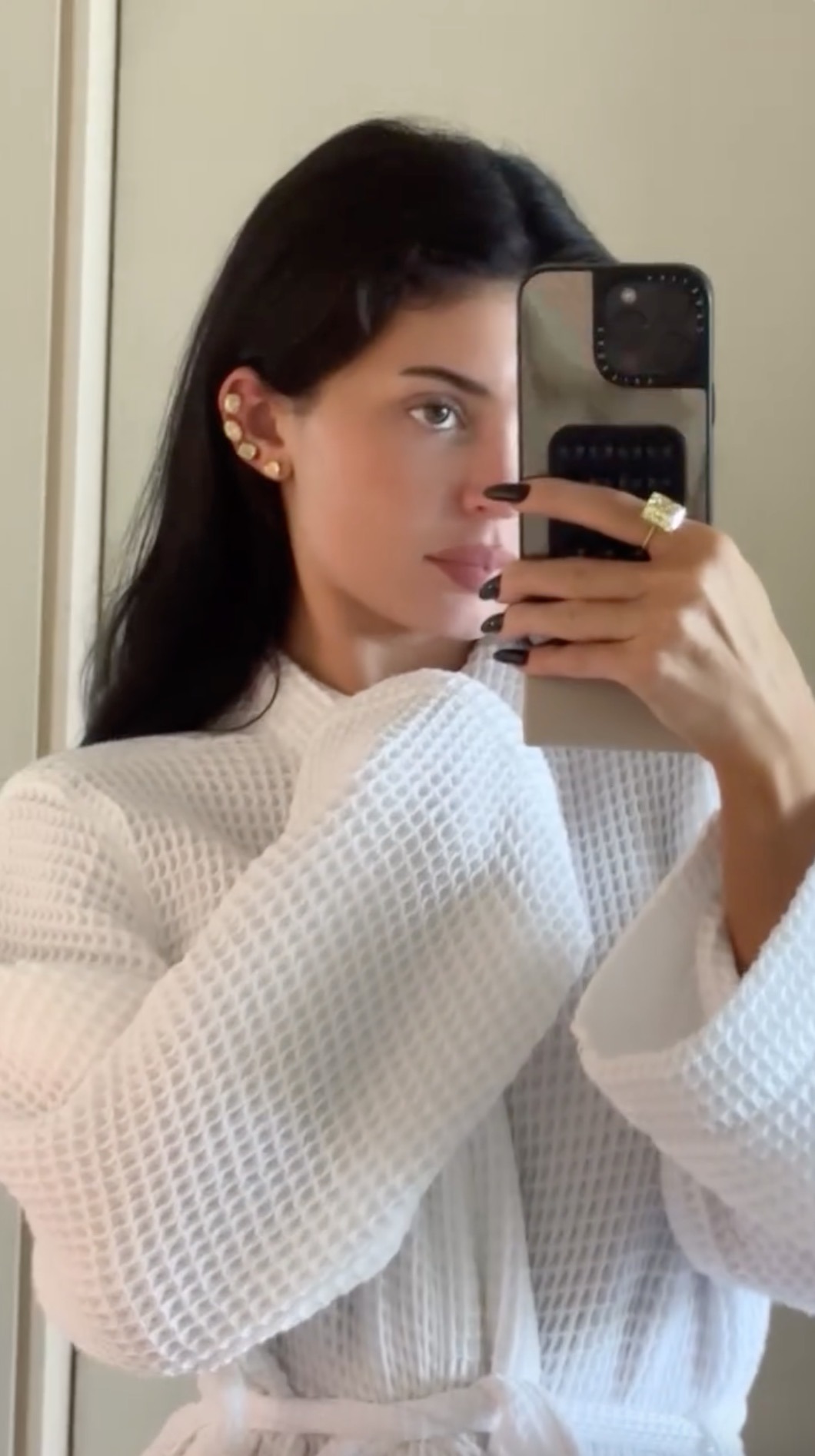
Kylie Jenner posted a set of Instagram Stories on September 10, 2026 and the detail that traveled fastest was not a bag or a dress. It was her ear. Four yellow diamond studs climbing each lobe, in different shapes, with a matching cushion cut ring on her hand.
I want to talk about why that ear reads so cleanly, because the design principle behind it is something you can use at almost any budget.
One color family, four shapes
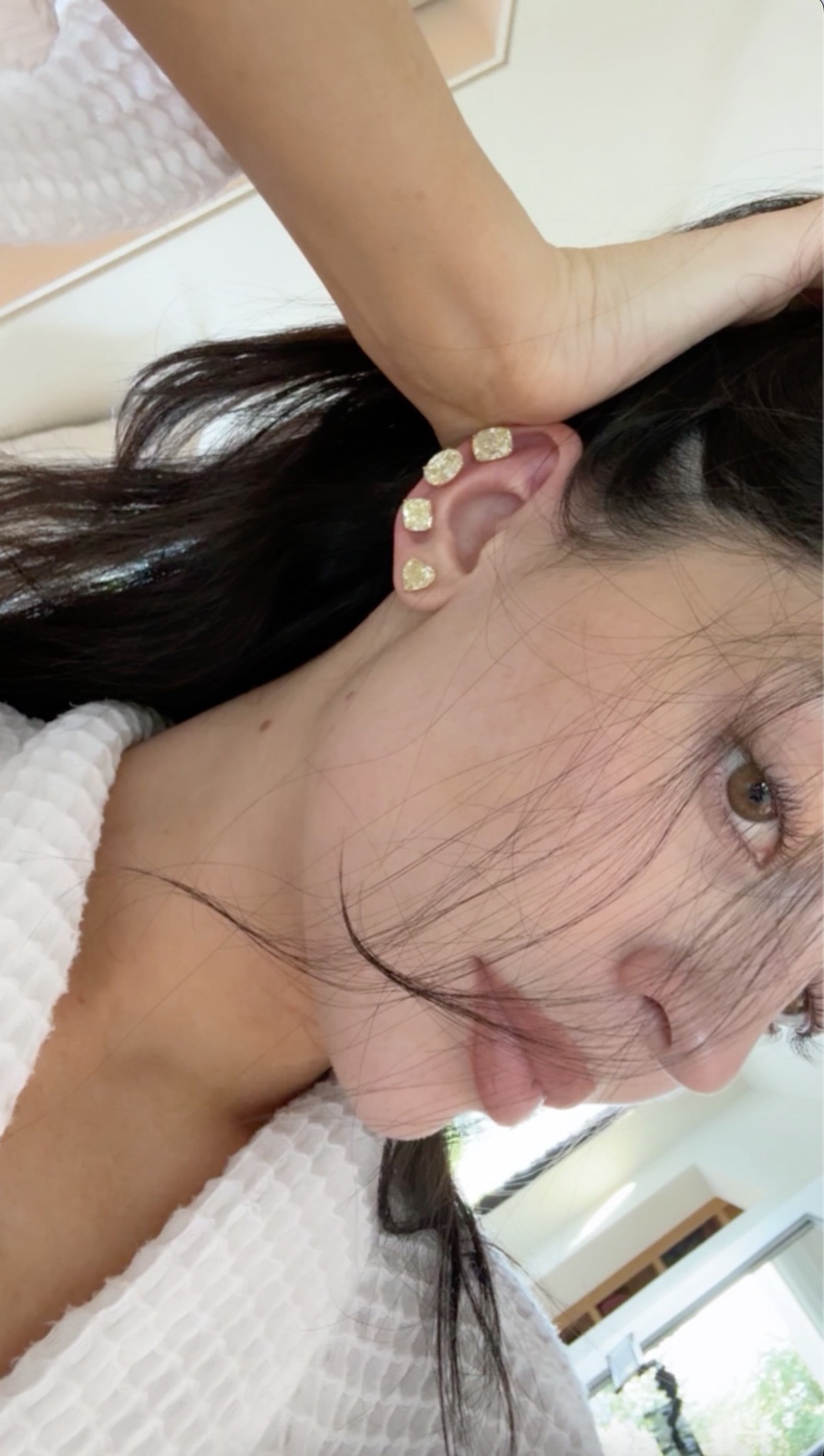
Published descriptions of the stack identify heart, oval, cushion and elongated cushion shapes, though the wording varies between outlets and no one outside her team has measured these stones.
Here is the design logic. When you repeat one strong color family and vary the shape and the scale, you get cohesion without needing matched pairs. That matters more than it sounds. Matched pairs of fancy color diamonds are the expensive, slow part of any commission, because you are asking for two stones that agree on hue, tone, saturation and outline. Once you let go of matching and commit instead to a color story, the buying problem gets dramatically easier and the finished ear looks more deliberate, not less.
The shapes also do different work. An oval and an elongated cushion stretch along the ear and create motion. A cushion sits square and anchors. A heart reads as a shape first and a stone second, which is why it draws the eye and why it is usually placed where you want the ear to break rhythm.
Why the same yellow can look like several yellows
With fancy color diamonds, color is the value. Graders describe hue, tone and saturation, and the practical question is what the stone looks like face up, not what the tag says.
Different shapes handle color differently. Longer outlines with larger facets tend to hold color in broader flashes. Rounder or more brilliant faceting can break light into more, smaller returns and can make a stone appear slightly lighter. Cutters actually chase this deliberately, choosing outlines and angles that concentrate color rather than scatter it, which is one reason you rarely see fancy yellows cut as textbook round brilliants.
Then there is the metal. Yellow gold cups and bezels reflect warmth back into a stone and can push a lighter yellow to read stronger. A white metal setting will let the stone speak for itself and will expose a weak color instantly. Neither choice is cheating, but you should know which one you are looking at.
What a photograph cannot tell you
This part matters and it gets skipped constantly.
A photo cannot confirm whether these stones are natural or laboratory grown. It cannot confirm color grades, clarity grades, carat weights, treatments such as irradiation or HPHT color treatment, who supplied the jewelry, or what anyone paid. Origin and treatment determination is a laboratory function requiring instrument based testing. Anyone assigning a grade or a price from a screenshot is guessing.
What we do have is an expert estimate. Page Six reported an assessment from Olivia Landau of The Clear Cut, who estimated roughly two to two and a half carats for each earring stone, around ten carats for the ring, and approximately one million dollars for the group. Treat that the way it was offered, as an informed outside estimate, not a confirmed appraisal and not a purchase price. I have no reason to doubt Landau's read. I also have no invoice, and neither does anyone else writing about it.
A screenshot is not a grading report. It cannot tell you origin, treatment, carat weight or price.
Building the same idea at your budget
The good news is that the shape rhythm is the design, not the price tag. Three ways to get there.
Natural fancy yellow, built slowly. Start with one stone you love in your strongest position, usually the first or second piercing, and add over time. Buy each stone with a report from a respected laboratory, and buy for face up color rather than for the grade on paper. Smaller natural fancy yellows in the quarter to one carat range are far more attainable than the internet suggests, especially in lighter saturations.
Laboratory grown fancy yellow. You get size and saturation for far less money, and yellow is one of the easiest colors to source in lab grown material. Two conditions. Get the origin disclosed in writing on the invoice, and understand that resale on lab grown color is weak in a falling market. If the goal is the look, this is a rational choice.
Colored gemstones. Yellow sapphire, citrine and yellow beryl can carry the same color story at a fraction of the cost. Sapphire has the hardness for daily wear in a stud. Citrine is softer and better suited to positions that take less abuse. Mixing a natural fancy yellow diamond with well matched yellow sapphires is a trick working jewelers have used for years and it photographs beautifully.
The part people get wrong
Two practical warnings from the bench.
Security first. A climbing stack means multiple piercings under a phone, a pillow, a sweater and a hood every day. For anything above roughly half a carat I want a threaded post with a screw back or a locking back, and I want the seat checked at least annually. Friction backs walk off. That is not an opinion, that is what my repair bench sees.
Spacing second. The stack fails when the stones crowd. Each piercing needs enough room that the girdles do not touch, or the stones will chip each other and the ear will look congested rather than layered. If your existing piercings are close together, use smaller stones in the tight positions and put your largest stone at the lobe.
Do that and you have the same idea Jenner just put on camera. One color, four shapes, secure settings, and a rhythm that reads from across the room.