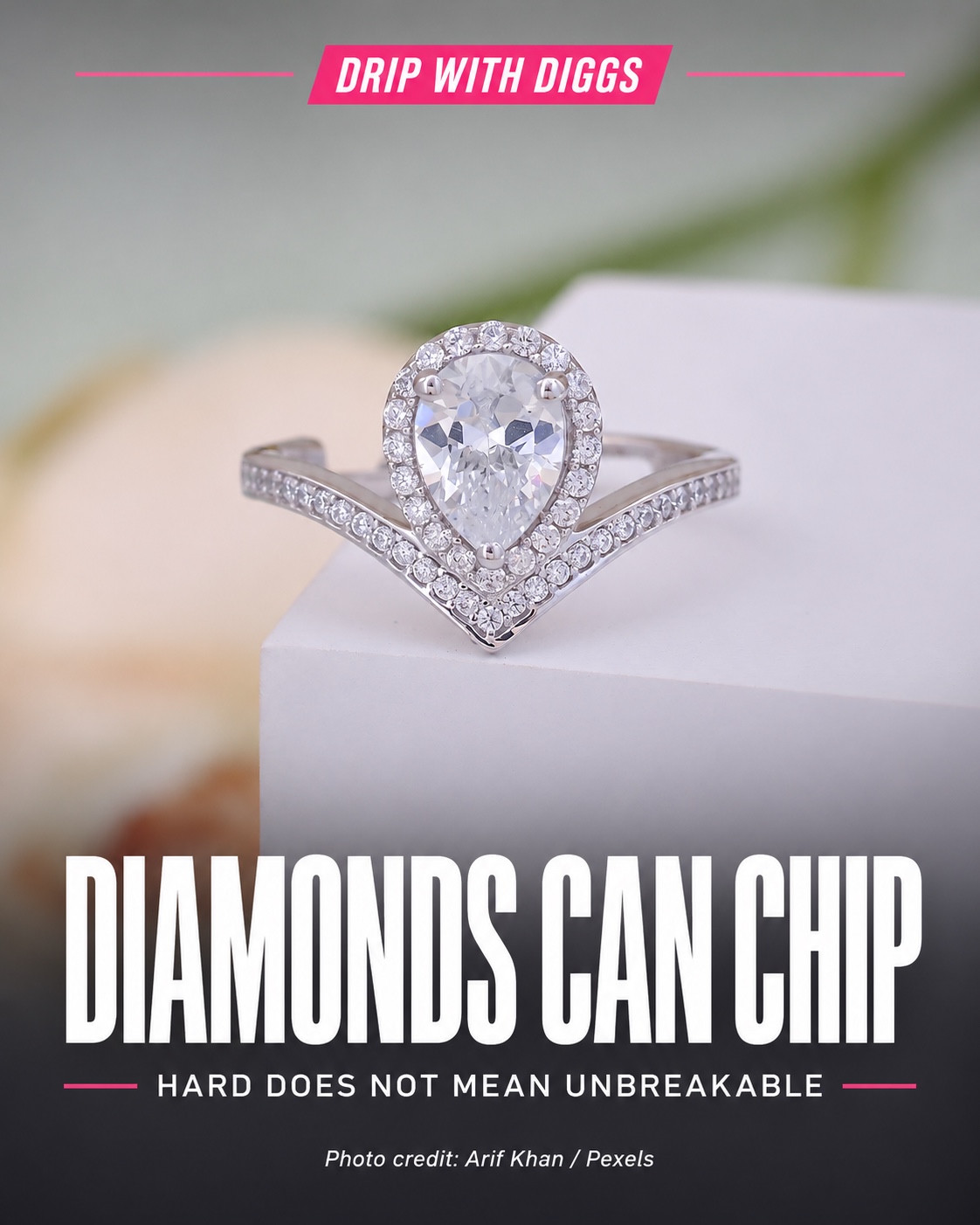
Yes. Hard does not mean unbreakable. Hardness describes resistance to scratching; toughness describes resistance to breaking and chipping. Diamond excels at the first, but a hard blow in the wrong place can damage it, as GIA’s diamond-care guidance explains.
Why the tip deserves attention
A pear-shaped diamond’s pointed end is not something to ignore. GIA identifies points, sharp corners and very thin girdles as vulnerable areas. The girdle is the edge around the stone. Even an everyday collision with a hard countertop can cause damage; diamonds in neighboring jewelry can also strike one another. GIA’s chipping guide explains why protective settings matter.
A protective prong is not a promise that a stone cannot chip. Ask a qualified jeweler to examine the actual tip, girdle and mounting rather than accepting “diamonds never chip” as reassurance. A photograph cannot establish whether your particular ring is secure.
What if you notice damage?
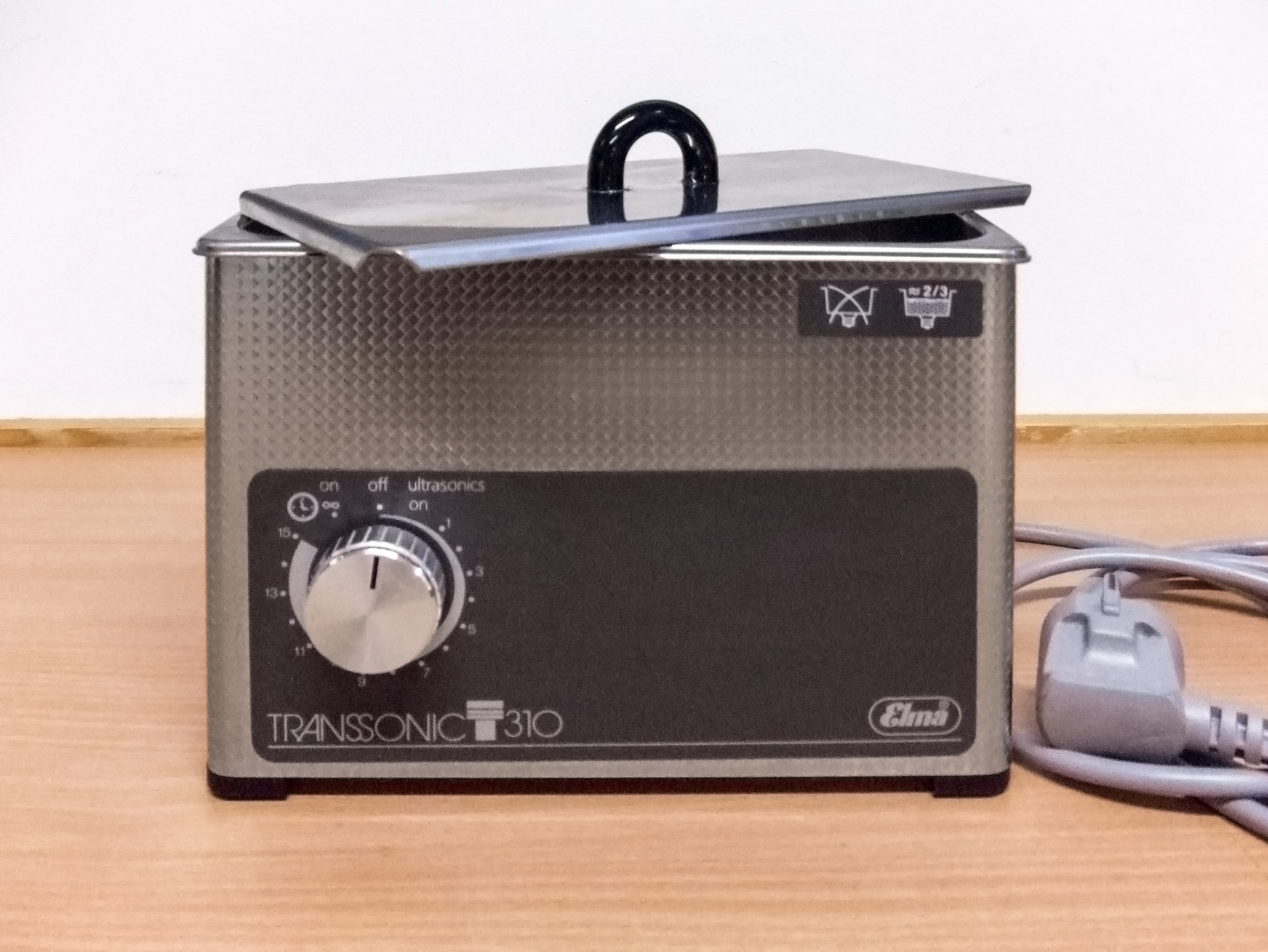
Take the ring off and arrange an inspection if a stone moves, a prong looks damaged or you notice a possible chip after an impact. Do not try to prove its strength with another knock, and do not put a questionable setting into an ultrasonic cleaner. GIA cautions that ultrasonic and steam cleaning can loosen gemstones; professionals inspect settings first.
The takeaway: buy the diamond you love, but ask how its vulnerable areas are protected. Scratch resistance is not an impact warranty.
About the author
Erica Diggs is a GIA Graduate Gemologist and the founder and editor of Drip With Diggs.