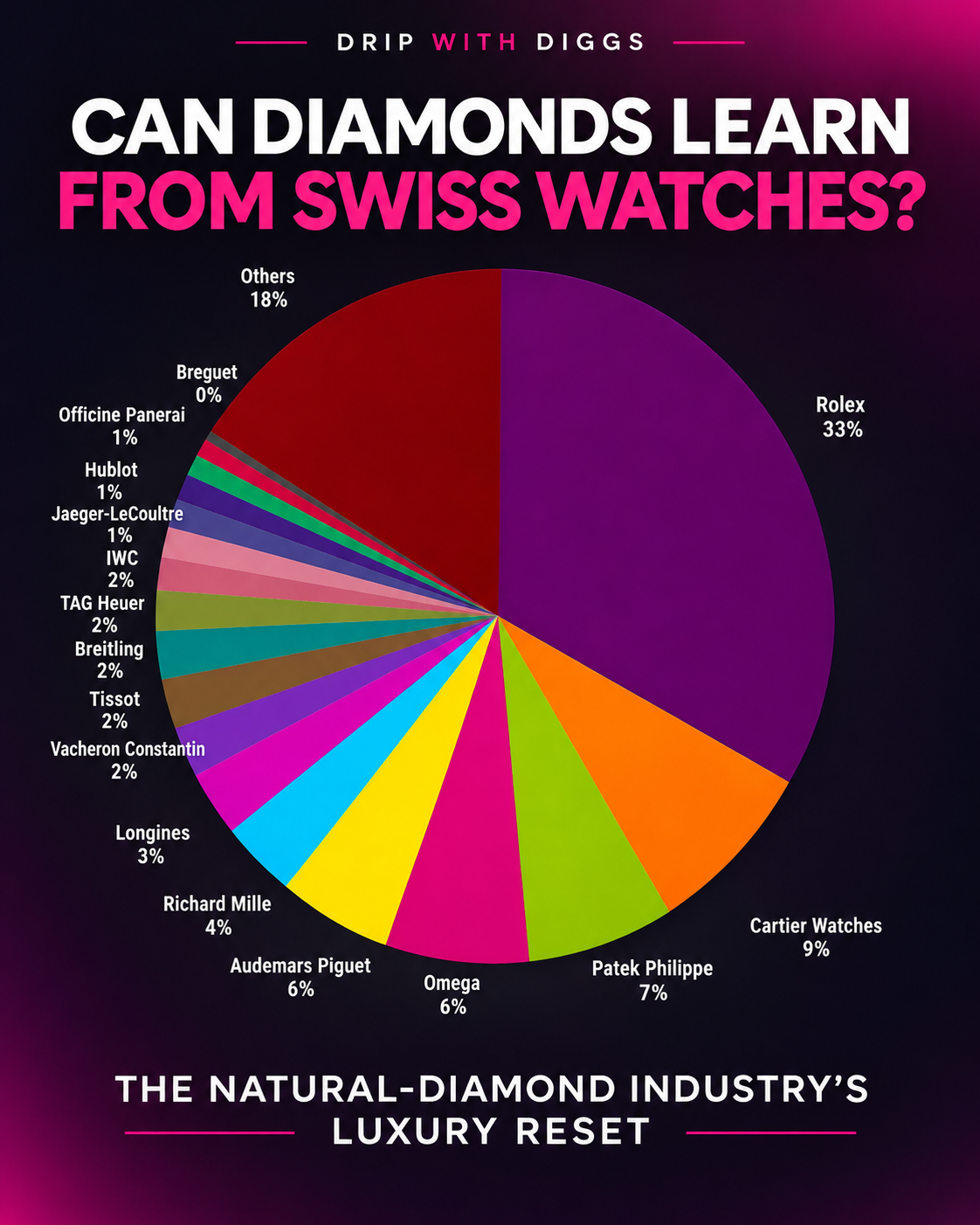
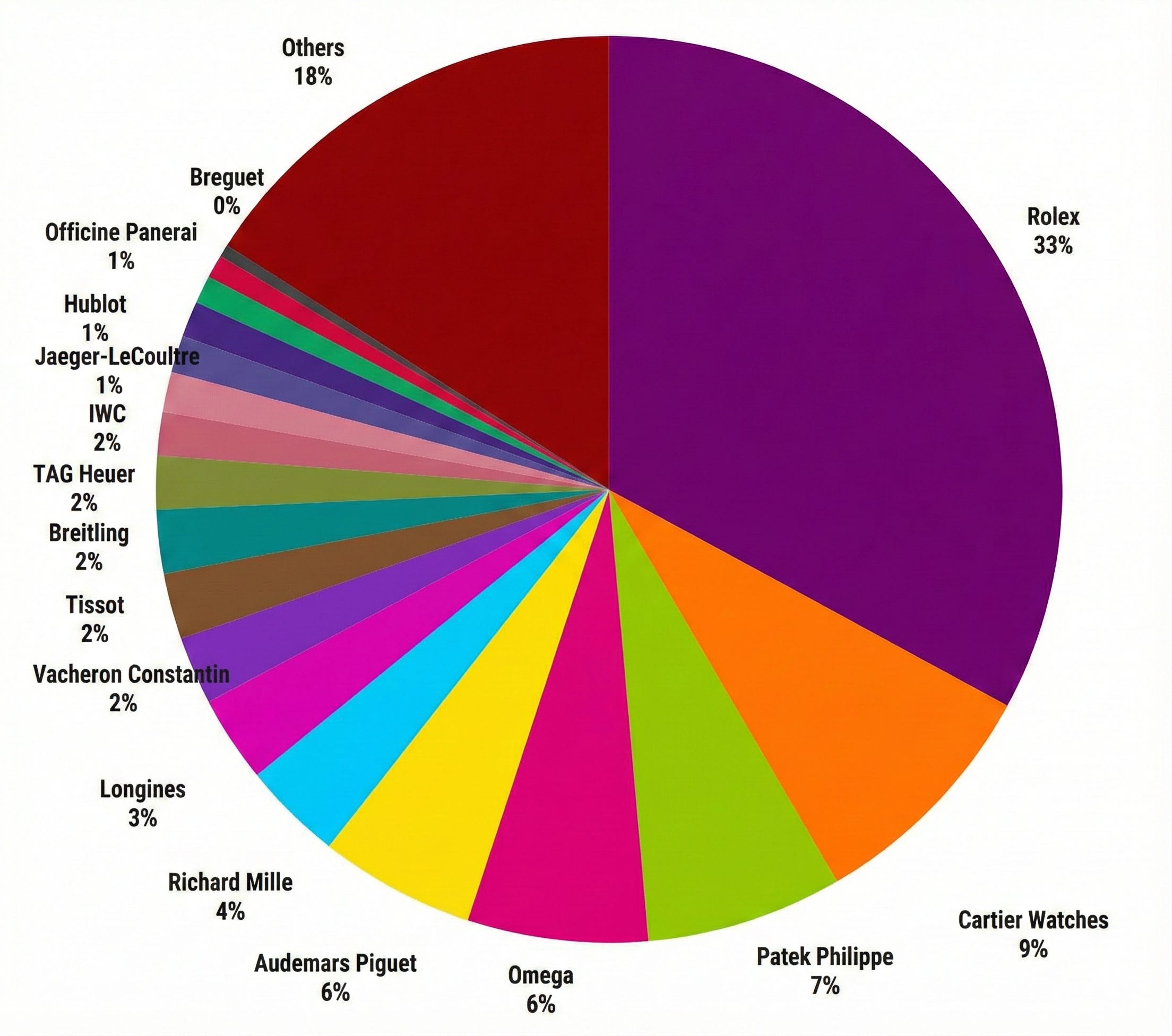
On Nov. 5, 2026, Rapaport published an analysis asking whether natural diamonds can follow the Swiss watch industry's path back to luxury value. The piece is new commentary on an earlier discussion. It draws on the October 2026 Dubai Diamond Conference and on "The Swiss Parallel," a report from DMCC and OriginalLuxury presented there. It does not announce a new policy, program or industry agreement.
The argument
According to Rapaport, the natural-diamond sector may need stronger brand visibility, more consumer education and a clearer luxury narrative built on heritage, scarcity and identity. In that reading, Swiss watchmakers offer a model: a category that faced cheaper technological alternatives and answered by selling craft, history and brand rather than function alone.
Where the comparison breaks down
Rapaport also identifies limits to the parallel. A watch is a visible branded object, and its maker's name is on the dial. A diamond usually is not. Distinguishing a natural diamond from a laboratory-grown one requires specialist equipment, so a shopper cannot confirm origin by looking. Rapaport adds that the diamond supply chain is more fragmented than the Swiss watch business, with many miners, manufacturers, dealers and retailers between the mine and the customer, which makes a single unified brand story harder to build.
Why it matters
For jewelers, the analysis points to the counter as the place where the natural-diamond story is told or lost. Clear disclosure, grading reports and the ability to explain origin carry more weight when the product itself does not announce what it is. For consumers, the takeaway is practical: when origin matters to the purchase, ask for documentation from a recognized laboratory and buy from a seller who can explain it.
Rapaport frames the Swiss model as a set of possible lessons, not a forecast. Whether heritage branding can change demand for natural diamonds remains an open question.