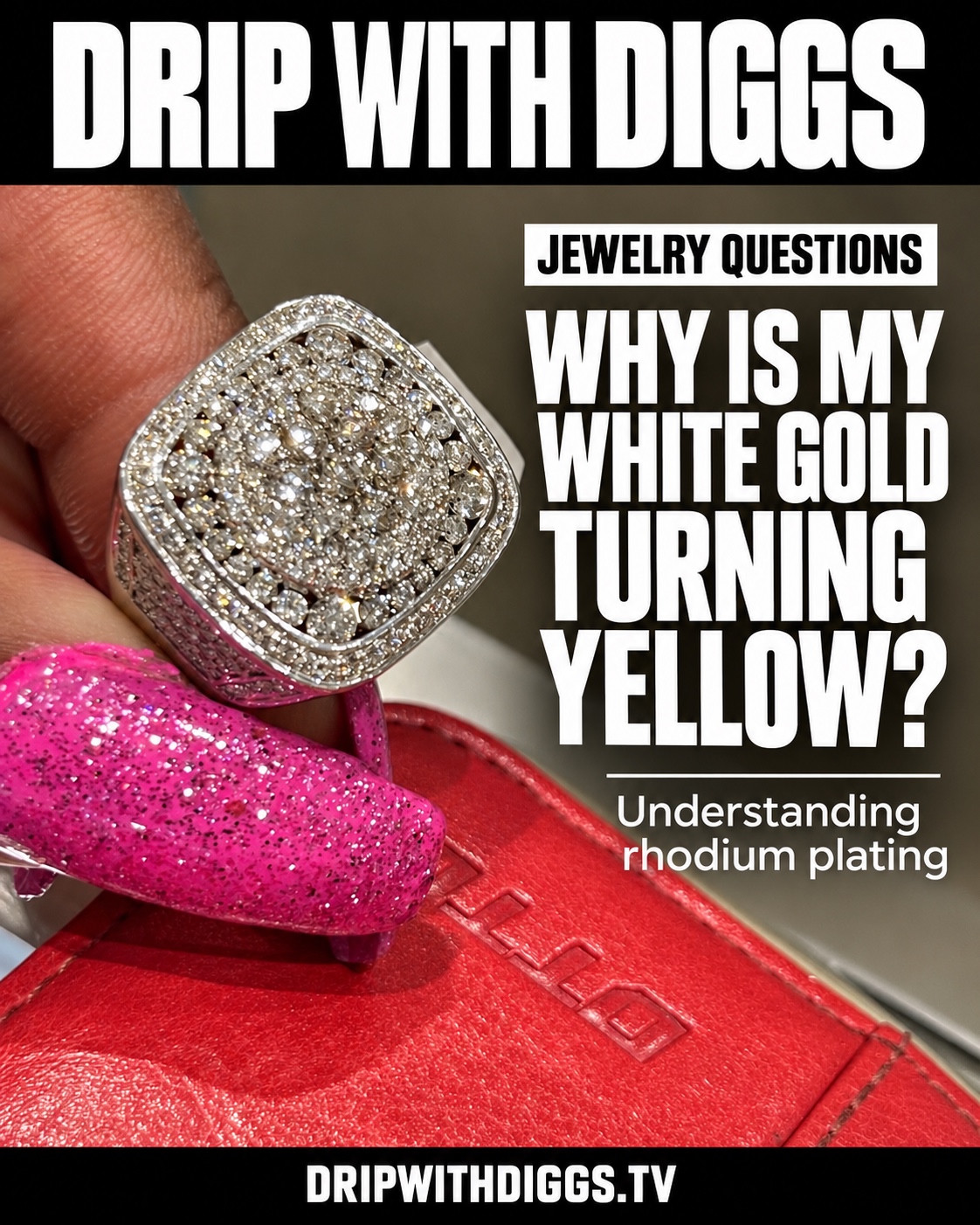
White gold can look warmer as its rhodium finish wears away. That color change alone does not prove the ring was misrepresented.
GIA explains that white gold is made by mixing gold with white metals, and it is commonly plated with rhodium for a brighter white appearance. The underlying alloy can have a yellowish tint. When the plating wears, that warmer color can become visible.
The question becomes more urgent when a new ring changes quickly. In an r/jewelry discussion, a shopper reported yellowing along the outside bottom of an 18K white-gold engagement ring within the first week. That account raises a useful question, but it does not establish what happened to the ring.
If yours changes soon after purchase, photograph the affected area and take it back to the seller. Ask the jeweler to inspect the finish, confirm the metal description against your receipt and explain any recommended work before you authorize it. Ask whether that work is covered by the purchase agreement.
For a ring with worn rhodium plating, replating can restore the bright-white finish. GIA recommends discussing replating with your jeweler when needed. Get advice for your particular ring rather than accepting a diagnosis from its color alone.
About the author
Erica Diggs is a GIA Graduate Gemologist and the founder and editor of Drip With Diggs.