On May 30, 2023, I sent my manufacturer two messages about the diamond grill we were developing: “This sample is my teeth.” Then, “I am going to wear them.”
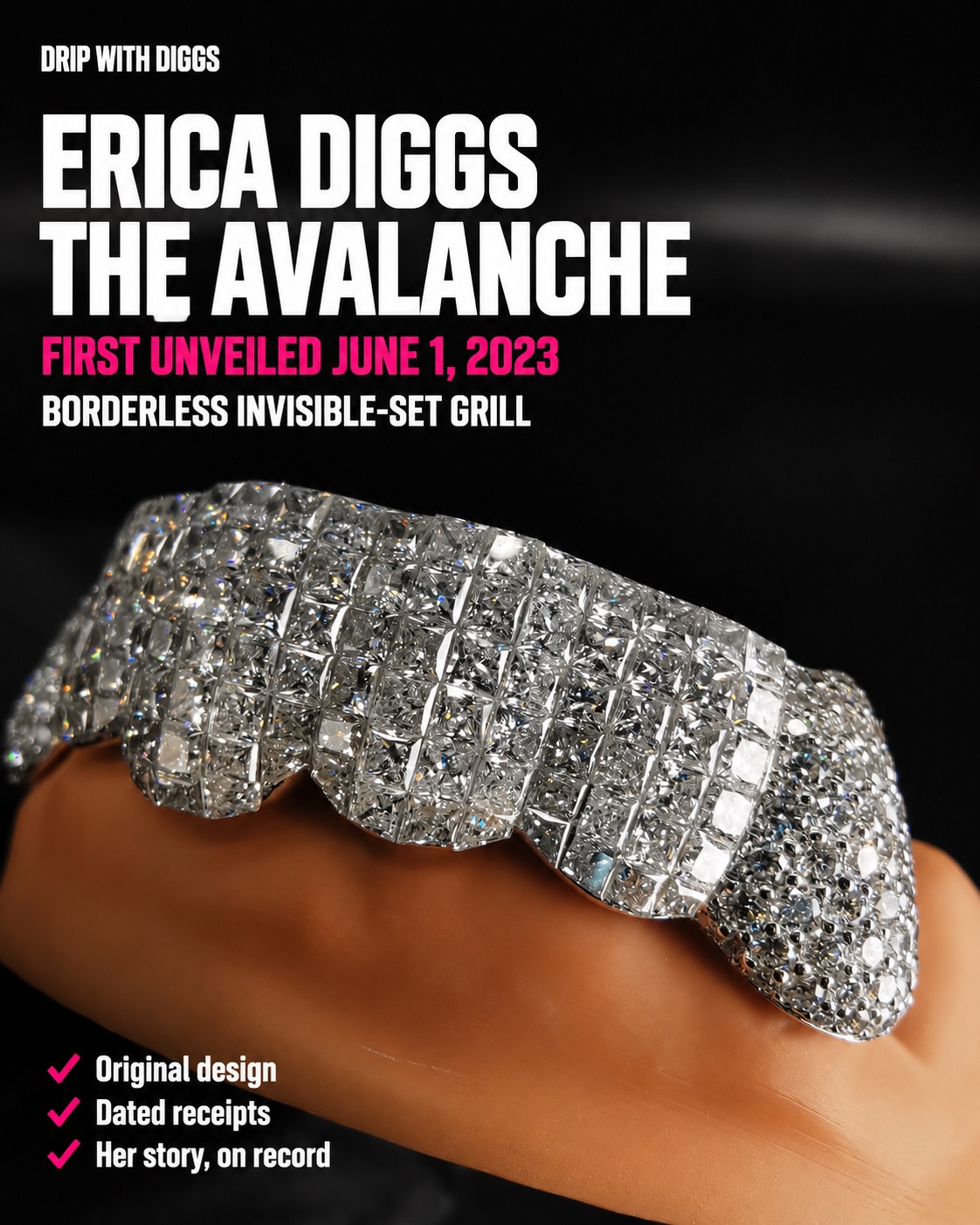
The piece would become The Avalanche. Princess-cut diamonds formed its bright central surface, with round-stone pavé at the ends. I wanted the look of borderless invisible setting across the teeth, without a metal frame outlining the central stones. Underneath that surface was a problem I had spent years working through: how to turn a digital design into jewelry that fit a mouth comfortably.
I was an experienced grill wearer, and I chose my own teeth for the prototype so I could test that fit and comfort myself. The model, base, proportions and setting all had to come together on a person. A successful rendering was only part of the job.
The Avalanche grew out of GIA training, collaborations with designers in Croatia and Pakistan, casting setbacks in New York and a Hong Kong factory’s invisible-setting expertise. By the time I sent those messages, I had invested in learning the software, developing workflows and finding ways around production problems. Later, photographs of the grill made for my own mouth would become the center of a public dispute over whose work people were seeing.
A different way to build a grill
Looking at a handmade Gabby Elan grill, I noticed small CAD-created elements, roughly three to five millimeters, soldered onto the structure. I began questioning whether the construction could be approached differently. Could more of the grill be worked out in the digital design instead of assembled that way?
The front and back presented different demands. The front needed enough thickness for the design and setting. The back had to sit against the teeth without becoming unnecessarily bulky. Changing one part affected the other.
At GIA, my Jewelry Design & Technology instructor, John Mastoloni, stayed after class to help me work through those questions. The extra time became part of a larger effort to connect what I could draw on a screen with what could be manufactured and worn.
I also worked with Emanuel P., a designer in Croatia who uses Matrix, Rhino and ZBrush. We concentrated on the proportions: thin backs, thicker fronts and the precision needed around the teeth. Early versions could be bulky. Hollowing them created another set of decisions. Scanning and fit remained stubborn problems.
Every revision brought the design back to the same test. It had to work in a mouth, not only in software.
The price of learning
I trusted Emanuel to keep the system we were developing between us. When he began marketing it, I felt betrayed. I believed our understanding had been that he would not provide it to other people.
I did not have the money to put every protection in place or pursue a legal fight. The resources required to develop jewelry were already substantial; defending the work demanded another kind of budget altogether. As a Black woman building technical expertise in this business, I felt underestimated, and that experience made the loss of trust more painful.
The work continued. I hired a ZBrush specialist in Pakistan for about $65 an hour and spent roughly three weeks working with him. We developed multiple workflows. I documented the process in a PDF and learned to do the work myself.
Learning it meant I could keep developing a design without relying on someone else to translate every change. I was paying for expertise, but I was also building my own ability to solve the next problem.
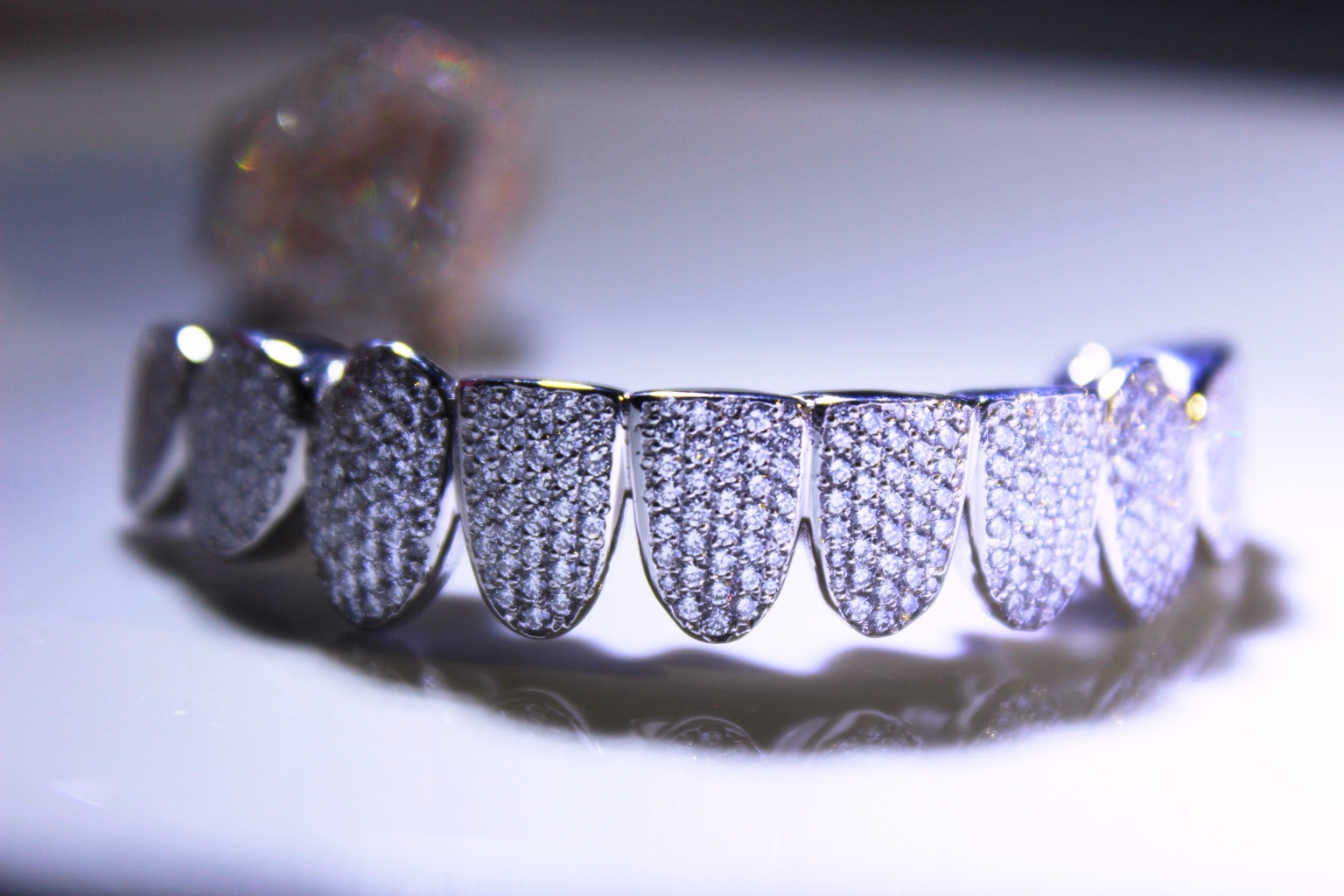
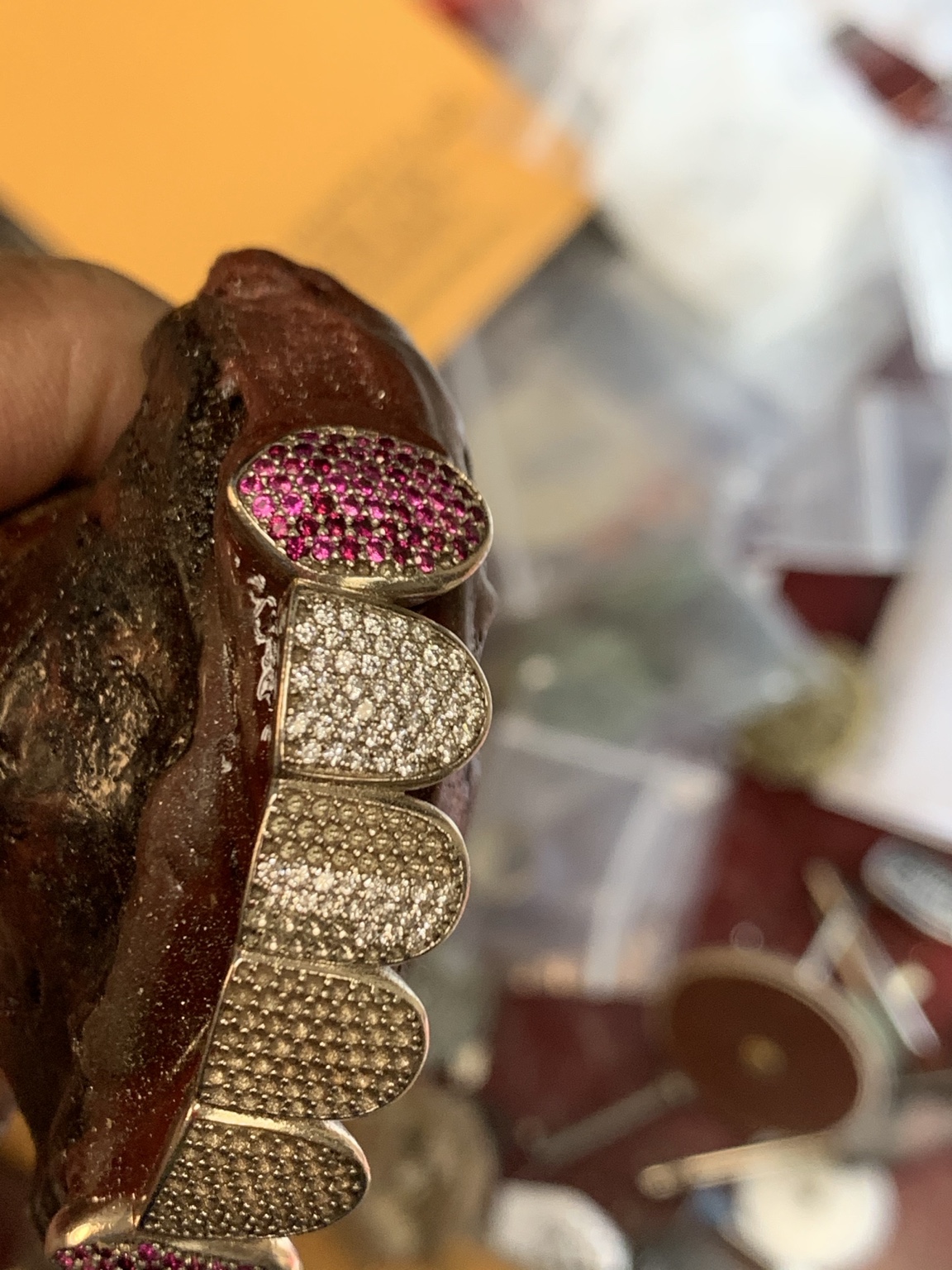
The designs varied. My portfolio includes all-round pavé arches, colored-stone combinations and decorative single-tooth pieces. Each project gave me another opportunity to work through shape, construction and the relationship between the design and the teeth beneath it.
When the cast did not fit
Production brought its own setbacks. In a separate arrangement with a manufacturer on 47th Street, I traded work while trying to get my pieces cast. I was being pressed to complete urgent jobs without payment while my own casting was delayed. Roughly ten to fifteen pieces came back with fit problems.
Those were expensive failures in time as well as work. A finished casting that did not fit meant returning to a problem I had already spent hours trying to solve digitally.
Eventually, I bought a centrifugal casting machine. Bringing more of the process within reach gave me another way to move the work forward instead of waiting on someone else at every stage.
The experience sharpened the distinction between making an attractive image and making wearable jewelry. The latter demanded control over the steps between them.
Bringing invisible setting to the teeth
Borderless invisible-set rings gave me the visual direction for The Avalanche. I wanted to bring that continuous diamond surface to a grill, adapting the look to the shape and requirements of the mouth.
My contribution included the mold, the base, the layout and the grill workflow. The Hong Kong manufacturer brought expertise in invisible setting. The factory specified the depth needed for the stones, handled the diamond setting and consulted dental clinics as the project developed.
That division of work was central to the collaboration. Their setting skill met knowledge I had been developing through my own training, experiments and production experience.
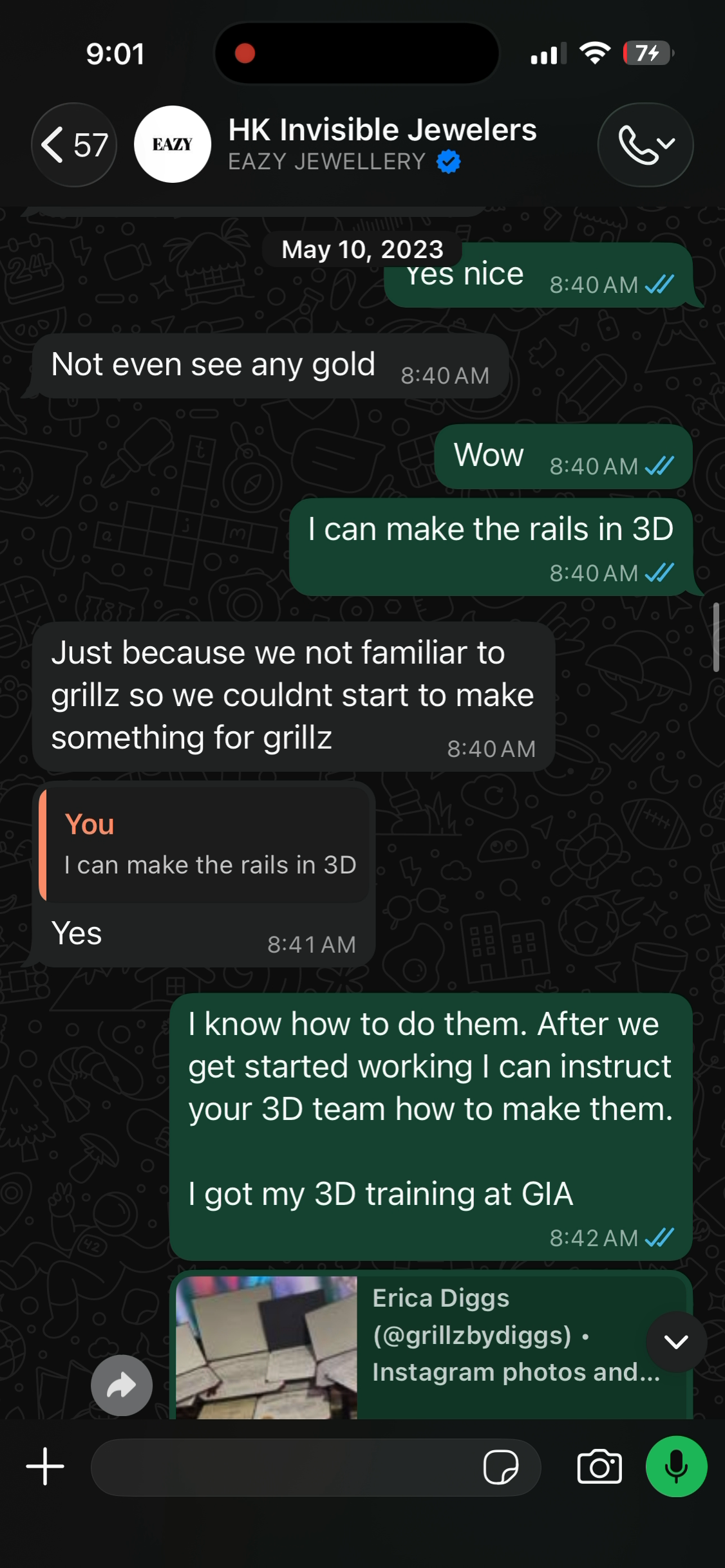
On May 9, 2023, I contacted the manufacturer after seeing its Instagram advertisement. By the following day, our conversation had moved to grills, 3D files and borderless setting.
“I can make 3D and send you files,” I wrote.
The supplier discussed invisible-set grills and answered, “We can do no border.” Then came a more specific admission:
“Just because we not familiar to grillz so we couldnt start to make something for grillz”
I offered to make the rails in 3D. The supplier quoted that message and replied, “Yes.” On May 10, I explained the next step:
“I know how to do them. After we get started working I can instruct your 3D team how to make them. I got my 3D training at GIA”
The relationship began with complementary skills. The factory knew invisible setting. I brought the grill-specific design knowledge and offered to teach its team the workflow.
From the base file to the prototype
On May 22, I showed earlier work and discussed how I had started making my invisible-setting design. Two days later, I sent a file titled “invisible base.zip.”
“Here is a grill with the base in STL format,” the May 24 message read.
By May 29, a rendered design was in the conversation. I asked Max for the 3D file so I could render it in my own software and prepare the announcement. I already had the wording:
“The Worlds First Set of Borderless Invisible Set Diamond Grillz”
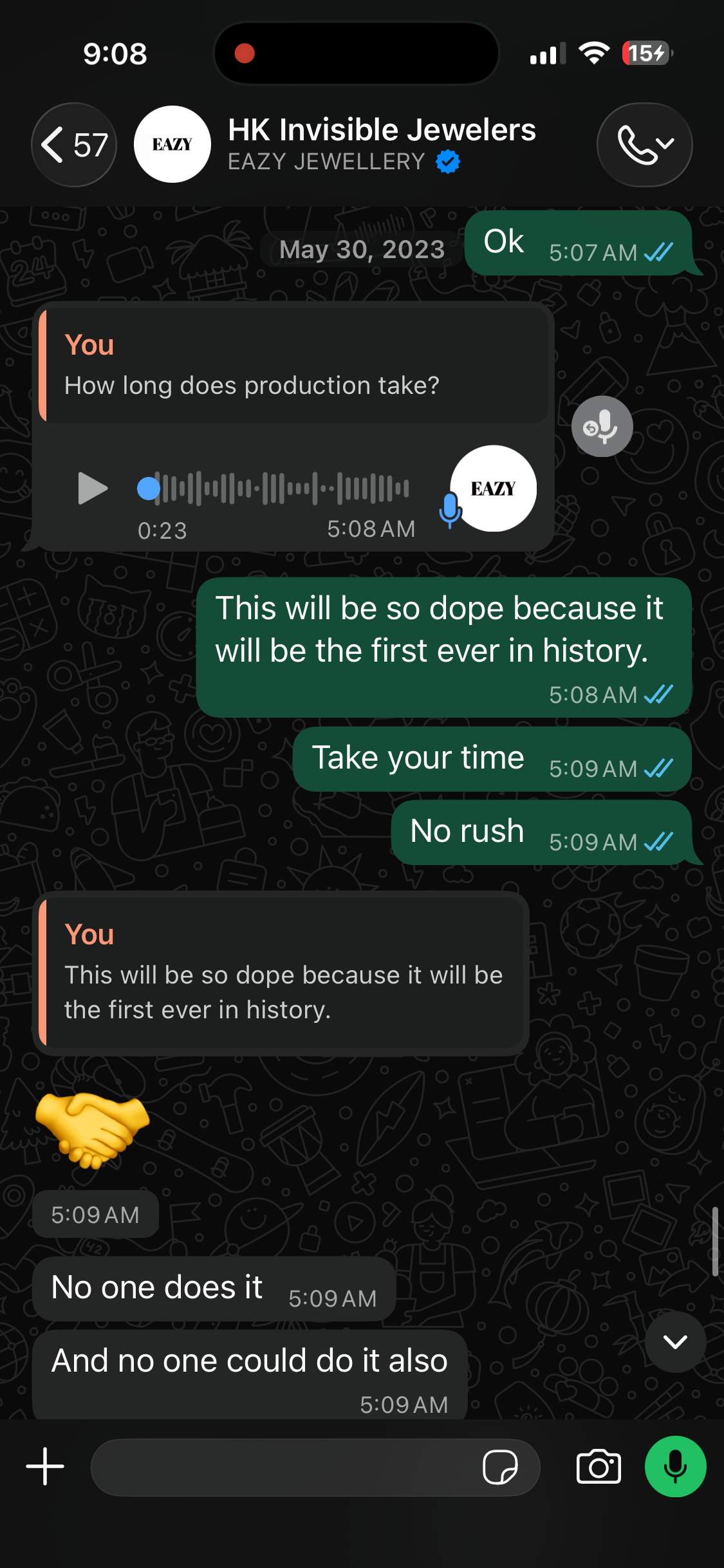
I regarded the piece as a first. On May 30, I told the supplier it would be “the first ever in history.” The response was enthusiastic: “No one does it,” followed by, “And no one could do it also.”
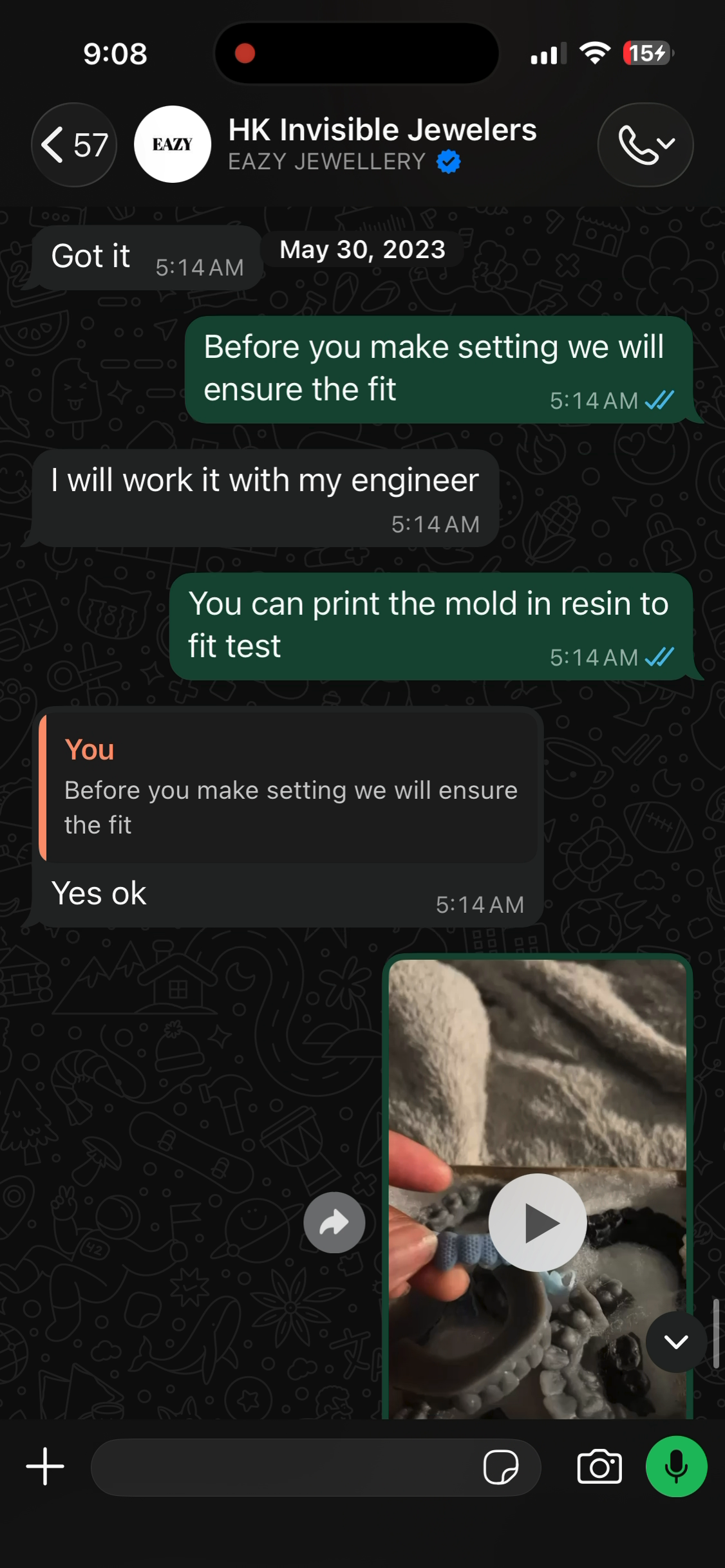
The excitement ran alongside practical instructions. I told the supplier I was highly skilled at making grills fit. We discussed testing the mold in resin before setting the stones.
“You can print the mold in resin to fit test,” I wrote on May 30. The supplier quoted my instruction to ensure the fit before making the setting and replied, “Yes ok.”
On May 30, the manufacturer asked for four to five weeks to make the piece. In a voice note, he explained that the team wanted to get the fit right. He did not want to send her a grill that would not fit her teeth.
I would wear the prototype. Having worn grills before, I could judge how the design felt against my own teeth and where it needed improvement. The fit test connected the digital development to the person the piece was being made for.
The Avalanche takes shape
My June 1, 2023 Instagram announcement showed a render of the grill while it was in production. The straight-edged central stones and the rounded pavé ends gave the piece distinct textures within one arch.
By the June 23 production-progress reel, the name was public: Avalanche. The caption described the lightweight borderless invisible setting as almost complete and the calculations and mapping that preceded manufacturing.
The name also appeared in my July 8 message to the manufacturer: “I named it ‘The Avalanche’.” Completed-grill photographs followed in the conversation.
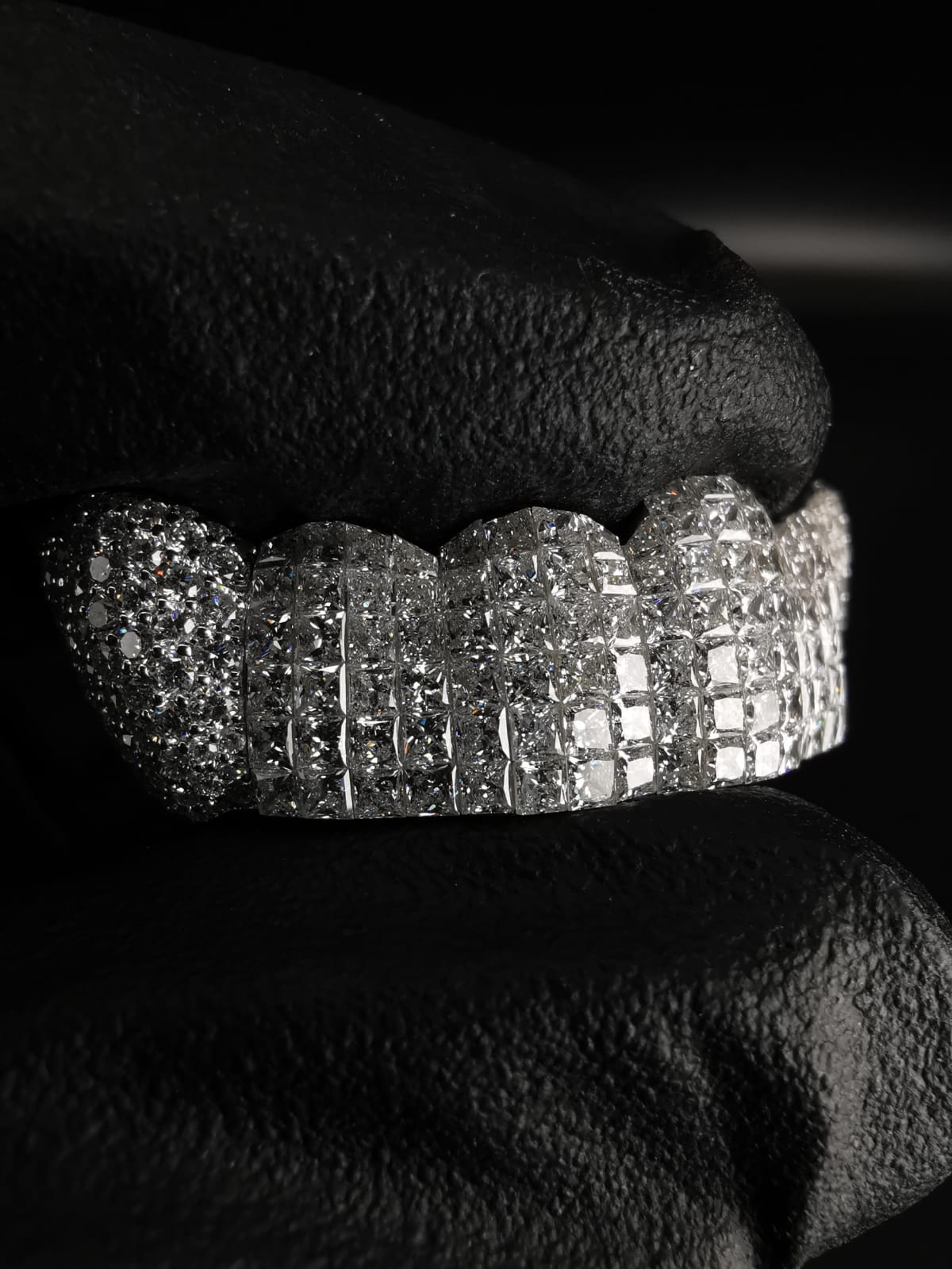
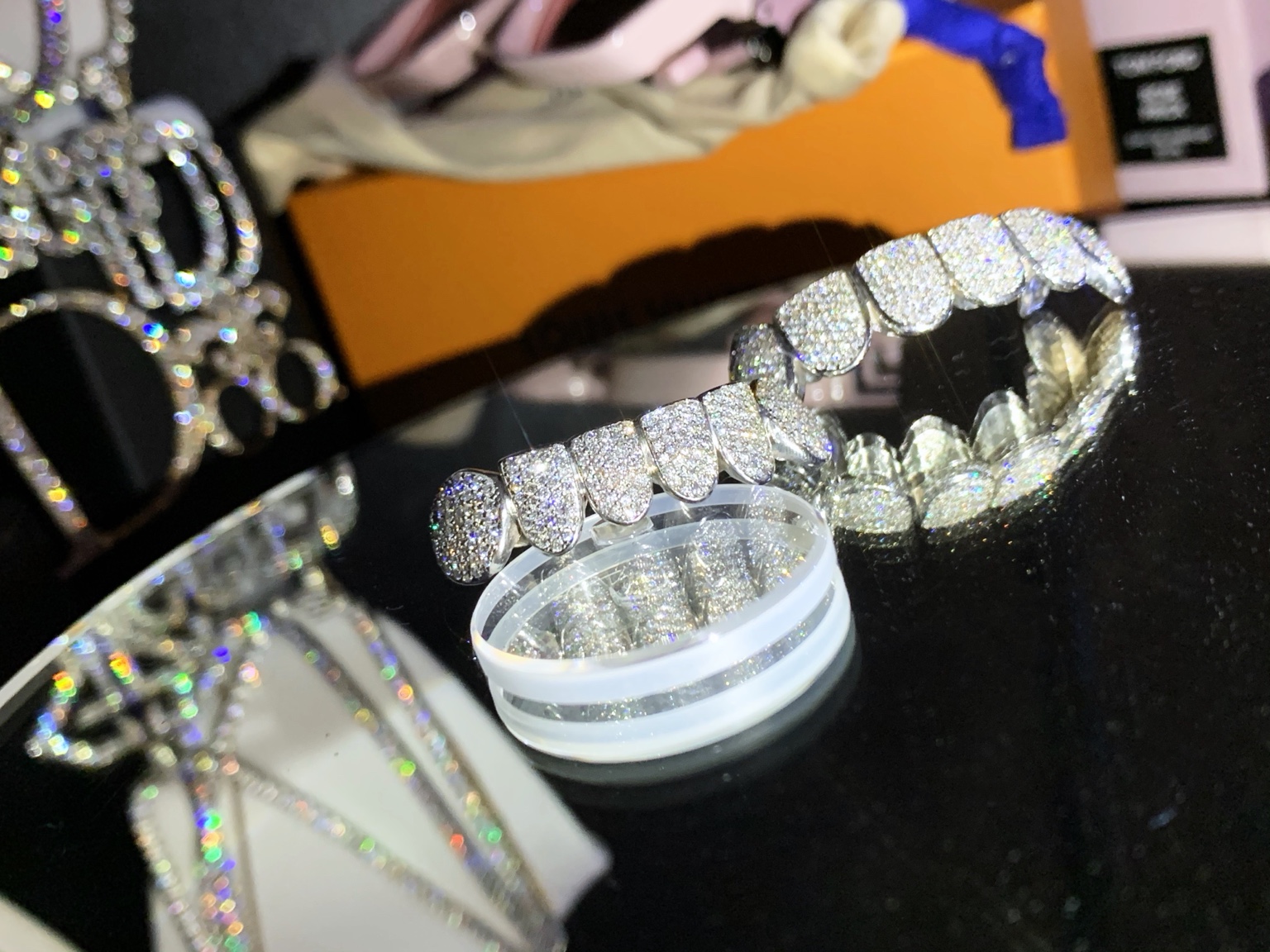
The finished piece brought together the visual direction and the work underneath it. The central stones filled their tooth-shaped sections; the pavé ends changed the texture as the arch curved away. In the close photographs, the divisions between teeth remained visible even as the diamonds carried the surface.
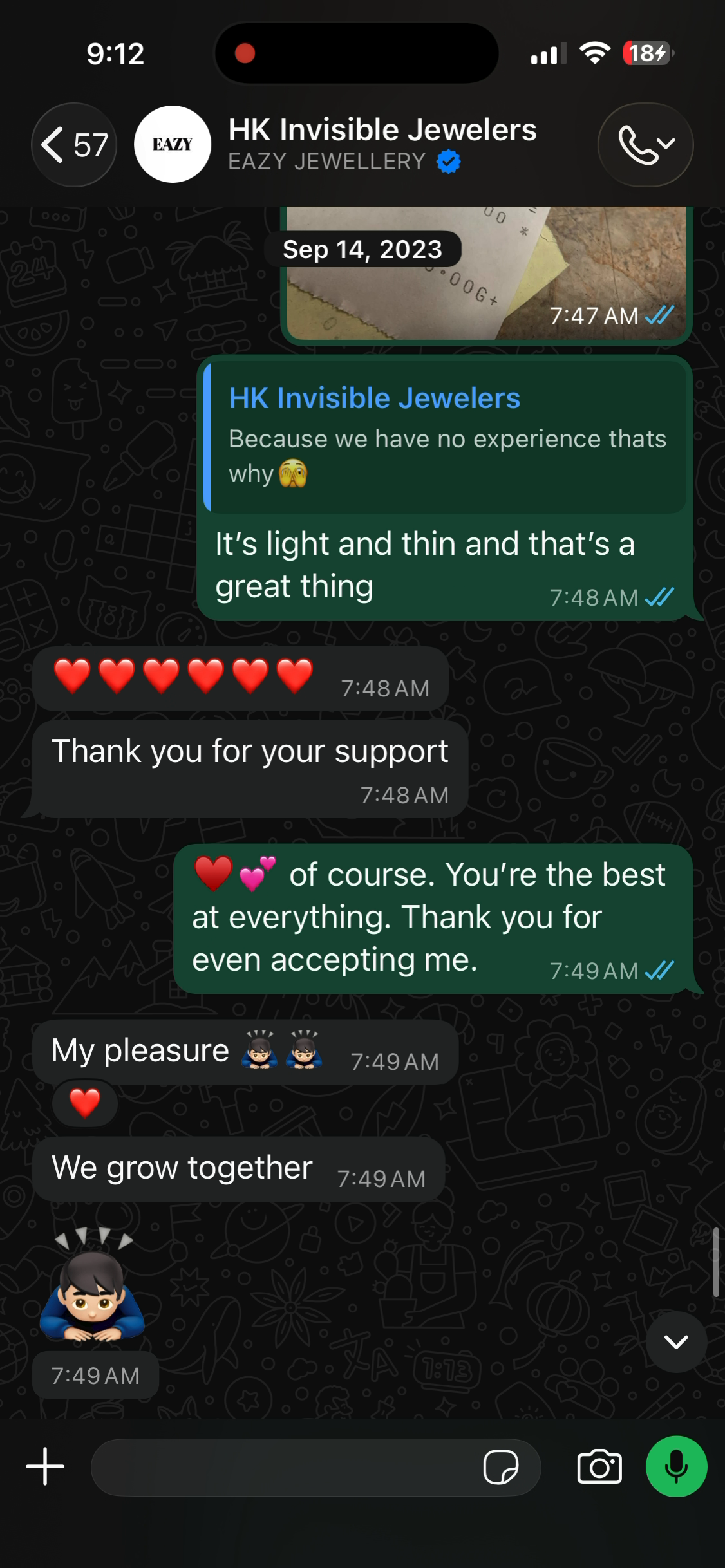
On September 14, I sent the manufacturer the result of wearing it: “The grill u made is so light and thin it feels natural.” The response included a thank-you for my support and the words, “We grow together.”
Some improvements stayed with me. The prototype was one stage of the design, and I had further ideas I was not ready to hand over.
The personal piece becomes a public dispute
On October 4, 2024, I publicly challenged the use of photographs of my personal grill. In one post, I pointed to my 3D work and the grill in my mouth. In a second, I accused @pjaythejeweler and vvsandbetter of presenting photographs of my set as their own creation and said the Hong Kong manufacturer had supplied the images.
The object at the center of the dispute was personal. It had been designed for my teeth and developed through work I had financed and helped direct. Seeing its image detached from that history hurt.
The frustration extended beyond a photograph. I had spent money learning, paying designers, testing methods and trying to correct manufacturing problems. Protecting that investment through legal action was beyond what I could afford.
Creating the work and having the resources to defend it were two very different realities.
Saint Jewels and the reach of a design
In its October 6, 2026 reel, Saint Jewels displayed upper and lower diamond grills and tagged Larry June. Held in a black glove, the arches showed repeating geometric stone panels across the teeth.
Seeing Saint Jewels work in a style I developed is an honor. His piece is his own execution, and I appreciate seeing that design approach carried into other work. Respected jewelers have praised what I created. Their recognition means something to me as a designer who has spent years developing the method.
That appreciation sits alongside pride in my own contribution. The Avalanche’s development is there in the dated exchanges: the instruction I offered on May 10, the base I supplied on May 24, and the fit-testing discussion on May 30, 2023. My June 1 public announcement and June 23 production reel followed.
First, best and what comes next
I am a Black woman and a military veteran who developed this method through training, experimentation and persistence. I brought the grill-specific knowledge, design and workflow into the collaboration that produced The Avalanche. The factory brought its invisible-setting craftsmanship. The finished piece carries both contributions.
My ambition has always been to be first or to be the best. With The Avalanche, I see myself as both. I can stand behind my work and appreciate what other jewelers do with the style.
The next stage is a relaunch, with plans to continue producing The Avalanche and develop the improvements I held back. The software knowledge, documented workflows and lessons from the prototype remain part of my practice.
On May 30, 2023, I told the manufacturer I would wear it. By September, I could tell them the grill felt light, thin and natural. That was the result I had worked toward: an idea developed into jewelry that belonged on my own teeth. The next designs begin with everything that first piece taught me.
SOURCES
- Erica Diggs’s June 1, 2023 design announcement.
- June 23, 2023 Avalanche production-progress reel.
- October 4, 2024 design-credit statement.
- October 4, 2024 statement about the disputed photographs.
- Saint Jewels’ October 6, 2026 reel.
- Diggs & Co., source of the supplied portfolio photographs.
- May 10, 2023 design and instruction exchange.
- May 30, 2023 development discussion.
- May 30, 2023 resin fit-test exchange.
- September 14, 2023 wearing and fit feedback.