On May 7, 2002, Allen Iverson sat before reporters in a fitted cap and an oversized black shirt, silver bright at his ears and layered chains resting across his chest. The Philadelphia 76ers had just been eliminated from the playoffs, and the questions were about practice. Iverson's answer would become one of the most replayed press conference clips in sports history. The picture deserves just as much attention as the sound.
What looks familiar now was not neutral then. The cap, the scale of the clothes, the earrings and the chains placed a fully formed hip hop identity inside an NBA setting that still expected its stars to translate themselves for broad approval. Iverson did not arrive dressed for a future tunnel camera. He arrived looking like himself, and millions of people recognized the distinction.
That image still matters because the league eventually learned to market the freedom it once treated as a problem. Before the tunnel became a runway, Iverson had already made the walk personal.
The authority behind the image
Style could not have carried this story without basketball. Iverson came from Hampton, Virginia, starred at Georgetown and became the first pick in the 1996 NBA Draft. He won Rookie of the Year in 1997, collected four scoring titles and carried Philadelphia to the 2001 NBA Finals during his Most Valuable Player season.
He made 11 All Star teams, entered the Naismith Basketball Hall of Fame in 2016 and was named to the NBA 75th Anniversary Team. He was barely six feet tall in a league built around size, yet he attacked the lane as if fear belonged to somebody else.
The courage made the clothes credible. Fans did not see a costume attached to a marketing plan. They saw the same person in the tunnel, at the microphone and at the rim. Iverson's basketball authority gave him room to alter the visual language of the league, even when its institutions pushed back.
A superstar who looked familiar
Basketball had style icons before Iverson. Walt Frazier made tailoring theatrical. Magic Johnson carried Los Angeles polish. Michael Jordan turned a suit and a sneaker into global business. Dennis Rodman made fashion a form of provocation. Iverson did not diminish any of that history. He opened a different door.
Cornrows, throwback jerseys, Timberland boots, oversized shirts, headwear, tattoos and jewelry were part of the lived culture around him. GQ's oral history records his insistence that he was not manufacturing an image. The men he knew already dressed that way. His achievement was bringing that language into the center of basketball without sanding away where it came from.
The response crossed geography and background. Black fans saw parts of their communities represented without apology. Young people far from Hampton copied the headband, the sleeve and the shoes because his defiance made individuality feel available. Hip hop artists embraced him because he was not treating their culture as a weekend costume. Players watched what happened when one of the league's brightest stars refused to separate performance from identity.
“My outfit cost more than the guys that had on a suit.”
The point was not that price made an outfit respectable. It was that respectability had been defined through a narrow silhouette. Iverson exposed how quickly a fitted cap or a chain could become a judgment about character, even when the person wearing it had reached the top of his profession.
The season when everything met
The 2001 season fused the athlete and the icon. Iverson won the scoring title and league MVP, then led the 76ers through a bruising Eastern Conference run and into the Finals. His partnership with coach Larry Brown had survived public friction because both men understood that the other could take Philadelphia where it wanted to go.
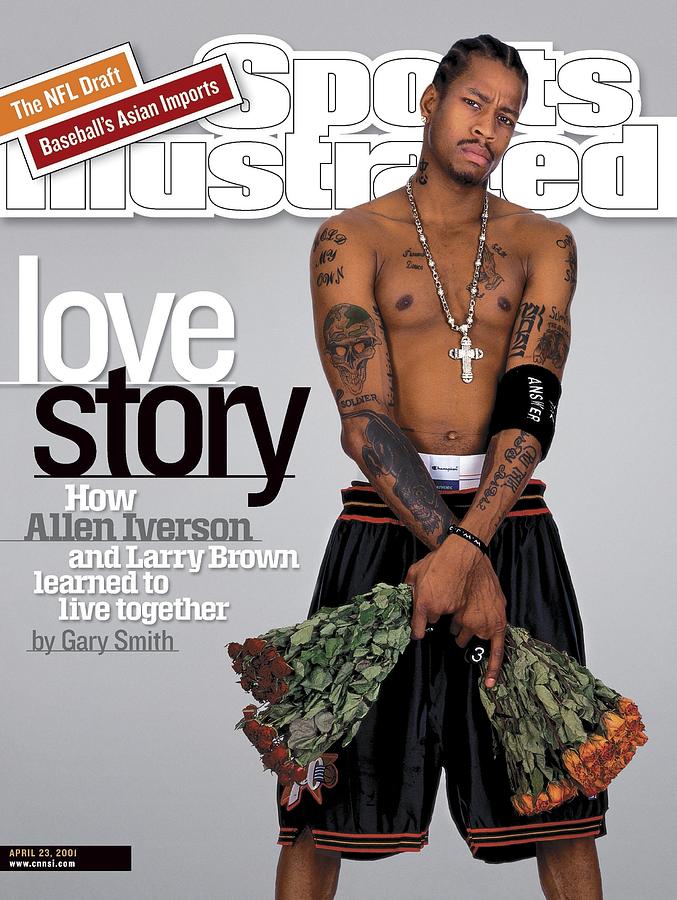
The April 23 Sports Illustrated cover captured that complicated bond through a portrait rather than a game frame. Iverson stands shirtless in uniform shorts, tattoos visible, a cross pendant at his chest and flowers in both hands. The cover line reads “Love Story,” a playful description of how Brown and Iverson learned to live together while lifting the team toward the top of the league.
That season established more than competitive legitimacy. It made his entire presentation impossible to dismiss as style without substance. The crossover, the sleeve, the braids, the jewelry and the refusal to retreat were now attached to an MVP.
Jewelry as autobiography
Iverson's jewelry story began in the exchange between basketball and music. In his 2023 GQ interview, he remembered Sean “Puff” Combs as an influence on the flash and aspiration he associated with success. He watched Tupac Shakur and the Notorious B.I.G. make jewelry part of a larger language about arrival.
His first league chain was gold and diamond with a diamond cross. On draft night, he told GQ, the chain was hidden beneath his clothes while his bracelets, ring and Rolex remained visible. The detail is revealing. Jewelry was already part of the occasion before television learned to treat draft night as a fashion event.
Iverson said that he and Puff used Manny the Jeweler. He remembered going jewelry shopping with Puff and Biggie, and he bought the same style ring that Tupac had purchased there. Those memories place his collection inside a real cultural circuit. Artists influenced an athlete, then the athlete carried that visual language into arenas and locker rooms where another generation of players could see it.
“Puff was my guy when it came to the jewelry and the flash.”
By 2023, GQ described Iverson in diamond bracelets, a bust down Patek Philippe, a diamond set Cuban link and a flooded I3 pendant. The I3 mark joined his surname and Philadelphia number in one piece. The jewelry had changed in scale and execution, but its purpose remained personal. It held aspiration, affiliation and identity close to the body.
His earrings deserve the same restraint a gemologist would bring to any photograph. Images across his career show large diamond appearing studs or solitaires, often worn as a matched visual pair. Large, closely matched stones became a powerful status signal because symmetry, face up presence and consistency are difficult to achieve at scale. A photograph cannot establish carat weight, grade, natural origin, setting metal, value or whether each earring contains a single stone. Those conclusions require direct examination and documentation, not visual guesswork.
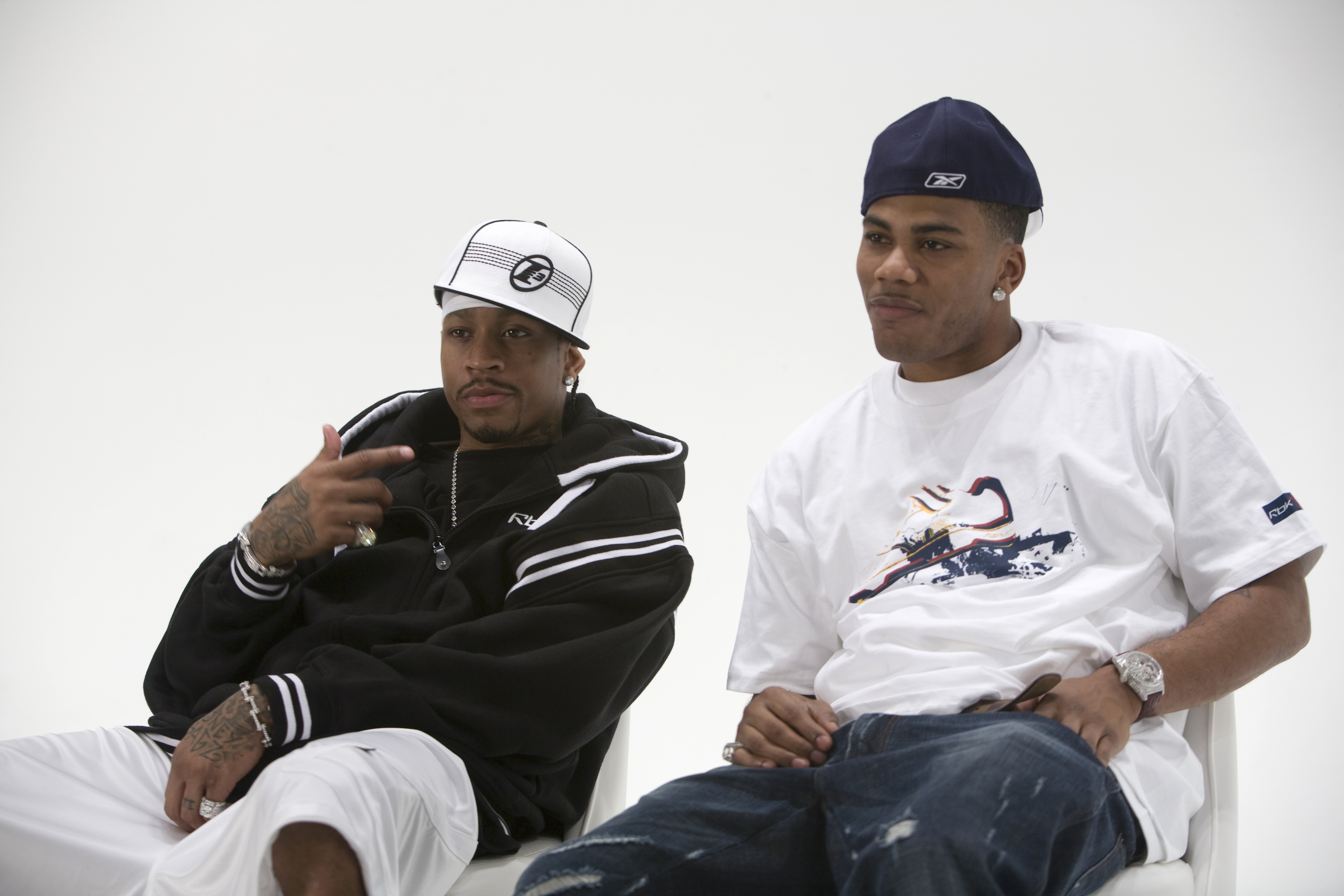
Jewelz: The Rap Career the NBA Tried to Silence
The boundary between athlete and artist became more complicated in 2000, when Iverson recorded as Jewelz. “40 Bars” surfaced as a single and drew warranted criticism for violent, misogynistic and anti gay lyrics. A planned debut project was reported under the title Non-Fiction and later Misunderstood, but the album was shelved and never commercially released.
Commissioner David Stern condemned the lyrics. Contemporary ESPN reporting said Iverson agreed to remove the offensive language after the two met. Years later, Iverson recalled the strange intimacy of a private meeting in which Stern read the lyrics aloud to him.
There is no need to turn accountability into persecution. The language deserved criticism, and Iverson's later embarrassment does not erase its harm. What the moment reveals is how thoroughly his public identity crossed the categories the league preferred to keep separate. He was an MVP level basketball player speaking in the music and vocabulary around him, with all the authenticity, influence and responsibility that carried.
Jewelz was not a detour from the story of style. It was another place where self expression met institutional power, and where expression did not remove the obligation to answer for what was said.
The image conflict was already underway
The friction started before the 2005 dress code. GQ's oral history recounts league officials expressing concern over the Reebok skull cap Iverson wore to his Rookie of the Year press conference. The same oral history reports that the NBA's official Hoop magazine airbrushed out his neck tattoo on a cover.
Those episodes show an institution trying to edit the signs around a young star while benefiting from his talent and popularity. They also explain why later debates about clothing landed on Iverson with unusual force. He had become the central symbol of a cultural shift that involved many players but had no more recognizable face.
On October 17, 2005, the NBA announced a business casual policy for players during official league and team activity. Contemporary ESPN reporting listed restrictions on headgear, jerseys, T shirts, chains, pendants or medallions worn over clothing, sunglasses indoors, Timberland style boots and other items associated with the era's hip hop aesthetic. Injured players on the bench were expected to wear a sports coat.
The league never officially named the rule for Iverson, and no single player caused it. Yet the prohibited items mapped so closely onto the image he had normalized that he became the argument's center. The policy followed the 2004 brawl in Detroit and a period of intense concern about the NBA's public image. For many players and fans, it also carried a racial message about which expressions of Black identity could be presented as professional.
Iverson complied when required without accepting the premise that his original clothes reflected a defective character. His larger principle was not that everyone should dress like him. It was that success should not require every player to look the same.
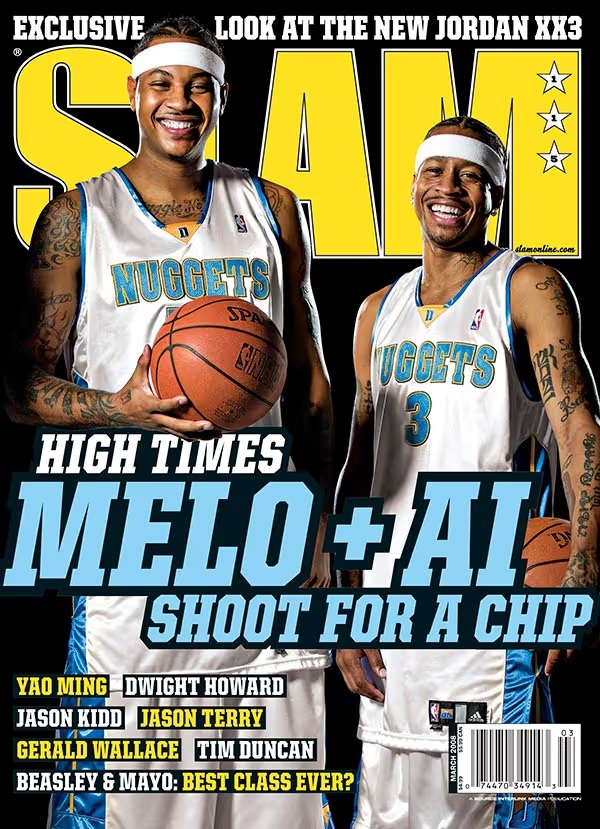
The sleeve became a silhouette
Iverson's influence also traveled through an object that began as treatment. The New Yorker reported that an injured elbow led 76ers trainer Lenny Currier to cut a length of compression stockinette for him before a January 21, 2001 game. Iverson scored 51 points that night and continued wearing a sleeve.
Under Armour later supplied longer colored versions. Other players adopted them, and the shooting sleeve became part of basketball's visual grammar. The path from medical necessity to fashion accessory was pure Iverson. Anything he wore with conviction seemed to acquire meaning.
The sleeve, headband, braids and Reebok shoes gave young players a silhouette they could reproduce. His throwback jersey habit also helped accelerate a trend that moved through basketball and streetwear. He did not invent every element. He made the combination unmistakable.
From resistance to the tunnel economy
By the late 2010s, arena entrances had become fashion media. Cameras waited for players. Dedicated accounts identified clothes within minutes. Stylists, designers and brands turned arrival into an economy. The league that once worried about Iverson's skull cap now benefited from players being recognized as individual visual brands.
The change was gradual. In the 2020 Orlando bubble, specific dress requirements were relaxed, including the expectation that players on the bench wear sports coats. That did not formally end the 2005 policy. It showed how far daily practice had moved from its original rigidity.
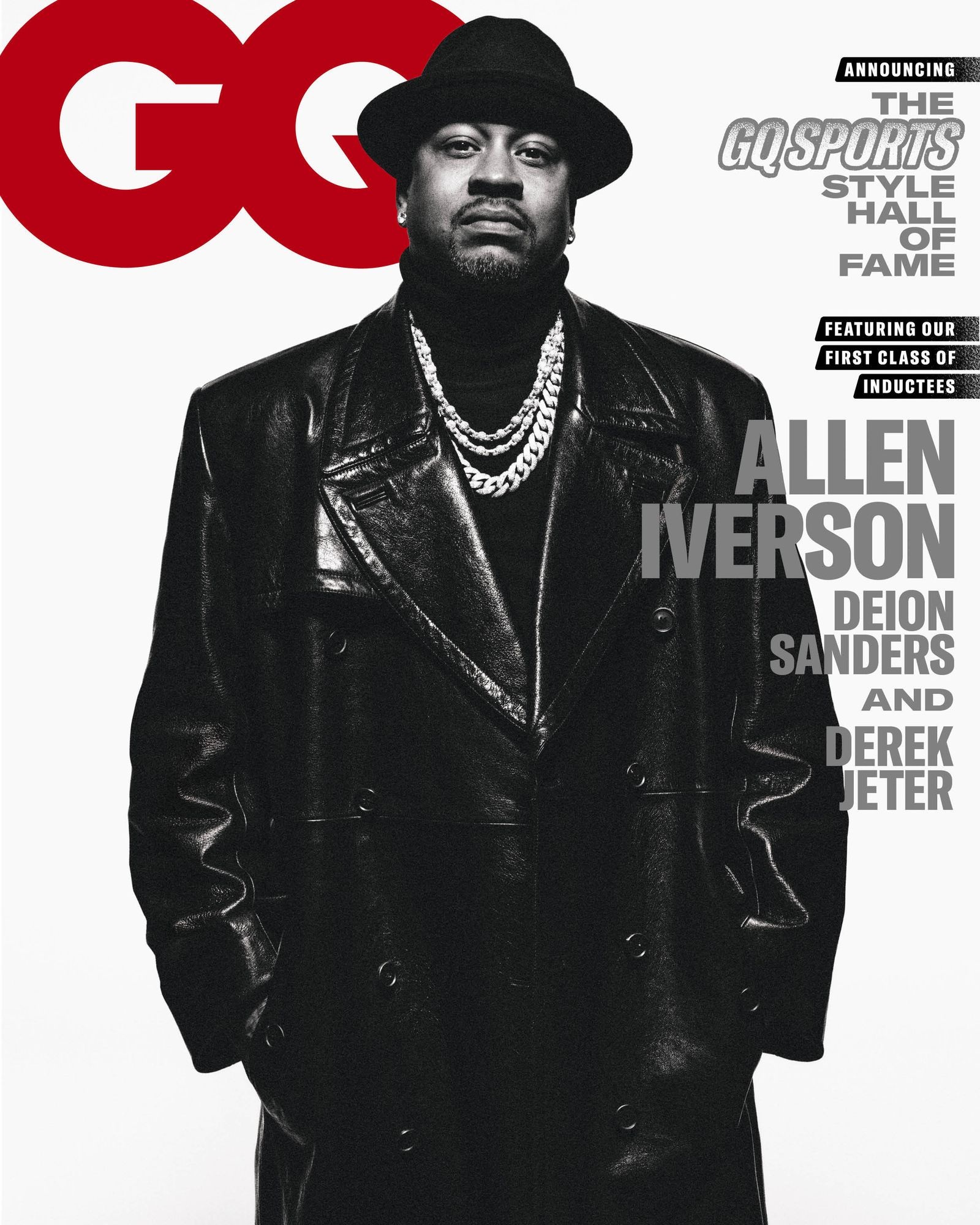
In 2023, GQ inducted Iverson into its Sports Style Hall of Fame. The honor did not make his influence real. It documented a verdict culture had reached long before. His style could be examined as fashion history because younger athletes had already inherited the freedom he fought to keep.
The basketball institutions eventually made their own acknowledgments. Iverson entered the Hall of Fame in 2016 and the NBA 75 list in 2021. The 76ers had retired his No. 3 jersey in 2014. In 2024, the team unveiled a statue of him at its training complex, a permanent image of the player whose appearance had once made institutions nervous.
Iverson Style & Legacy Timeline
- 1996: Philadelphia selects Iverson first in the NBA Draft after his Georgetown career.
- 1997: Iverson wins Rookie of the Year as his play and personal style command attention.
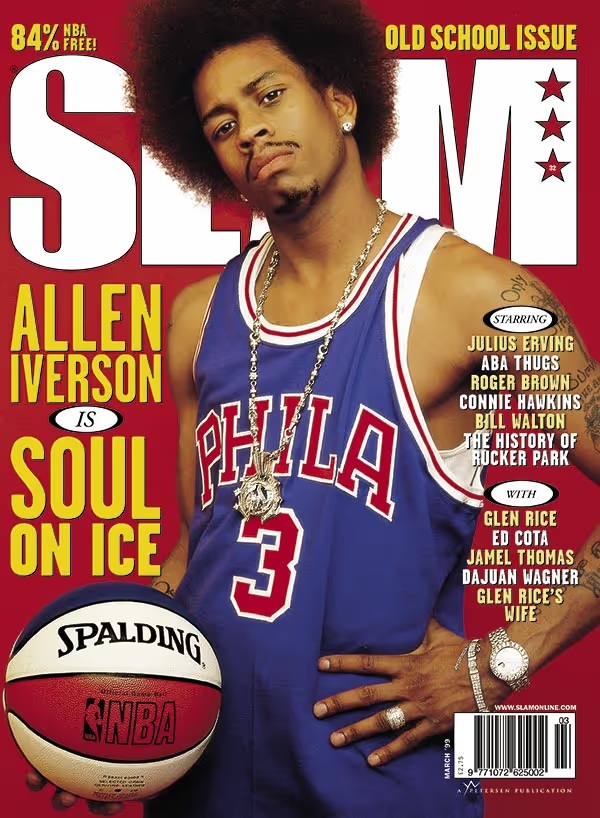
- 1999: SLAM publishes its Soul on Ice cover, joining throwback basketball history with hip hop presentation.
- 2000: The Jewelz single “40 Bars” draws criticism, and the planned album is later shelved.
- 2001: Iverson wins league MVP and leads Philadelphia to the NBA Finals.
- 2005: The NBA introduces its business casual dress code, and Iverson becomes the debate's central symbol.
- 2016: Iverson enters the Naismith Basketball Hall of Fame.
- 2023: GQ inducts Iverson into its Sports Style Hall of Fame.
The Answer changed the question
Iverson's legacy does not need a flawless hero. His recording demanded accountability. His career contained conflict, contradiction and pain. The cultural verdict is powerful because it can hold those truths beside his brilliance rather than hiding them.
He made the NBA confront a question larger than whether a player could wear a chain or a fitted cap. Could a superstar arrive from a Black community, carry its music and style into the league, and remain fully legible as a professional without translating himself into somebody else's comfort?
The modern answer is visible every night. It is in the tunnel photographs, the independent labels, the statement jewelry, the sneakers, the tattoos and the freedom players use to build identities beyond the game. Iverson did not create all of it alone. He absorbed a singular share of the resistance before the culture became profitable.
That May 2002 press conference survives as a joke to some people. Look again and it becomes a time capsule. The chains and earrings do not distract from the man at the microphone. They complete the record of who was allowed to be seen, who was asked to change and who kept showing up as himself.
Editor’s Note: What Allen Iverson Means to Me
When I was growing up, Allen Iverson was the coolest basketball player in the world. I wanted to be an NBA player, even though girls were not shown that dream with the visibility women basketball players have today. His influence reached me because he made greatness feel personal. He showed that reaching the highest level did not require pretending I came from somewhere else.
As a jeweler, I now understand his style with another layer of appreciation. The chains, earrings, watch and rings were not isolated objects. Together they communicated arrival, aspiration, memory and belonging. They connected the NBA to the rappers and communities that influenced its players long before the league publicly embraced that relationship.
This is why Iverson remains foundational to Drip With Diggs. We tell the story behind the ice. In his case, the story behind the ice is also the story of an athlete who expanded what a superstar was allowed to look like.
_Erica Diggs_