Jay-Z closed his JAŸ-Z30 anniversary concert series at SoFi Stadium in Inglewood on October 24, 2026, the second of two Los Angeles-area shows. USA TODAY’s account of the finale placed Too Short, Snoop Dogg and Dr. Dre among the guests and described tributes to Nipsey Hussle. The gathering connected a Brooklyn artist’s catalog with the city hosting its final celebration.
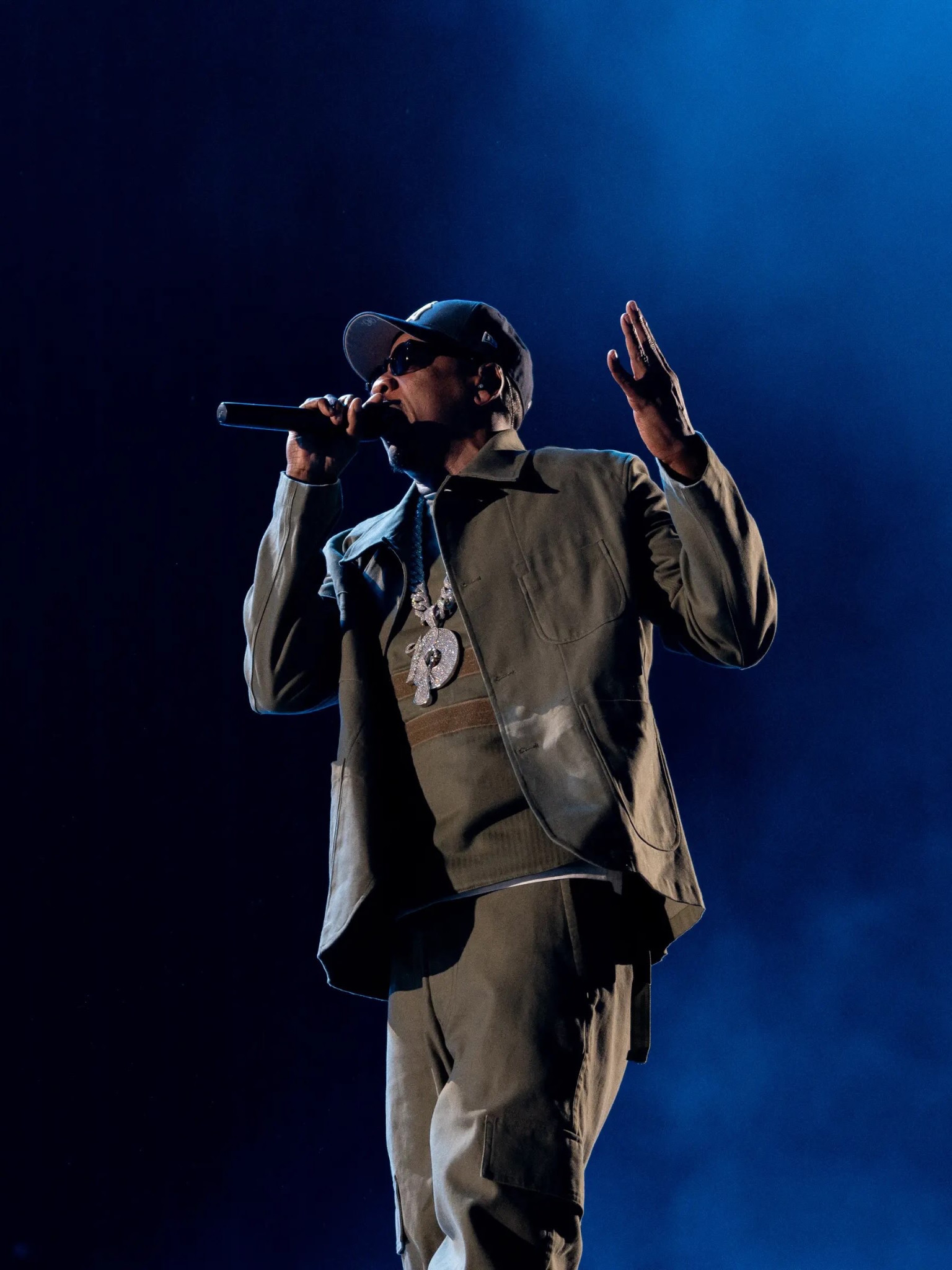
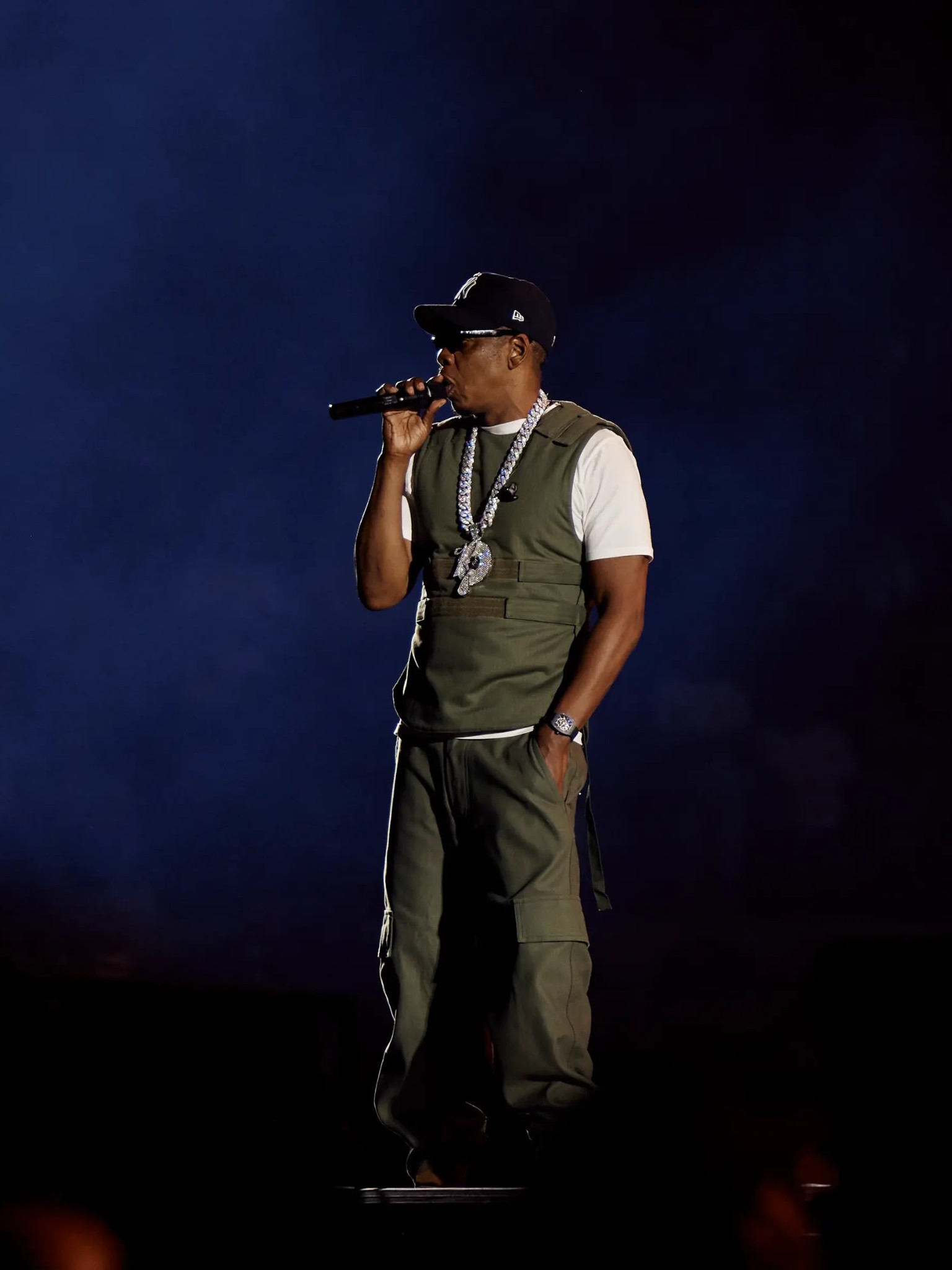
The chain was part of that anniversary image. In the official October 24 photographs, Jay-Z wears an oversized Roc-A-Fella pendant on a broad, stone-set Cuban-link necklace. The record, champagne bottle and script R are recognizable against his dark vest. The substantial links give the emblem a strong frame, while its familiar outline connects this stadium appearance to the smaller and layered versions in the archive. The scale commands attention; the design carries the history.
Thirty years after Reasonable Doubt, the occasion also invites a closer look at the objects that made Jay-Z’s early ambitions visible. Few carry the history of Roc-A-Fella as clearly as its chain. The pendant condensed a record label into something that could move through a studio, appear in a photograph and change hands in front of an audience.
Its importance has never depended on one size or one price. A Roc-A-Fella chain can be a piece of jewelry, an emblem of affiliation and a gift with a very particular history. Those meanings overlap, but they are not interchangeable. To understand why the chain still commands attention, the question is less how much it cost than who gave it to whom.
A closer look through Kodak Lens
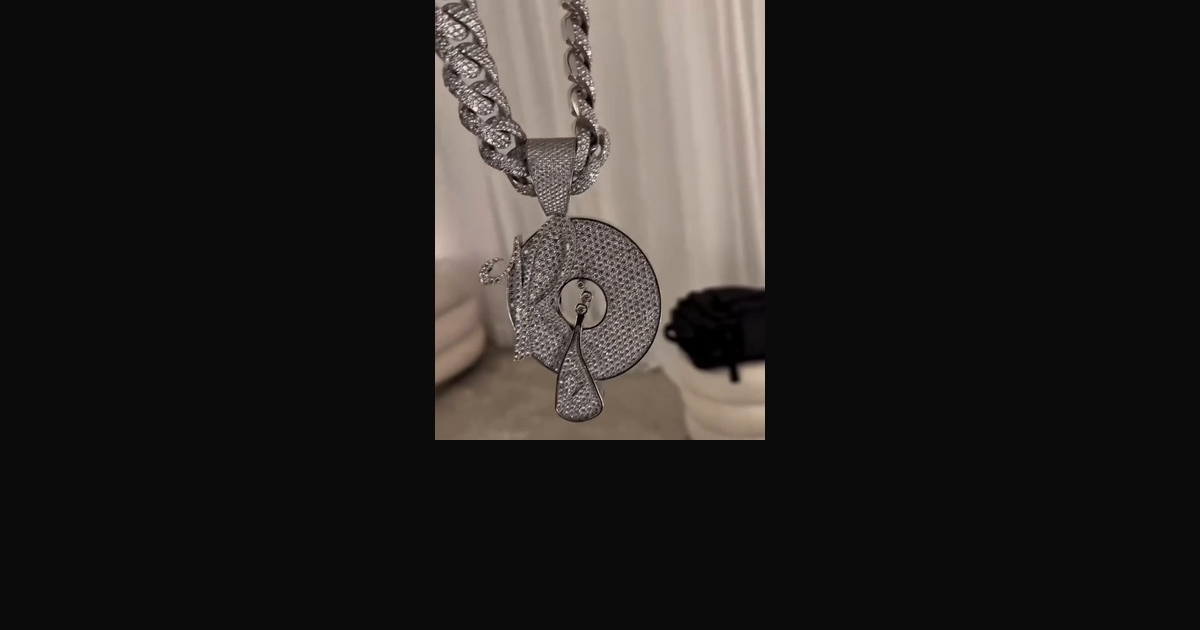
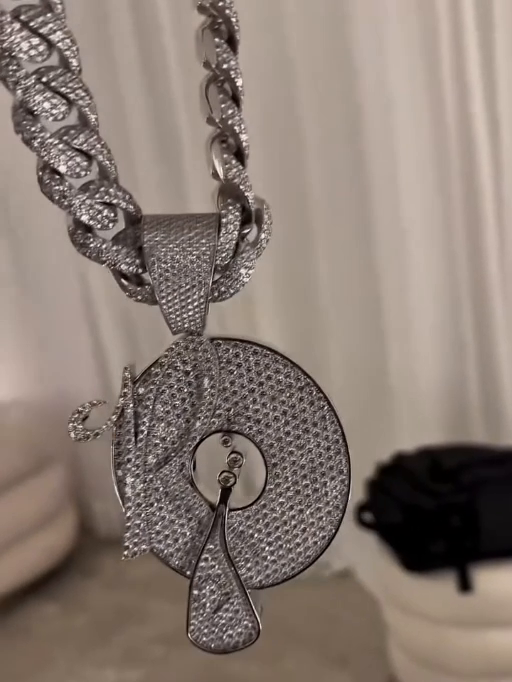
New photographs and a chain-only video from Lenny S., known on Instagram as @kodaklens, bring the Roc-A-Fella emblem into closer view. The video frame shows stone-set links meeting a broad, triangular bail above the pendant. Below it, the record, champagne bottle and sweeping script R form a layered composition, with the circular center giving the eye a place to rest amid the closely set stones.
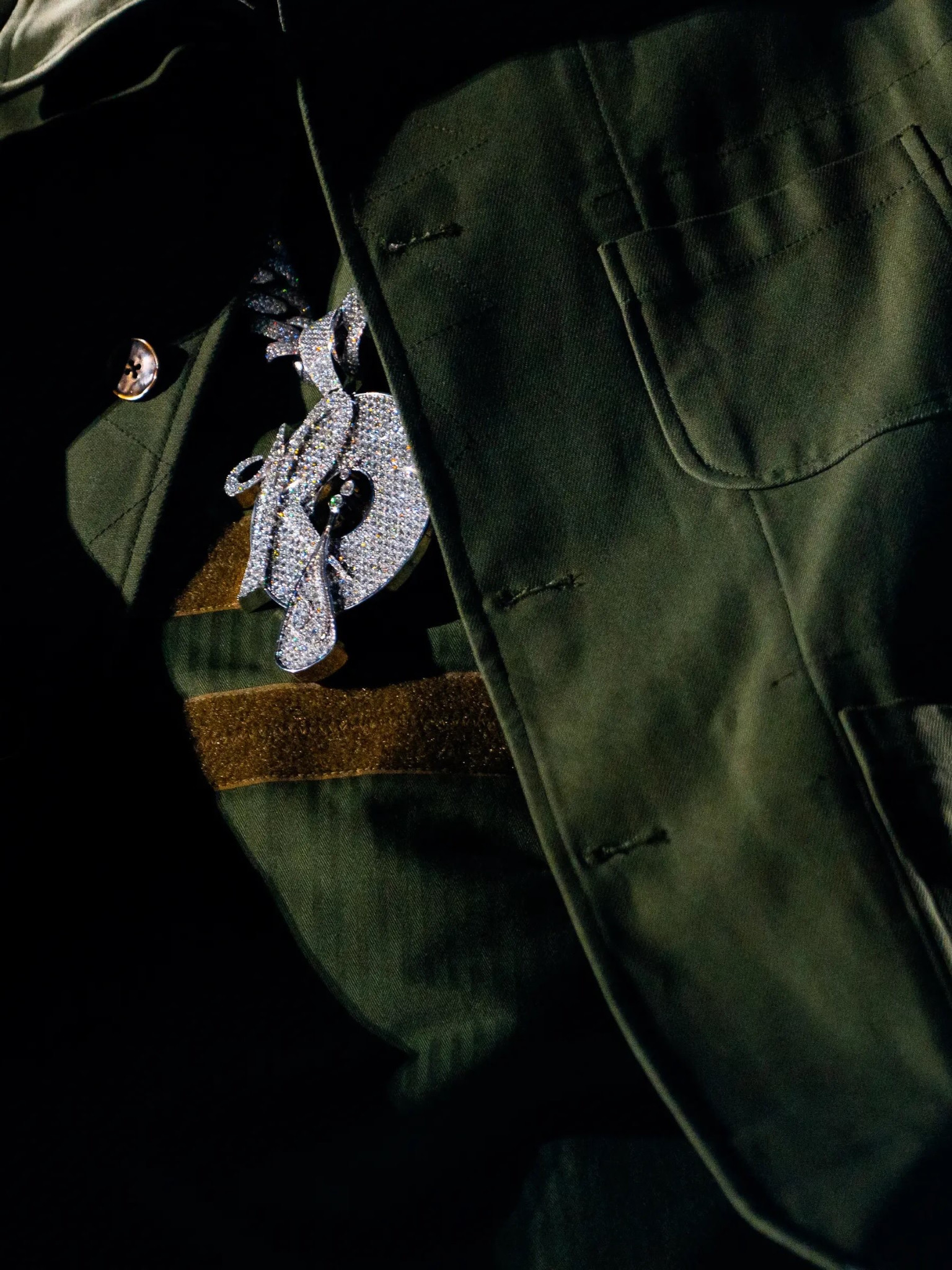
The close-up photograph against olive fabric gives the emblem another setting. Its bright surface stands apart from the matte cloth, while the overlapping shapes preserve the logo's familiar outline. In the performance photographs, the necklace becomes the center of Jay-Z's look, framed by an open jacket in one image and worn over a vest in another. The photographs make the relationship between the pendant, the links and the clothing easier to study without turning visible sparkle into an unsupported specification.
Watch the concert footage
Concert footage of Jay-Z supplied to Drip With Diggs, used with permission. The contributor asked to remain unnamed. The clip’s exact recording date has not been independently verified.
A record label made wearable
The emblem brings together a vinyl record, a champagne bottle and a cursive R. The American Museum of Natural History identifies that combination in its description of the Roc-A-Fella pendant, connecting the object to the label founded by Jay-Z, Damon “Dame” Dash and Kareem “Biggs” Burke. Music and celebration occupy the same small composition. The logo offers an entire attitude before a wearer says a word.
There is a useful early anchor in The Book of HOV, the official exhibition presented at Brooklyn Central Library in 2023. Its online archive dates a Roc-A-Fella chain to 1997. That is a date attached to a particular exhibited object, not proof that every version began that year. Still, it places the chain close to the beginning of the story now being revisited on stadium stages.
Explore the object: The Book of HOV’s Roc-A-Fella chain, dated 1997.
TIME’s 2022 oral history describes chains being bestowed with approval from at least two of Roc-A-Fella’s three founders. Its witnesses remember the beginning differently, placing it around 1996 or 1997 to 1998, and associate early production chiefly with Jacob Arabo. The account also records Ben Baller wearing a rose-gold version designed by Chris Aire in 2001. Dash’s presentation of his own chain to Kanye West became an enduring image of entry into the circle. These recollections describe recognition, not one standardized object made once and copied forever.
That distinction matters. A label’s name on an album tells a listener where a record came from. A chain carries that association into everyday life. It makes the relationship visible even when there is no music playing. For an artist receiving one, the object can turn an otherwise private acknowledgment into a moment that other people witness and remember.
One emblem in different forms
The photographic record resists the idea of a single, unchanging Roc chain. At the 2001 Radio Music Awards, Jay-Z wore one pendant below the diamond sign formed by his hands. At the Sprite Liquid Mix Tour in 2002, he layered two over a football jersey. The second photograph is especially revealing: different treatments of the emblem could coexist in one look, rather than simply replace each other in a tidy sequence.
Archive photographs: Jay-Z at the 2001 Radio Music Awards, photographed by Jason Kirk/Getty Images, and the 2002 Sprite Liquid Mix Tour, photographed by Tim Mosenfelder/ImageDirect/Getty Images.
One exhibited example was identified by The Washington Post as Jacob-made 14-karat rose gold with diamonds. Later production has other names attached: the introduction to a 2019 Authority Magazine interview credits jeweler Alex Todd with handling Roc-A-Fella and Paper Planes chains for Roc Nation clients. The emblem endured while the people supplying it and the relationships surrounding it continued to develop.
A careful history therefore follows individual objects instead of assigning one specification to the whole family. The important differences may involve proportion, the chain supporting the pendant, the arrangement of stones or the person who commissioned it. Two pieces can share the same silhouette and have very different biographies. A later version does not erase an earlier one, and a familiar logo does not prove that a newly photographed pendant is the same object seen years before.
When a chain becomes a ceremony
Some of the most revealing chapters take place when the jewelry leaves Jay-Z’s neck. On January 28, 2014, J. Cole celebrated his 29th birthday at the Theater at Madison Square Garden. XXL’s contemporary concert review records Jay-Z appearing and giving Cole his original Roc-A-Fella chain. The gift joined an older label’s emblem to a younger artist associated with Roc Nation.
DJ Khaled’s 2016 Roc Nation management announcement included another presentation. BET reported Jay-Z describing the gift as the last original Roc-A-Fella chain in his personal collection. Khaled later showed it in GQ’s 2019 On the Rocks interview, describing its Cuban-link pairing and emphasizing that it had personally belonged to Jay-Z. The object’s place in that collection was part of what made receiving it special.
Big Sean’s story begins before he received his own. In a 2012 GQ interview, he named Jay-Z’s Roc-A-Fella chain among hip-hop’s best. Five years later, around the release of I Decided, he told Angie Martinez that Jay-Z had given him one and said, “You earned it.” In GQ’s own video interview that February, Sean described the gift as rare and unexpected. The earlier admirer had become a recipient, with the same emblem connecting those two stages of his career.
BET reported another gift to Meek Mill at New York’s D’Ussé Palooza in December 2018. In his Instagram Story, Meek emphasized that Jay-Z had taken the chain from his own neck. The gesture gave the object a direct line of provenance: it had belonged to the person now placing it in another artist’s hands.
Meek’s later recollection makes the personal meaning unusually clear. As reported by HotNewHipHop from a 2023 Complex conversation, he said he had asked Jay-Z for the chain. He could buy one, he explained, but wanted “this actual artifact from you.” His account complicates the idea that a recipient could never ask. What mattered to him was receiving Jay-Z’s own piece, with its history intact.
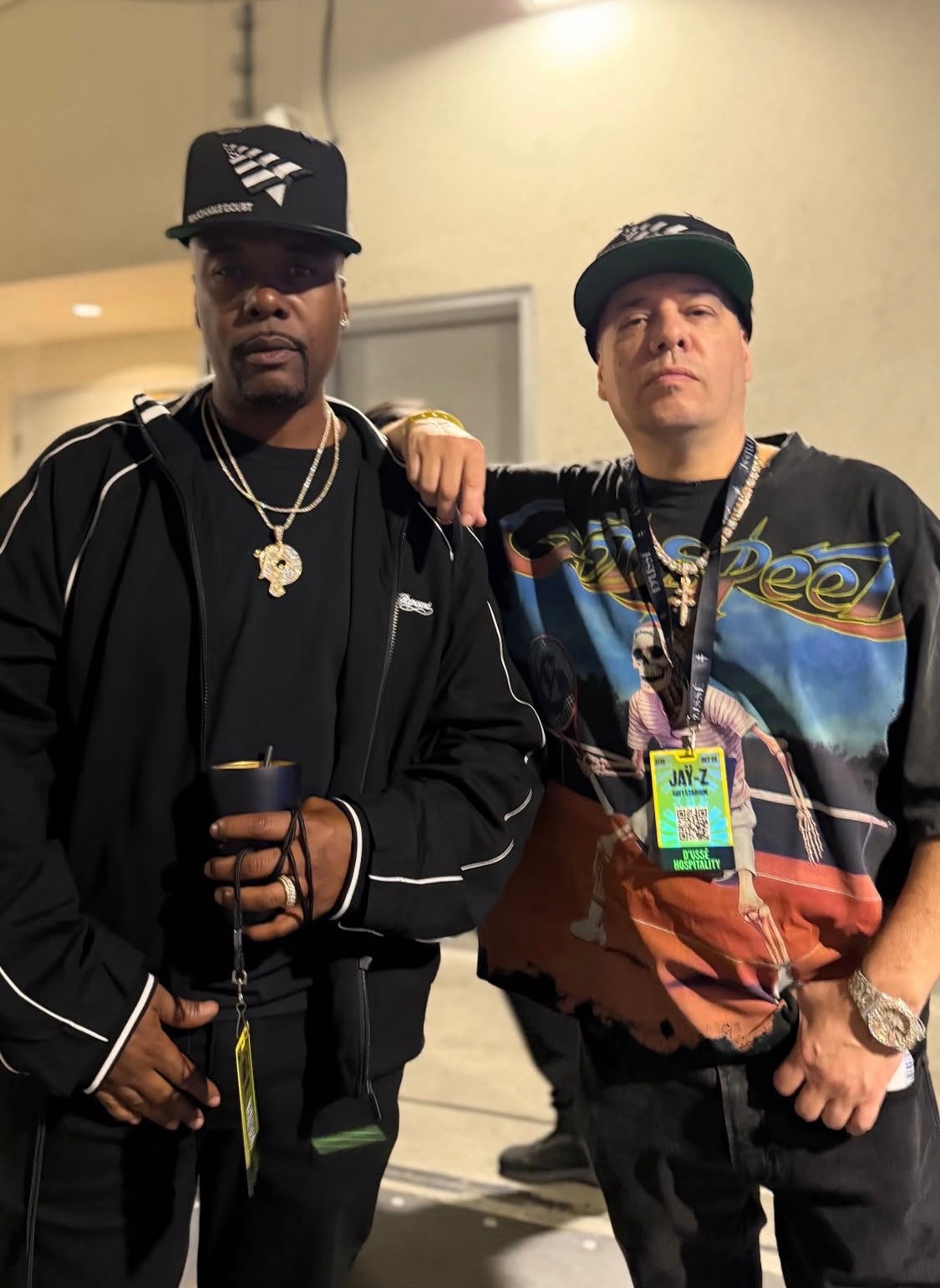
By 2021, the chain was also marking continuity with the original era. Hot 97 reported that Jay-Z gave Memphis Bleek a diamond-set Roc-A-Fella chain for Reasonable Doubt’s 25th anniversary. Bleek shared the gift and a handwritten message: “Bleek, I always got you. Thanks 4 Everything!” Five years before the stadium anniversary, the pendant was already serving as a way to remember a shared past. The message made the occasion personal, turning a milestone in the catalog into an acknowledgment of a lasting relationship.
These exchanges also explain why the old emblem continues to operate beyond the original label’s roster. Roc-A-Fella and Roc Nation are not interchangeable names. Team Roc’s official biography dates the founding of Roc Nation to 2008. A later Roc Nation relationship can help explain the setting of a gift without changing the identity of the logo on the pendant.
The difference between a replica and recognition
The chain’s exclusivity has produced stories about who may wear it and who may make it. One often-retold jewelry-store confrontation needs precise attribution. The Boombox’s 2018 account identifies Dame Dash as the person confronting a jeweler over a Roc-A-Fella chain made without his permission. It does not establish a blanket ban issued by Jay-Z, and it should not be retold as though it does.
There are separate questions here. Was an object manufactured or sold with authorization? Was it personally presented by a founder? Does it contain the materials claimed for it? A chain can be genuine gold and still lack the history of a founder’s gift. Conversely, a documented gift needs no invented price tag to explain its importance. Calling everything outside the circle “fake” collapses material authenticity and cultural recognition into one imprecise word.
The visible design can be repeated. The original act of recognition cannot. That is why the most useful evidence is specific: a dated presentation, the recipient’s account, a maker’s documentation or an exhibition record tied to an identifiable object. The history becomes more compelling when the facts remain distinct, rather than being polished into a legend that every chain followed the same rules.
Reading the jewelry without inventing the specifications
From a design perspective, the Roc pendant succeeds because its parts remain legible together. The record provides a broad circular foundation, while the bottle and script interrupt that shape. The eye can move between the overall mark and its details. Against a plain shirt, the emblem becomes the visual center; layered with another pendant, it becomes part of a larger arrangement. Its recognizability gives jewelers room to vary execution without losing the reference.
The gemological reading begins where the photograph ends. GIA explains that settings can obscure color and clarity assessments and make exact carat weight difficult to establish. A concert image can reveal scale, silhouette and the way a necklace moves against clothing. The finer specifications belong to examination and documentation. Respecting that distinction leaves room to appreciate the design without attaching an imaginary valuation to it.
The museum setting offers another way of looking. The American Museum of Natural History included a Roc-A-Fella medallion in Ice Cold, its 2024 to 2025 exhibition of hip-hop jewelry. Displayed among objects associated with other major artists, the emblem became part of a history that could be examined rather than merely glimpsed in motion. The display recognized jewelry as evidence of the culture that produced and wore it.
Explore the museum object: Roc-A-Fella pendant in the American Museum of Natural History’s digital collection.
What the emblem carries forward
Jay-Z’s anniversary shows make that history newly relevant. The official JAŸ-Z30 program treats his catalog as a living archive, extending the music into installations and objects. The Roc-A-Fella chain belongs in that conversation because it lets a viewer see ambition becoming affiliation, and affiliation becoming memory.
Scale may make a pendant noticeable from across a room. History is what gives a familiar one its staying power. The most important weight in a Roc-A-Fella chain is the record of who wore it, who received it and why that moment mattered. Thirty years after Reasonable Doubt, those stories still travel with the emblem.
About the author
Erica Diggs is a GIA Graduate Gemologist, a GIA-trained CAD designer, a bench jeweler trained at Studio Jewelers, and a diamond setter.